

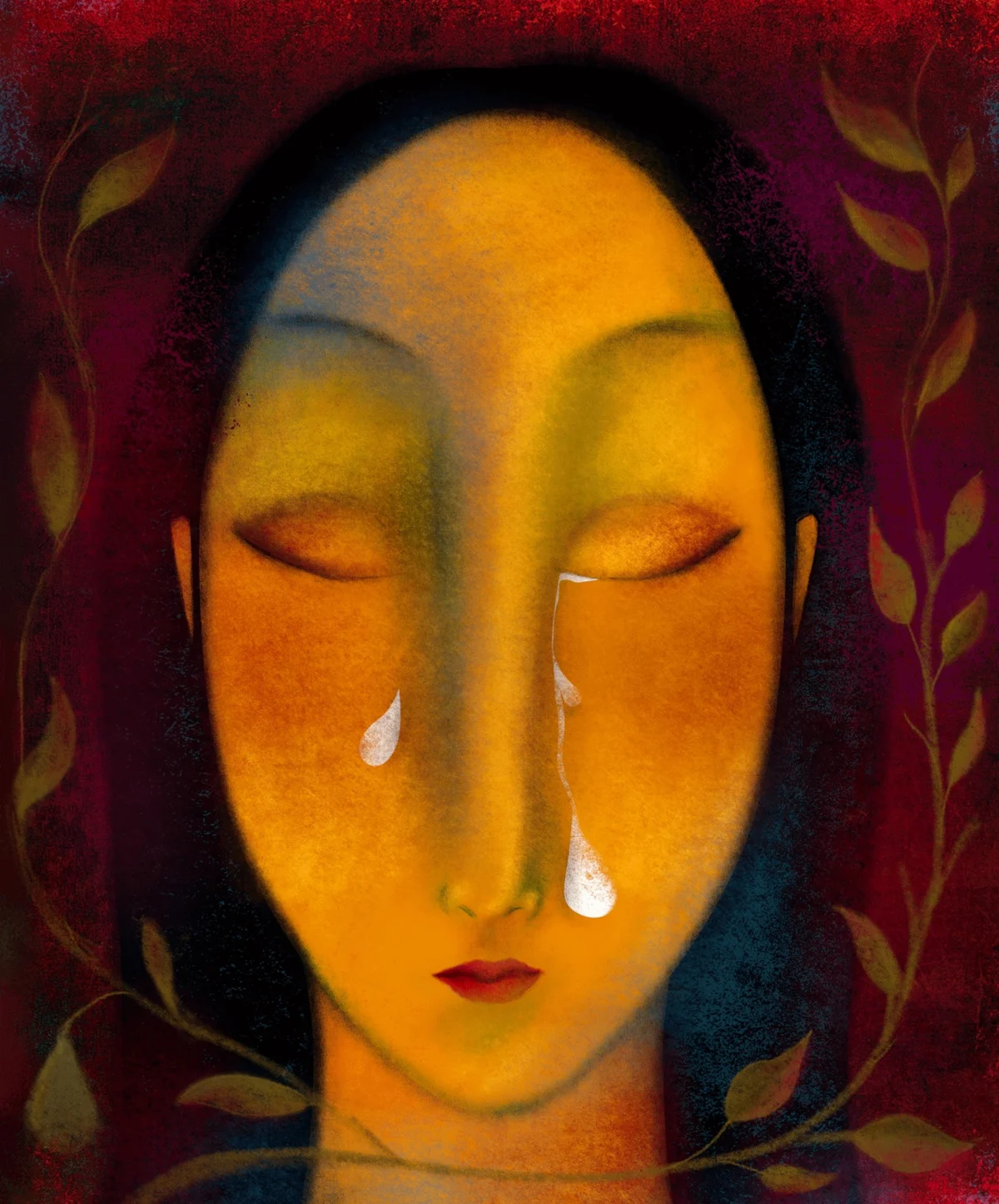
In the contemporary landscape of editorial illustration, few artists possess the ability to marry raw, personal vulnerability with the sharp, intellectual rigor of political commentary quite like Fatinha Ramos. Based in Antwerp, the Portuguese illustrator has carved out a unique space as a "visual activist," a term she uses to describe her commitment to amplifying the stories of marginalized communities and challenging systemic societal failures. Her work—a sophisticated hybrid of analog texture and digital precision—has graced the pages of The New York Times, The Washington Post, and Scientific American, yet it is her defiance of traditional disability narratives that is currently garnering the most profound critical attention.
The Core Philosophy: Art as an Antidote to Stereotypes
For Ramos, the act of creation is never merely aesthetic. It is a communicative bridge. "To me, being a visual activist means I only illustrate stories that resonate with me deeply, by giving voice to minorities or social situations that need to be addressed," she explains. "It is the only way I can truly connect with others."
This philosophy serves as the bedrock of her practice. Whether addressing the climate crisis, the pervasiveness of systemic racism, or the erosion of empathy in the digital age, Ramos utilizes a distinctive visual language that feels at once timeless and urgent. Her compositions are rich, emotive, and often surreal, acting as an antidote to the cookie-cutter imagery that frequently dominates editorial media. By refusing to soften the edges of difficult subjects, she forces the viewer to confront realities that are often ignored or glossed over.

A Chronology of Artistic Evolution
Ramos’s trajectory from an aspiring creative to a globally recognized illustrator was shaped by her early life experiences. Born with osteogenesis imperfecta—frequently referred to as "brittle bone disease"—Ramos spent much of her childhood within the sterile, isolating confines of hospitals.
From Clinical Walls to Creative Worlds
During these formative years, art became more than a hobby; it was an essential escape mechanism. The clinical environment of the hospital ward, with its emphasis on diagnosis and limitation, contrasted sharply with the boundless world she created on paper. This childhood necessity solidified into a professional ambition. Before establishing herself as a powerhouse in independent illustration, Ramos spent 12 years navigating the high-pressure world of advertising and publishing as an art director. This period was crucial in refining her technical skills and understanding the power of visual messaging in a commercial context.
The Shift to Fine Art
After more than a decade in the corporate sphere, Ramos transitioned into full-time freelance illustration and fine art. This shift allowed her to pivot away from the constraints of client-driven advertising toward a practice that prioritizes her own intellectual and artistic inquiries. Recently, she has begun exploring the intersection of traditional illustration and sculpture, specifically through a series of anatomical glass works that grapple with the realities of living with a chronic physical condition.

Supporting Data: The Impact of Representation
The significance of Ramos’s work is best understood through the lens of representation. In a study conducted by the Ruderman Family Foundation on the portrayal of disability in the media, researchers found that authentic representation—that which is created by individuals with lived experience—leads to a 40% increase in audience empathy and a significant reduction in the perpetuation of "inspiration porn."
Ramos’s work directly confronts this trend. By rejecting the trope of the "disabled hero," she avoids the infantilizing language that often plagues the depiction of people with disabilities. Her collaboration with institutions like the Anne Frank Museum and MoMA underscores the institutional shift toward valuing nuanced, lived-in perspectives over sanitized narratives. Her recent commission for MoMA, which featured an essay on her connection to the legendary artist Frida Kahlo, served as a catalyst for a broader cultural conversation regarding how we view the intersection of pain, bodily autonomy, and creative output.
Official Perspectives and Critical Discourse
The critical reception of Ramos’s work centers on her refusal to be categorized simply by her medical condition. In her own words to MoMA, she noted, "I want to move away from the narrative that turns artists with disabilities into symbols of resilience. Creativity does not happen despite limitations but through them. Art should broaden how we see the world—and that includes how we see bodies, too."

This statement highlights the tension between the public’s desire for an "uplifting" story and the artist’s desire for an honest one. Art critics have praised her for this approach, noting that her work is devoid of pity. Instead, she offers a mirror to the human condition, reflecting the complexity of navigating a world designed for the able-bodied while simultaneously expressing the profound beauty inherent in human fragility.
The Implications: Why Visual Activism Matters
The implications of Ramos’s work extend far beyond the gallery or the magazine page. As society grapples with increasing polarization, her practice offers a roadmap for how art can serve as a catalyst for social change.
1. The Deconstruction of "Resilience"
Ramos’s work suggests that by focusing on "resilience," we often ignore the structural barriers that necessitate such endurance. By centering her work on the reality of her experience—and that of other marginalized groups—she forces the audience to look at the systems in place, rather than just the individual who is overcoming them.

2. The Humanization of Data
In her work for outlets like Scientific American, Ramos demonstrates how technical or scientific data can be translated into human stories. This is vital in an era where the public is often overwhelmed by statistics regarding climate change or public health. Her ability to translate these abstract concepts into emotional imagery makes the data digestible and, more importantly, relatable.
3. Redefining the "Other"
By constantly shifting her focus—from the personal experience of disability to the global realities of systemic racism—Ramos challenges her viewers to broaden their definitions of "the other." Her work acts as a reminder that we are all, to some extent, defined by our limitations, and that these limitations are not failures, but facets of the human experience that deserve to be represented with dignity and complexity.
Looking Ahead: The Future of the Practice
At present, Fatinha Ramos is intentionally curating her professional intake, moving away from high-volume commercial projects to focus on her fine art practice. This shift is a bold professional move, signaling a desire to delve deeper into her own creative process. Her ongoing work with anatomical glass sculptures suggests a move toward tactile, three-dimensional explorations of the body, continuing her career-long obsession with how we perceive form, health, and identity.

For those interested in following her progression, her website and social media channels continue to serve as a hub for her latest explorations. As she moves further into this new phase, the art world is watching with anticipation. Whether she is illustrating a story about the climate crisis or crafting a glass sculpture that mimics the fragility of human bone, Ramos remains a singular voice in the world of visual culture—a voice that demands we not only look, but that we truly see.
Through her refusal to compromise and her dedication to the voices that have been silenced or misrepresented, Fatinha Ramos is setting a new standard for what it means to be an artist in the 21st century. She is not merely creating images; she is creating a visual language of empathy, one that challenges the status quo and invites us all to see the world—and our bodies—with renewed clarity and compassion.









No comments yet. Be the first to join the conversation!