

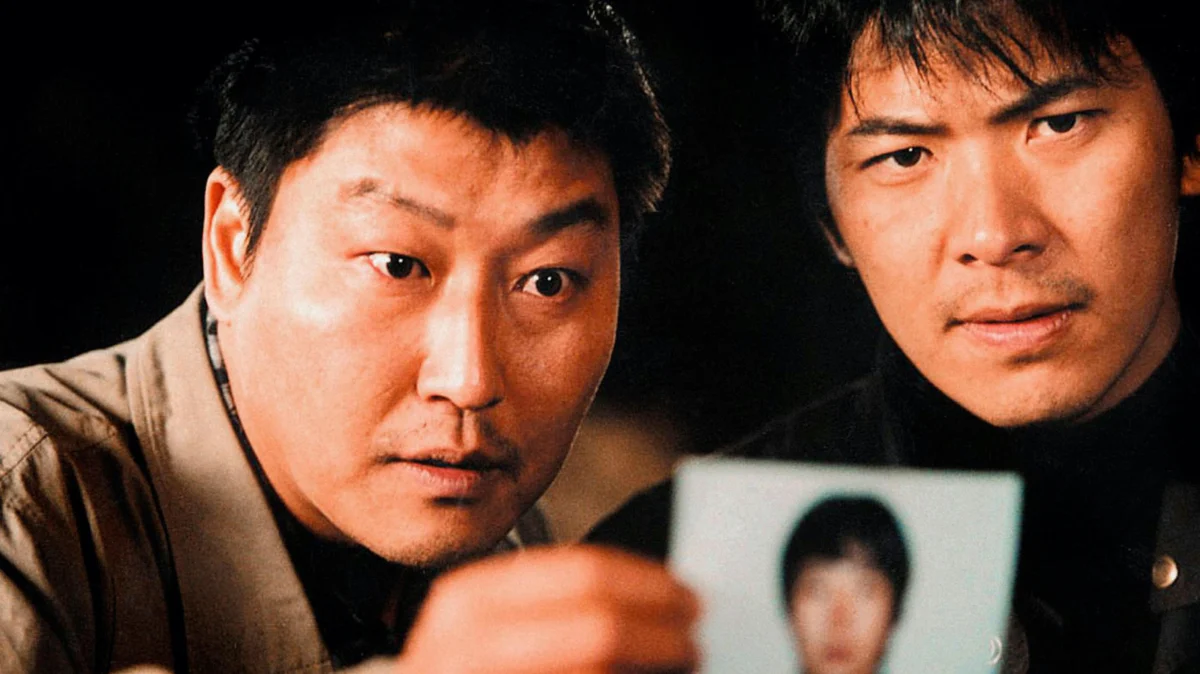
For enthusiasts of the crime-thriller genre, few films cast as long or as chilling a shadow as Bong Joon-ho’s 2003 magnum opus, Memories of Murder. Currently streaming on Paramount+, the film serves as a cornerstone of 21st-century cinema, acting as both a bridge between traditional procedural storytelling and the bold, genre-bending auteurism that would later define the director’s global success with Parasite.
The Visionary Behind the Lens: Bong Joon-ho’s Unique Narrative Architecture
To understand the weight of Memories of Murder, one must first appreciate the singular mind of Bong Joon-ho. Bong is perhaps the most unpredictable filmmaker working in the contemporary landscape. He possesses a rare ability to transmute genre tropes into profound sociological inquiries. Whether he is dissecting class warfare within the claustrophobic confines of a post-apocalyptic train in Snowpiercer or blending creature-feature spectacle with biting family satire in The Host, Bong consistently defies categorization.
His filmmaking process is a "gonzo" experiment in tonal balancing. He frequently juxtaposes profound, existential grief with sharp, observational comedy, mirroring the chaotic and often absurd nature of human reality. While his recent sci-fi foray, Mickey 17, saw him engaging with grander, high-concept themes, Memories of Murder remains arguably his most visceral and disciplined work—a film that manages to be simultaneously a gripping police procedural and a devastating historical autopsy.
Chronology: A Nation’s First Encounter with Systematic Evil
Memories of Murder is rooted in the harrowing reality of the Hwaseong serial murders, a series of rapes and killings that paralyzed the Gyeonggi Province of South Korea between 1986 and 1991. For a country transitioning toward democratization while still navigating the scars of military rule, these events were unprecedented. South Korea had never before faced the specter of a serial killer, and the investigation—or lack thereof—became a mirror for the inefficiencies and brutality of the era’s law enforcement.
The Investigation Timeline
- 1986–1991: The period in which at least 10 women were raped and murdered in the Hwaseong area. The case remained cold for decades, becoming a national obsession and a source of deep cultural trauma.
- 2003: Bong Joon-ho releases Memories of Murder, dramatizing the investigation. The film captures the frantic, often incompetent, and desperate atmosphere of the South Korean police force during the late 80s.
- 2019: Advances in DNA technology finally allow investigators to identify the perpetrator, Lee Choon-jae, who was already incarcerated for a separate crime.
- Present Day: The film stands as a historical document of a period of transition, preserving the frustration and the moral decay that accompanied the hunt for a phantom.
The Procedural Dynamic: A Study in Mismatched Perspectives
The narrative efficacy of the film rests on the shoulders of its two leads: the local detective Park Doo-man (played by the legendary Song Kang-ho) and the Seoul-transplant inspector Seo Tae-yoon (Kim Sang-kyung).
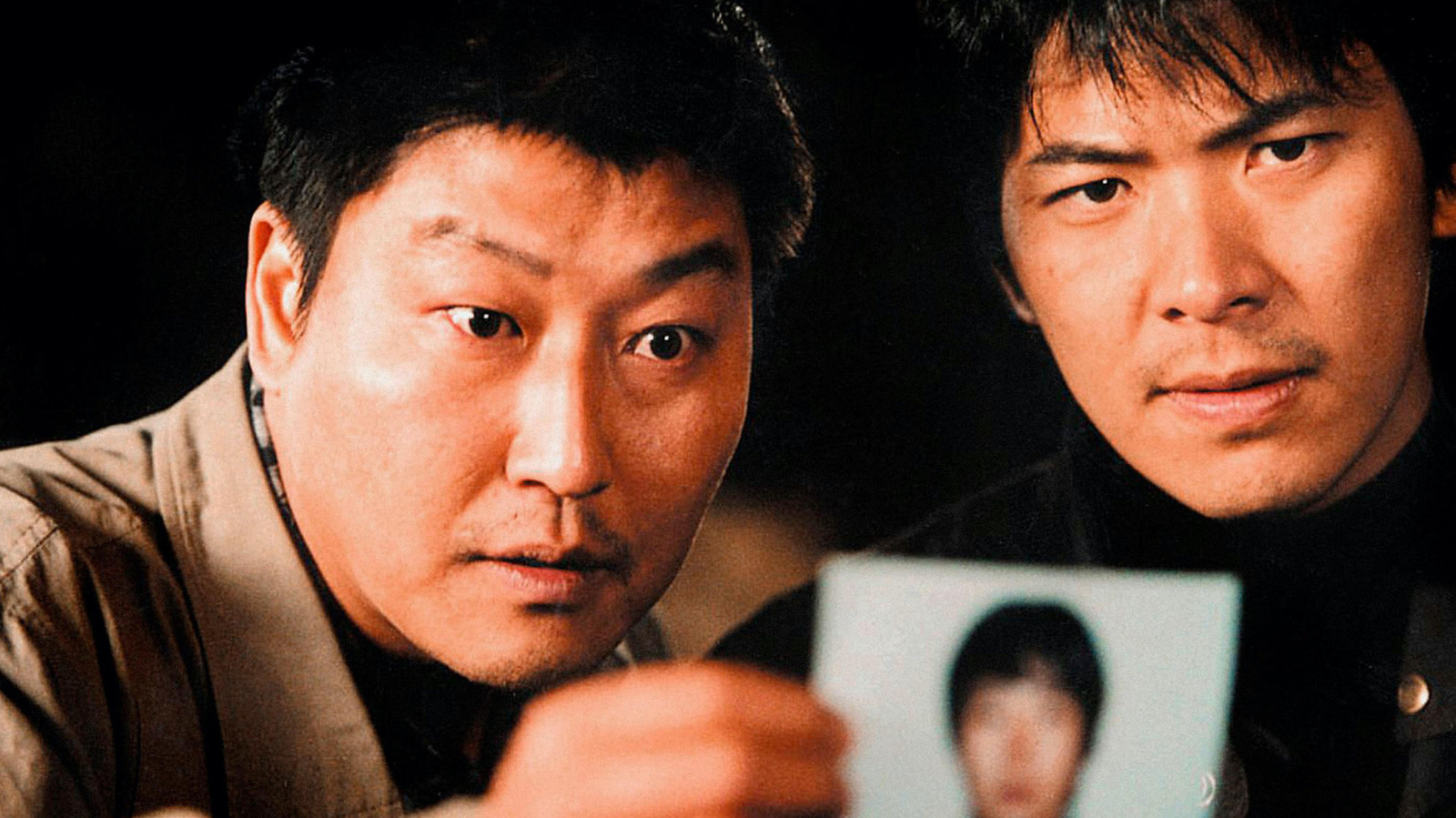
Park is a creature of intuition, a man who relies on his "gut" and his physical presence to extract confessions—often through dubious means. In contrast, Seo is the embodiment of modern, cerebral police work, relying on evidence, logic, and forensic documentation. Their clash is not merely a personality conflict; it is a clash of two Koreas: the traditional, superstitious, and authoritarian past versus the modern, scientific, and globalized future.
As the investigation drags on and the body count rises, both men are systematically hollowed out. The film masterfully depicts the erosion of their ideals. The "mismatched cop" formula is subverted; there is no triumphant resolution, no smoking gun that leads to a tidy courtroom scene. Instead, there is only the exhaustion of failure. The audience is invited to share in this defeat, leading to one of the most haunting and famous closing shots in the history of world cinema—a moment where the film breaks the fourth wall to stare directly into the eyes of the viewer.
Supporting Data: Why "Memories of Murder" Remains Essential
The film is frequently cited as the pioneer of the "revisionist serial killer movie," predating David Fincher’s Zodiac by four years. While comparisons to Fincher are inevitable given the meticulous nature of both directors, the two films operate on different wavelengths. Where Zodiac is an obsession with the mechanics of the puzzle, Memories of Murder is an obsession with the impotence of the seeker.
- Critical Acclaim: The film holds a near-perfect rating on major review aggregators, consistently praised for its cinematography, which captures the lush, autumnal desolation of the Korean countryside as a character in itself.
- Cultural Impact: It changed the way Korean audiences perceived the police and the state, sparking real-world discourse on the necessity of judicial reform.
- Technical Mastery: Bong’s use of long, complex tracking shots and sudden, jarring shifts in sound design creates a sensory experience that feels both grounded and fever-dream-like.
Official Responses and Public Reception
When the film was released in 2003, it was met with significant sensitivity. The victims’ families were still grieving, and the memory of the murders was fresh in the public consciousness. Bong Joon-ho famously conducted extensive research, interviewing police officers who worked the original cases and victims’ families, ensuring that the film functioned as a tribute to the victims rather than a glorification of the monster.
The film’s legacy has evolved alongside the real-life investigation. When the true perpetrator was finally identified in 2019, the South Korean public turned back to Bong’s film, not as a source of spoilers, but as a source of emotional closure. The film had correctly identified the atmosphere of the era, even if the police could not identify the man.
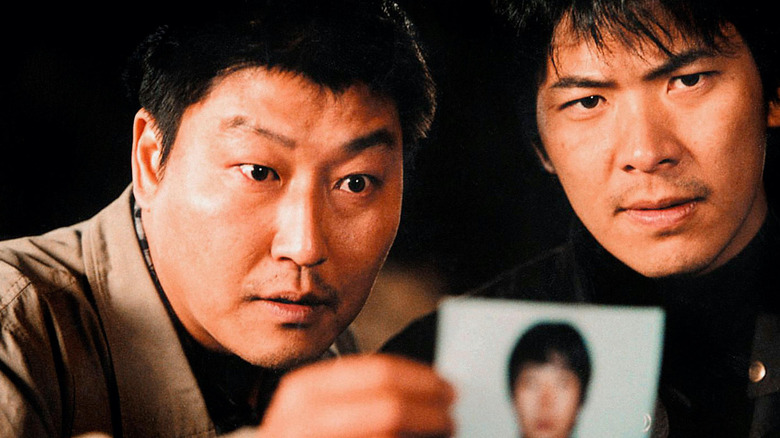
Implications: The Enduring Power of the Neo-Noir
Why should a modern audience, accustomed to the fast-paced, high-octane thrillers of the streaming era, turn to Memories of Murder? The answer lies in its refusal to offer catharsis.
Most serial killer procedurals offer the audience a sense of safety: the killer is caught, the system works, and order is restored. Memories of Murder offers no such comfort. It posits that some monsters disappear into the fabric of society, and that the greatest tragedy is not just the loss of life, but the loss of our ability to find justice in a fractured world.
As you navigate the vast library of Paramount+, Memories of Murder stands out as a necessary viewing experience. It is a film that will make you laugh at its absurdities, shriek at its horrors, and ultimately feel a profound sense of existential vacancy. It is a reminder that the best thrillers do not merely keep us on the edge of our seats; they change the way we look at the world when we finally stand up.
If you choose to watch, do so with the understanding that you are witnessing the birth of a cinematic titan. Bong Joon-ho may have gone on to win the Academy Award for Best Picture with Parasite, but for many, the dark, rain-soaked fields of Memories of Murder remain his most enduring and haunting contribution to the art form.










No comments yet. Be the first to join the conversation!