

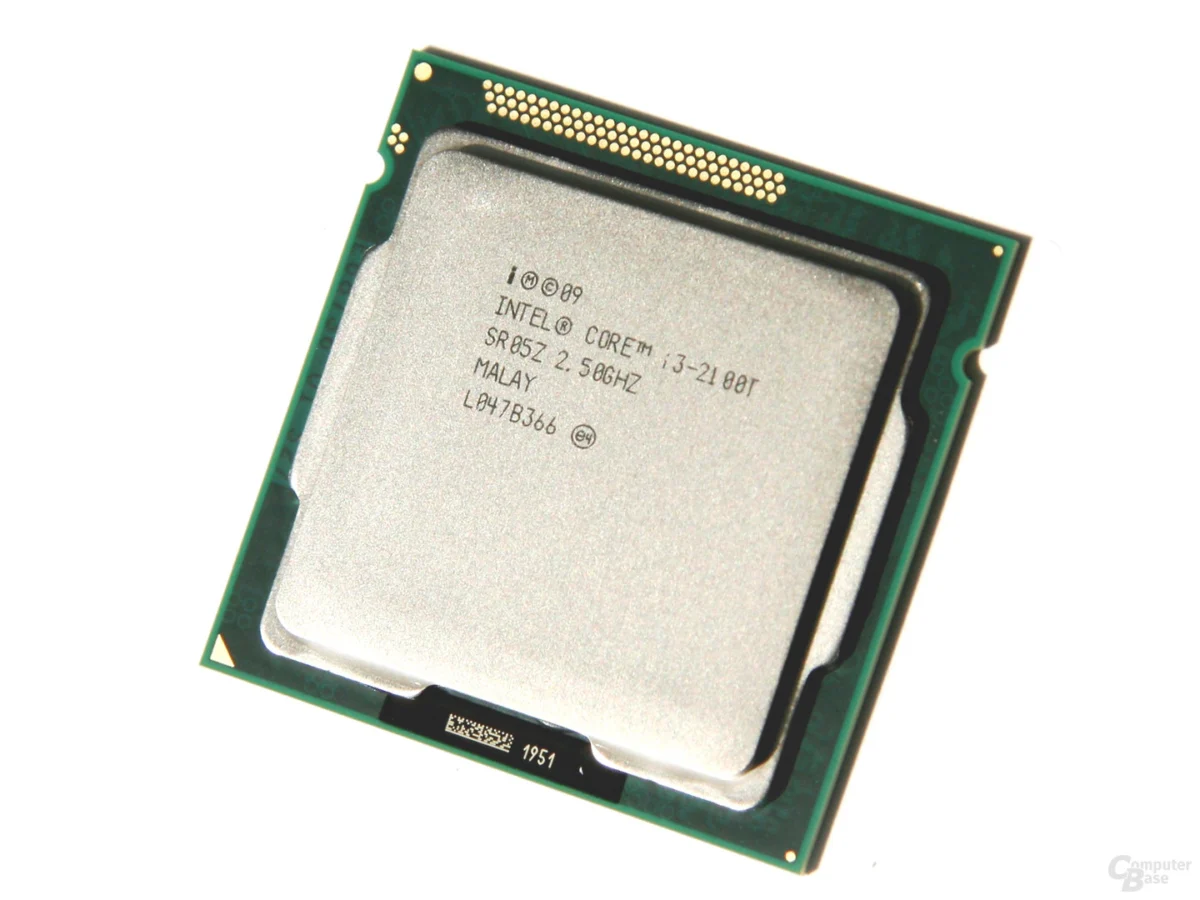
In the early 2010s, the computing landscape was undergoing a significant transformation. As the "Sandy Bridge" architecture arrived, Intel pushed the boundaries of performance-per-watt, redefining how users perceived desktop computing. Among this lineup, the Intel Core i3-2100T stood out as a specialized, low-power variant. Designed for the most restrictive thermal envelopes, it promised a new era of compact, silent, and efficient computing. Yet, as our retrospective analysis reveals, this pursuit of energy efficiency came at a cost that not every user was willing to pay.
Main Facts: The Anatomy of a Low-Power Processor
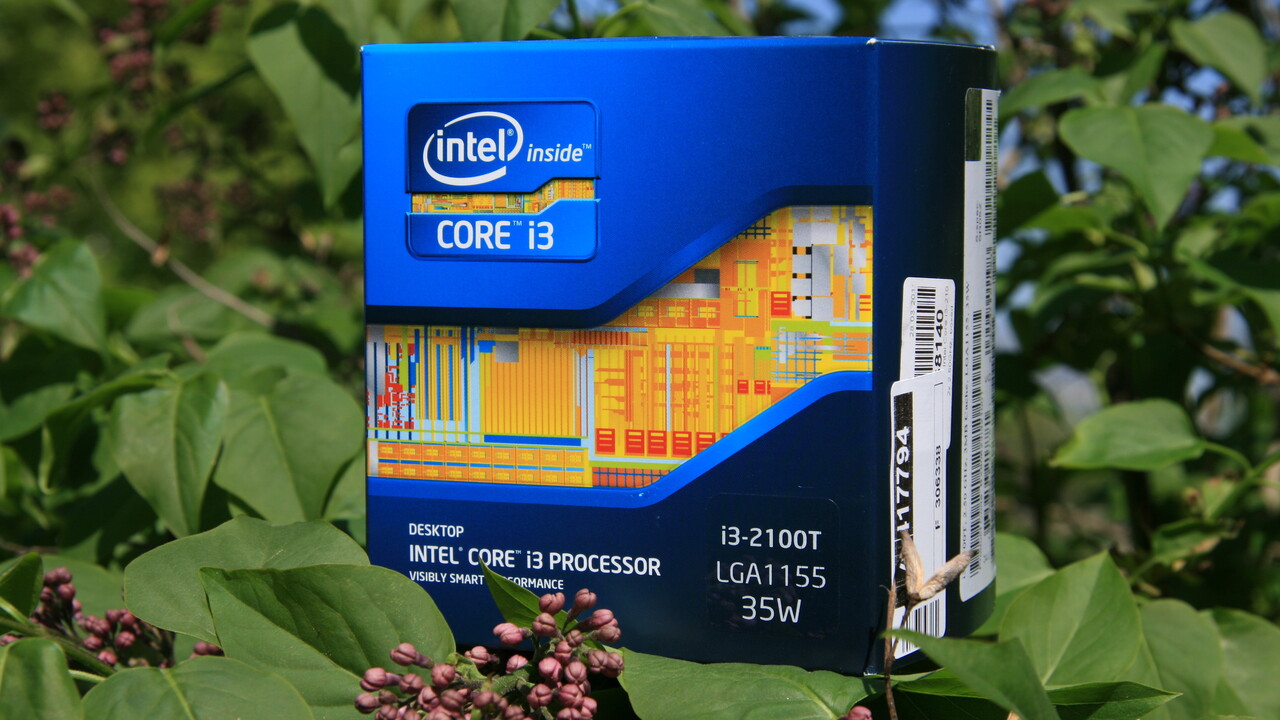
The Intel Core i3-2100T was the smallest entry in Intel’s "Sandy Bridge" family, specifically engineered to operate under a strict 35-watt Thermal Design Power (TDP). While the standard Core i3-2100 was designed for general-purpose desktop computing, the "T" suffix designated a segment Intel introduced to cater to small-form-factor (SFF) enthusiasts and home theater PC (HTPC) builders who prioritized silence and low heat output above all else.
Technically, the processor remained a dual-core unit with Hyper-Threading, offering four logical cores. To achieve the 35W limit, Intel implemented significant clock speed reductions. The base frequency was dropped from the standard 3.1 GHz to 2.5 GHz, and the integrated graphics (iGPU) frequency was scaled down from 850 MHz to 650 MHz. These adjustments were not merely aesthetic; they were necessitated by the physics of power delivery. The 35W chips were constrained to a maximum current of 25 amperes, a stark contrast to the 55 amperes permitted for the standard 65W variants.
Chronology: From Silicon Binning to Market Reality
The development and launch of the i3-2100T were a masterclass in silicon binning—the process of testing manufactured chips to determine their operational limits.
- The Manufacturing Phase: During the production of Sandy Bridge processors, every chip was scrutinized. If a dual-core silicon die could not handle the performance demands of the standard i3-2100, it was re-evaluated. If it demonstrated superior power efficiency under load, it was earmarked as a potential candidate for the 2100T.
- The Launch Window: Upon its release, the i3-2100T hit the market with a retail price of approximately 100 Euros, positioning it essentially at parity with the standard i3-2100, which retailed for around 95 Euros.
- The Ecosystem Integration: Intel bundled the T-series with smaller, less intrusive cooling solutions, acknowledging that the reduced TDP required less aggressive thermal dissipation.
- The Consumer Reaction: Early reviews—including our own original test—highlighted a disconnect. Consumers were paying a premium for a chip that was, by design, slower than its standard counterpart. This set the stage for a debate on whether energy savings were truly worth the performance deficit.
Supporting Data: The Performance and Efficiency Gap
When benchmarking the Core i3-2100T against its standard 65W sibling, the numbers painted a clear, if somewhat sobering, picture.
Performance Degradation
In intensive applications, the 2100T suffered an approximate 18% loss in performance compared to the standard i3-2100. Theoretical benchmarks showed a slightly smaller, though still significant, 10% gap. In gaming scenarios—even at lower resolutions like 640 x 480—the performance penalty tracked closely with the 20% deficit in clock speed. Even at higher resolutions, such as 1680 x 1050, where the system became GPU-bound, the CPU still lagged by 12%. Across our entire benchmark suite, the 2100T trailed the standard model by 17%.
The Efficiency Reality
The most revealing data points emerged when we measured actual power consumption. Out of the box, the i3-2100T was barely more efficient than the standard model. In idle states, the power draw was identical. Under load, the 2100T consumed only 9 watts less than the standard 2100.
However, with aggressive manual undervolting, users could squeeze out an additional 6 watts of savings. Under full CPU load, the 2100T system drew 23 watts more than its idle state, whereas the standard 2100 drew 38 watts more. While this 15-watt total savings was technically impressive, it was arguably a pyrrhic victory: the user had sacrificed 17% of their computational performance for a modest reduction in electricity usage.
Official Responses and Engineering Logic
Intel’s official stance at the time focused on "Thermal Design Power" as a specification for cooling requirements rather than a literal measure of maximum power consumption. By branding the 2100T with a 35W TDP, Intel was providing a guarantee to system integrators that the CPU would not exceed specific thermal thresholds, provided the OEM designed the cooling infrastructure accordingly.
Engineers at the time defended the T-series as a necessary component for the "Green PC" movement. The ability to run the processor entirely passively was the standout feature that justified the existence of the 2100T. In our stress tests, the 2100T ran for over 48 hours under Prime95 loads with no active airflow, maintaining a core temperature of just 68°C. For an engineer designing a fanless, living-room HTPC, this stability was far more valuable than raw clock speed.
Implications: A Niche Solution for a Specific Era
The legacy of the Intel Core i3-2100T is defined by the tension between mass-market performance and niche utility.
The Price of Silence
The primary implication of the i3-2100T was that it effectively separated the market into two camps. For the vast majority of desktop users—gamers, office workers, and students—the 2100T was a poor value proposition. The "T" did not stand for "Turbo," but rather for a compromise. The negligible electricity savings could not offset the tangible performance loss, making it a difficult sell for anyone not specifically building a fanless rig.
The Rise of the HTPC
For the niche segment, however, the 2100T was a breakthrough. It allowed for the construction of elegant, silent home theater PCs that could sit in a living room without the distracting whir of cooling fans. It proved that Sandy Bridge silicon was versatile enough to scale down to the levels of embedded systems while retaining the x86 compatibility and performance required for multimedia playback.
Looking Back at the "Retro" Perspective
Reflecting on this 15-year-old hardware, it is clear that the i3-2100T served as a precursor to the modern focus on extreme efficiency seen in today’s mobile and ultra-compact desktop processors. While the market didn’t fully embrace the T-series in 2011, the design philosophy—prioritizing thermal stability and power-efficient operation—has since become the industry standard.
In conclusion, the Intel Core i3-2100T was never intended to be a bestseller for the masses. It was a specialized tool for a specific problem: heat. It challenged the assumption that "faster is always better" and offered a glimpse into a future where the silent, efficient operation of a computer would become just as important as its raw frequency. For those who built their silent HTPCs around this silicon, the 17% performance sacrifice was a small price to pay for the serenity of a whisper-quiet machine. As we look back through the archives, the 2100T remains a fascinating artifact of a time when Intel was still experimenting with how to fit high-performance architecture into the smallest of thermal envelopes.










No comments yet. Be the first to join the conversation!