

The social media management software industry has matured into a powerhouse of the digital economy, currently valued at approximately $33.46 billion. As businesses increasingly rely on these platforms to bridge the gap between brand identity and consumer engagement, the expectations placed on these tools have shifted from simple scheduling to sophisticated enterprise-grade governance.

In recent months, a notable migration of marketing teams has begun, as users re-evaluate their reliance on Sprout Social. Driven by escalating per-seat pricing models, restricted access to social listening tools at lower tiers, and gaps in enterprise-level security, many organizations are conducting rigorous market scans to find more sustainable, cost-effective solutions.

The Factors Driving the Migration
The primary catalyst for this shift is the "scaling penalty." As companies grow, they must add more users to their social media management dashboard. With many platforms charging on a per-seat basis, costs can become prohibitive for mid-to-large enterprises.
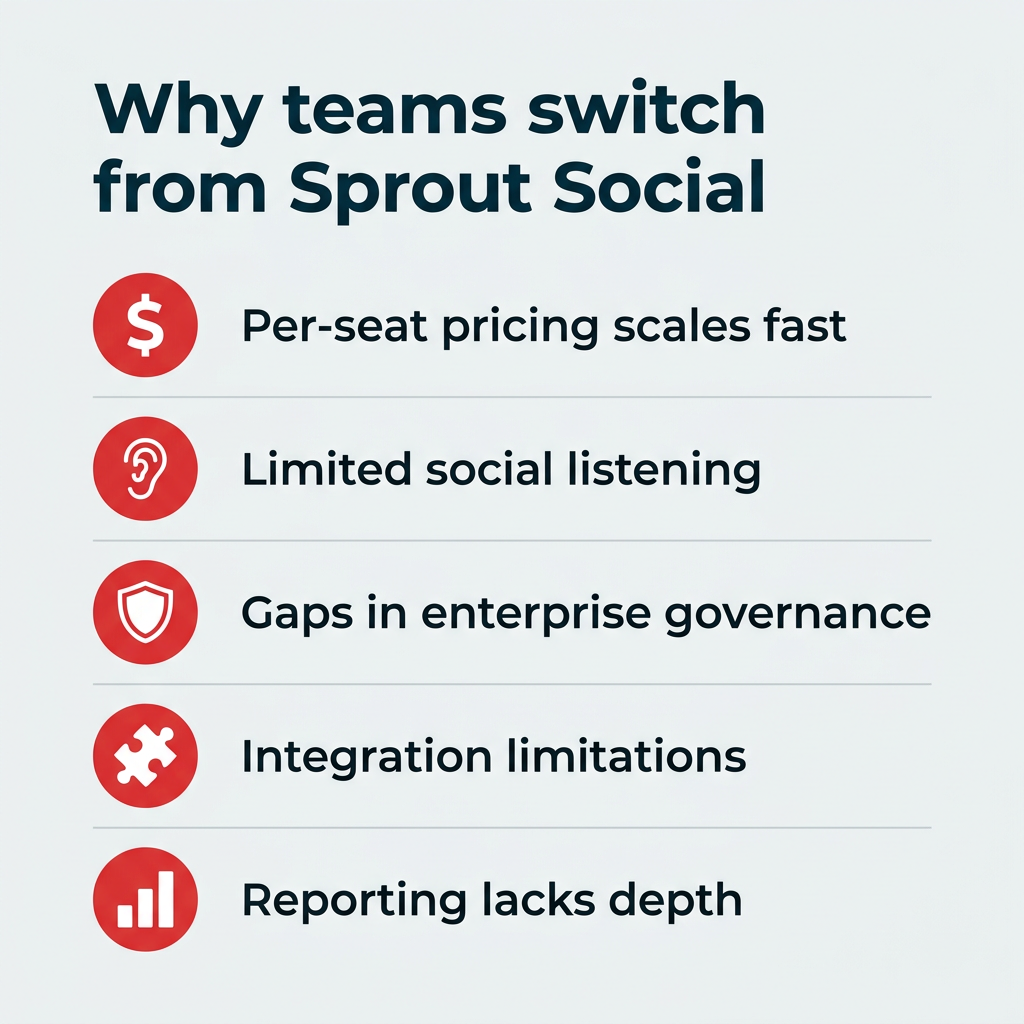
Beyond the financial implications, the "feature gate" has become a point of contention. Many teams find that essential capabilities—such as advanced social listening, multi-channel sentiment analysis, and complex approval workflows—are often buried behind premium add-ons or exclusive enterprise-tier pricing. In a market where agility is paramount, teams are looking for platforms that provide a more comprehensive, integrated suite of features without the need for constant, costly upsells.
Comparative Overview: The 2026 Landscape
To assist teams in their evaluation, we have analyzed the current market leaders. While each tool offers a distinct value proposition, the underlying requirement for most businesses remains the same: a balance between powerful analytics, intuitive content management, and robust security.
| Tool | Best For | Entry-Level Price (2026) | G2 Rating |
|---|---|---|---|
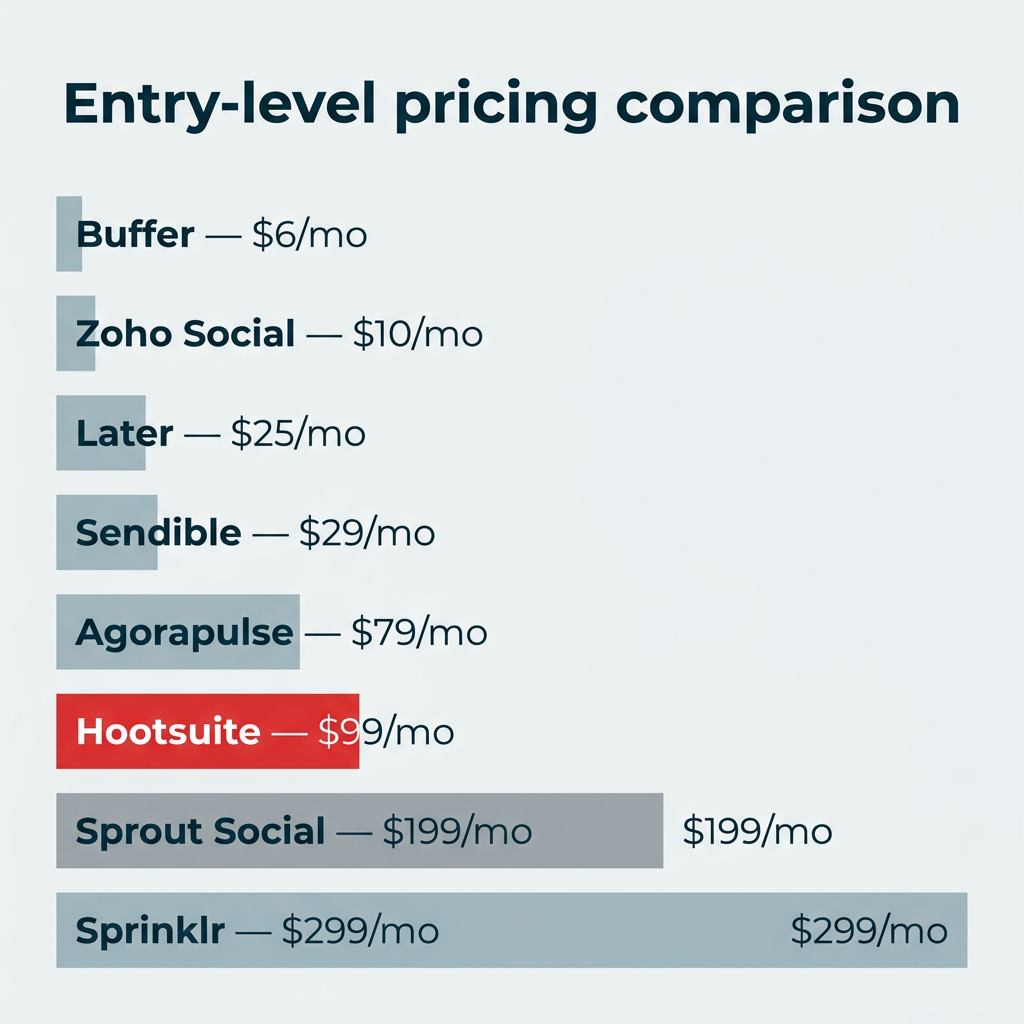
| Hootsuite | Enterprise & Regulated Industries | $99/user/month | 4.3/5 |
| Agorapulse | Mid-size Marketing Teams | $79/user/month | 4.5/5 |
| Buffer | Creators & Small Teams | Free (from $6/month) | 4.3/5 |
| Later | Visual Content Creators | $25/month | 4.5/5 |
| Zoho Social | Zoho Ecosystem Users | $10/month | 4.6/5 |
| Sendible | Digital Agencies | $29/month | 4.5/5 |
| Sprinklr | Global Enterprises | $299/month | 4.3/5 |
| Khoros | Multinational Corporations | Custom Pricing | 3.8/5 |
| HubSpot | CRM-Integrated Teams | $890/month | 4.4/5 |
In-Depth Analysis of Leading Alternatives
Hootsuite: The Enterprise Standard
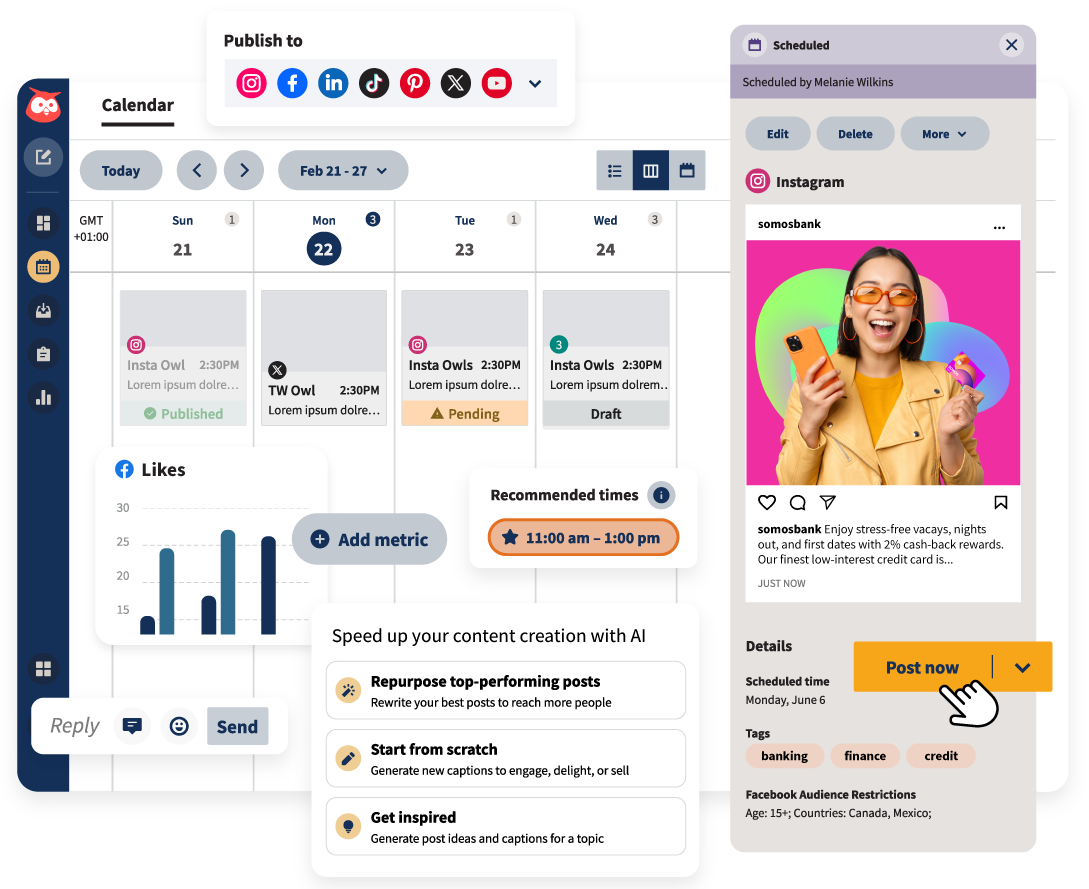
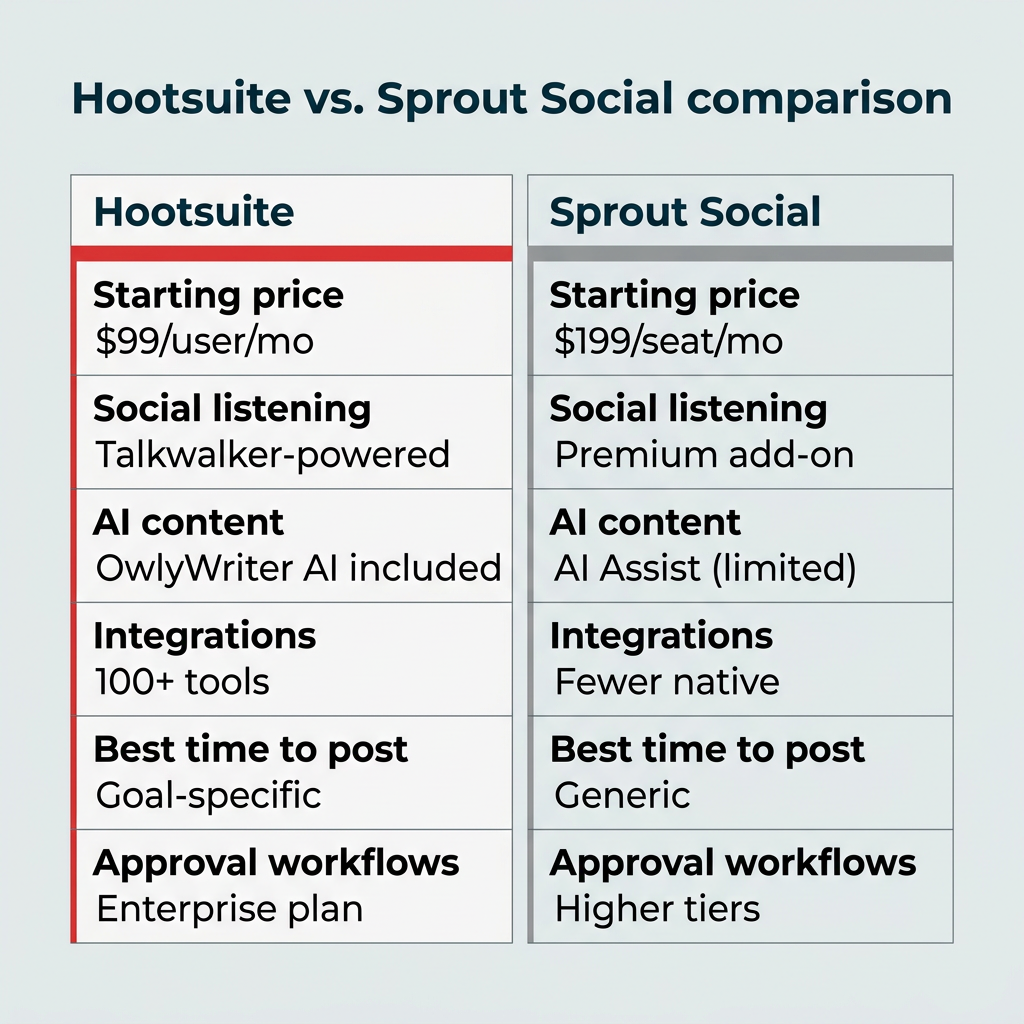
Hootsuite remains the most comprehensive alternative for teams requiring a high degree of governance. By integrating Talkwalker-powered social listening and its proprietary OwlyWriter AI, Hootsuite offers a streamlined workflow that covers the entire lifecycle of a post.

For companies in highly regulated sectors—such as finance, healthcare, or government—Hootsuite’s focus on compliance, audit trails, and granular permission sets provides a level of security that many other platforms struggle to match. At $99/user/month, it effectively undercuts the $199/seat starting point often associated with premium tiers of competitors, offering a clearer path to ROI.

Agorapulse: The Efficiency Expert
For mid-market teams, Agorapulse has carved out a niche by focusing on the "Unified Social Inbox." Its architecture is designed to reduce the time spent toggling between tabs. While it may lack the massive-scale governance features of a platform like Sprinklr, its built-in ROI tracking allows marketing managers to prove the value of their social efforts directly within the tool. It represents a "middle-ground" solution: more robust than a creator-focused app, but less complex to implement than an enterprise-wide suite.
Later and Buffer: The Lean Performers
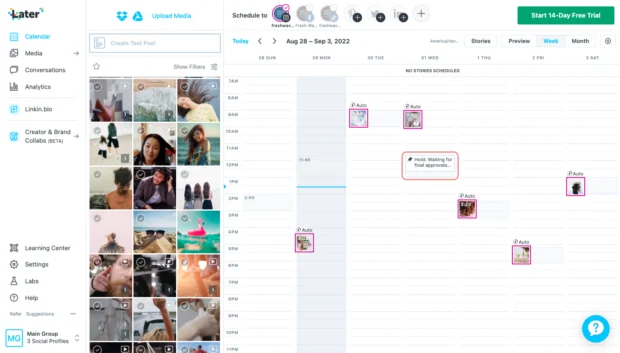
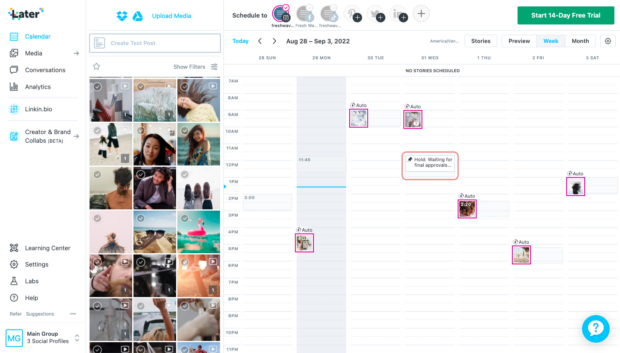
Later continues to lead the pack for visual-first brands. By allowing users to visually plan their Instagram grid, it solves a specific aesthetic pain point that larger, text-heavy tools often ignore. Conversely, Buffer’s strength lies in its radical simplicity. For startups and individual creators, the ability to get up and running for less than $10 a month makes it the clear winner in the "time-to-value" category.
Strategic Evaluation: A Chronology of Decision Making
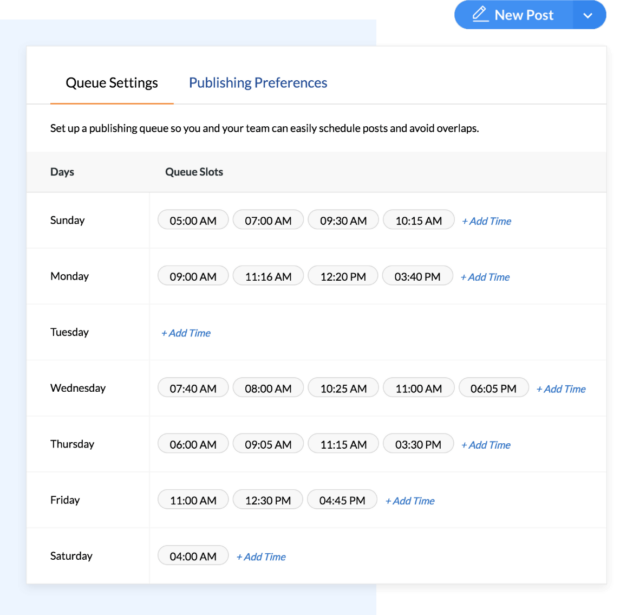
Selecting a new social media tool is not merely a purchase; it is a structural change to a marketing operation. To execute a successful migration, organizations should follow a structured, three-phase chronology:

- Audit and Discovery (Weeks 1–2): Catalog your current "must-haves." Document the number of social accounts, the size of your team, and the specific regulatory or compliance requirements your business faces.
- The Pilot Phase (Weeks 3–6): Select two top contenders and initiate a trial period. During this time, assign specific team members to test the "pain points" they currently experience. If social listening was a bottleneck in your old tool, prioritize testing that feature in the new one.
- Implementation and Migration (Weeks 7–8): Once a tool is selected, prioritize training. A tool is only as good as the team’s ability to use its advanced features. Ensure that your historical data is exported and archived before the final transition.
Supporting Data and Industry Implications
The cost differential between platforms is often obscured by complex pricing models. When modeling for a team of 10 users, the difference between $99/user/month and $199/seat/month amounts to an additional $12,000 in annual expenditure.

Furthermore, the rise of AI-integrated content generation is no longer a luxury—it is an expectation. As seen in the comparison of Hootsuite’s OwlyWriter AI against other market offerings, the ability to generate copy, optimize for platform-specific best practices, and analyze trends in real-time is the new baseline for competitive social media management.
Official Responses and Market Sentiment
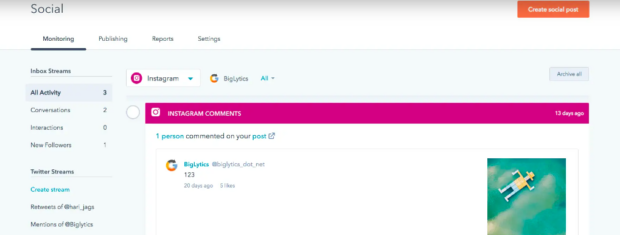
While vendors generally decline to comment on specific migration trends, industry analysts have noted a clear shift toward "consolidation of the tech stack." In the 2025 Gartner Market Guide, analysts emphasized that companies are increasingly looking for "all-in-one" platforms that handle not just posting, but also customer support, community management, and deep sentiment analysis.
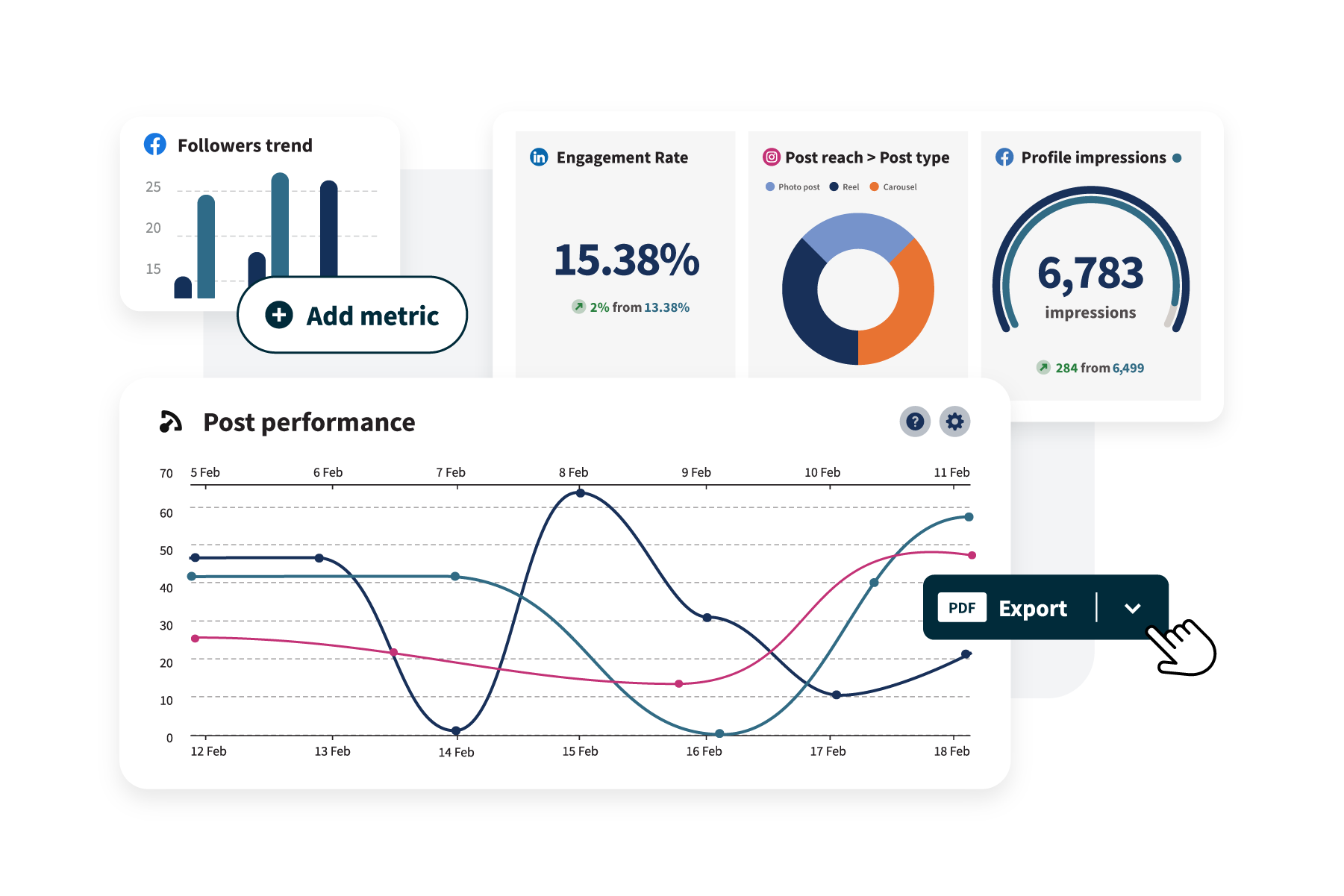
The sentiment among users on G2 and TrustRadius reflects this: there is a growing frustration with platforms that promise "all-in-one" capabilities but then hide those features behind paywalls that trigger only after a company has reached a certain size.
Final Considerations: Making the Switch
The "best" platform is not necessarily the one with the most features; it is the one that fits your current operational velocity.
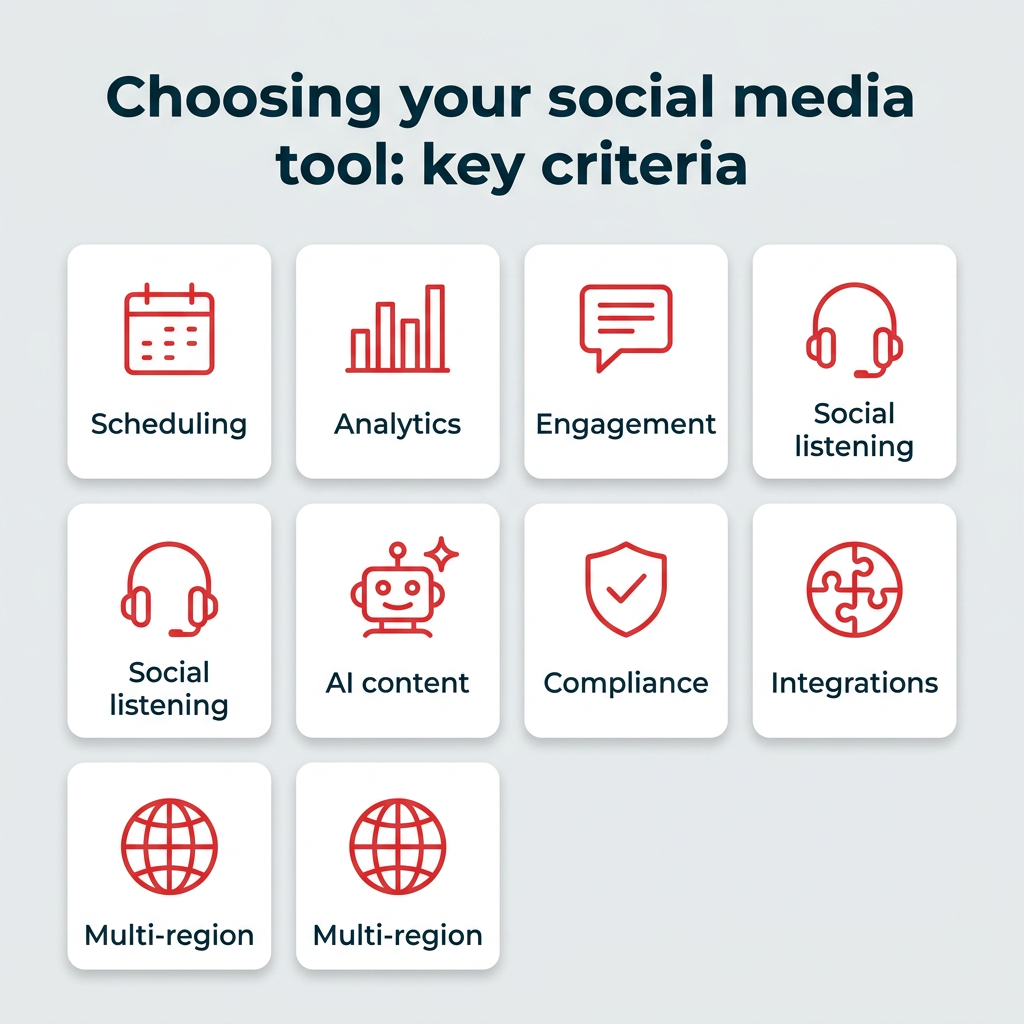
- For the Enterprise: If you are managing multiple brands, regional offices, and strict compliance needs, prioritize Hootsuite or Sprinklr. The investment in robust governance will save you from potential PR crises and security vulnerabilities.
- For the Agency: If your business model relies on managing dozens of client accounts simultaneously, look for tools like Sendible that offer white-label reporting and simplified client access.
- For the Growing Brand: If your priority is growth and ROI tracking, Agorapulse offers the best balance of user experience and analytical depth.
Ultimately, before finalizing any switch, ensure you have modeled the total cost of ownership over an 18-month period. Consider not just the sticker price, but the cost of training, the ease of integration with your existing CRM, and the scalability of the plan as your team expands. By doing your homework now, you ensure that your social media operations remain an engine for growth rather than a drain on your resources.












No comments yet. Be the first to join the conversation!