Asep Darmawan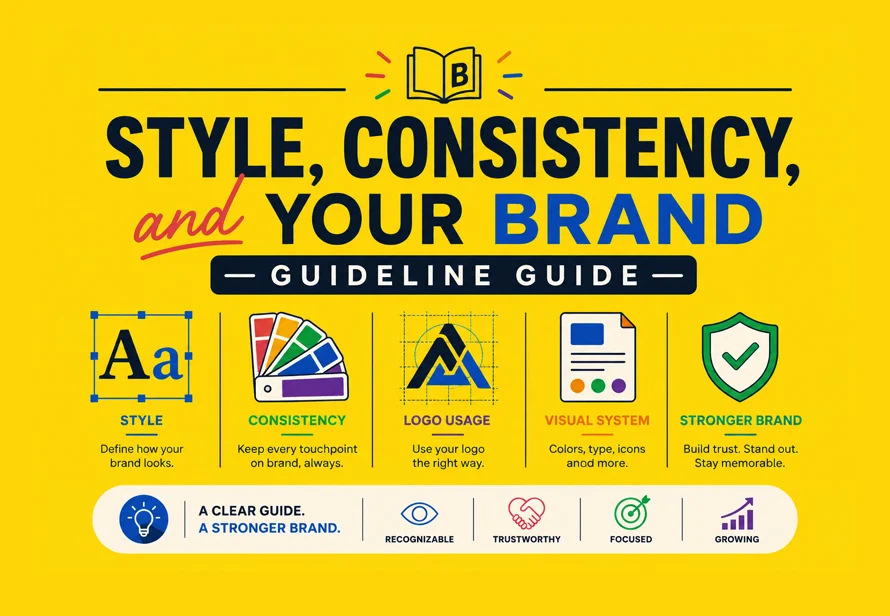
Every day, the average consumer is bombarded by thousands of visual marks. From the apps on our smartphones and the labels on our groceries to the signage on our local storefronts, we exist in a constant state of visual noise. Yet, if you were asked to list the logos you encountered in the last hour, you would likely only recall a handful.
This is not a failure of the designers behind the forgotten marks; rather, it is a testament to the extreme difficulty of creating a truly memorable brand identity. A logo is not merely a decorative graphic; it is the most condensed form of a company’s narrative. To move from "forgettable" to "iconic," a designer must bridge the gap between aesthetics and the cognitive architecture of the human brain.

The Main Facts: The Psychology of "Fluency"
The difference between a logo that sticks and one that disappears lies in a psychological concept known as processing fluency. The human brain is evolutionarily wired to conserve energy; it prefers information that is easy to categorize and interpret.
When a design is cluttered, ambiguous, or conceptually confusing, the brain must work harder to "decode" it. Conversely, brands like Nike or Apple provide the brain with a visual shortcut—a single, elegant mark that requires zero cognitive strain to identify. This ease of processing translates into a psychological preference: we tend to like what we can recognize instantly. A memorable logo functions like a familiar face in a crowd, registering in our subconscious long before our conscious mind has even had the chance to name the brand.

Chronology: The Evolution of Logo Recognition
The history of logo design is essentially a history of distillation. In the early 20th century, branding was often literal and descriptive, frequently featuring complex illustrations of the products themselves. However, as the pace of life and information consumption accelerated, logos began to shed their excess weight.
- 1950s–1970s: The Modernist Shift. Designers like Paul Rand championed the "less is more" philosophy. The focus shifted toward abstract, geometric forms that could communicate the essence of a brand without relying on literal imagery.
- 1980s–1990s: The Global Expansion. With the rise of international trade, logos needed to transcend language barriers. This necessitated a move toward universally recognizable, simple shapes.
- 2010s–Present: The Digital Optimization Era. With the advent of mobile screens and small-format social media avatars, logos have been further refined. Today, the "flat design" movement focuses on scalability and legibility across devices ranging from a 16×16 pixel favicon to a massive digital billboard in Times Square.
Supporting Data: Why Color and Shape Matter
The impact of a well-designed logo is supported by hard data. A study published in the journal Management Decision revealed that color alone can increase brand recognition by up to 80%. This is not a matter of subjective preference; it is a biological reaction.

- Red: Triggers urgency and physical energy (McDonald’s, Coca-Cola).
- Blue: Signals trust, stability, and intelligence (Intel, Chase, IBM).
- Yellow: Evokes optimism and warmth, though it can signal caution in specific contexts.
Beyond color, Gestalt psychology plays a pivotal role. The human brain naturally seeks patterns and attempts to "close" incomplete shapes. This is why the "negative space" arrow hidden in the FedEx logo or the simple silhouette of the WWF panda works so effectively. They engage the viewer’s brain in a split-second puzzle, creating a deeper, more lasting memory trace than a static, fully rendered illustration ever could.
Official Guidelines: What Defines Success vs. Failure
A "good" logo is rarely the result of a single brilliant spark of inspiration; it is the result of rigorous constraint. Professional designers often work through a process of elimination: sketch an idea, remove one element, then another, until the design cannot be simplified further without losing its identity.

The Comparison Matrix
| Feature | Bad Logo Design | Good Logo Design |
|---|---|---|
| Complexity | Over-reliance on gradients and detail | Clean, focused, and purposeful |
| Typography | Trendy, unreadable typefaces | Timeless, scalable, and legible |
| Scalability | Becomes a blur at small sizes | Maintains integrity at 16px or 16ft |
| Versatility | Only works in color | Strong even in black and white |
| Originality | Uses generic stock iconography | Custom, distinct, and unique |
Implications for Brand Strategy
The implications for businesses are clear: a logo is an investment in long-term asset value. A common mistake among new entrepreneurs is viewing a logo as a one-time "purchase" rather than a foundational piece of brand infrastructure.
The Role of Brand Guidelines
A logo is only as effective as its implementation. If a brand uses a slightly different shade of blue on their website than they do on their business cards, or if they allow a vendor to distort the aspect ratio of the icon, the brand’s perceived authority crumbles.

This is where a Brand Guideline Guide becomes essential. This document serves as the "constitution" for the brand’s visual identity. It dictates:
- Color Codes: Hex, RGB, and Pantone values to ensure uniformity across digital and print media.
- Typography: Primary and secondary font families that maintain a consistent "voice."
- Clear Space: The minimum distance the logo must maintain from other design elements to ensure it "breathes."
- Usage Prohibitions: Explicit rules on what not to do (e.g., no drop shadows, no stretching, no color inversions).
Budgeting for Success
The "logo budget" is frequently misunderstood. Prices can range from $20 for a crowdsourced template to $20,000 for a comprehensive agency rebrand. When assessing these costs, businesses must consider what is actually being purchased. A low-cost logo is often just a graphic; a high-end investment includes the research, strategy, and the development of a visual language that will serve the company for decades.

Crucially, businesses should prioritize the receipt of vector files (AI, EPS, or SVG). Unlike raster files (JPEG or PNG), which pixelate when scaled, vector files use mathematical equations to maintain perfect sharpness at any size. Without these, a business will inevitably face the high cost of a "re-vectorization" or a total redesign within a few years.
Final Reflections
In the digital age, a logo is the fastest version of your brand story. It is a promise of quality, a badge of community, and a signal of intent. The logos that survive are not necessarily the ones that are the most "creative" in an artistic sense, but rather the ones that are the most disciplined.

To create a mark that people remember, designers and business owners must look beyond the immediate aesthetic. They must embrace the constraints of human memory, the science of color, and the necessity of strict, consistent application. Whether you are a startup founder or a business leader looking to refresh an existing identity, the goal remains the same: create a mark so simple, so distinct, and so consistent that, once seen, it becomes impossible to ignore.


 Jia Lissa
 Muslim