

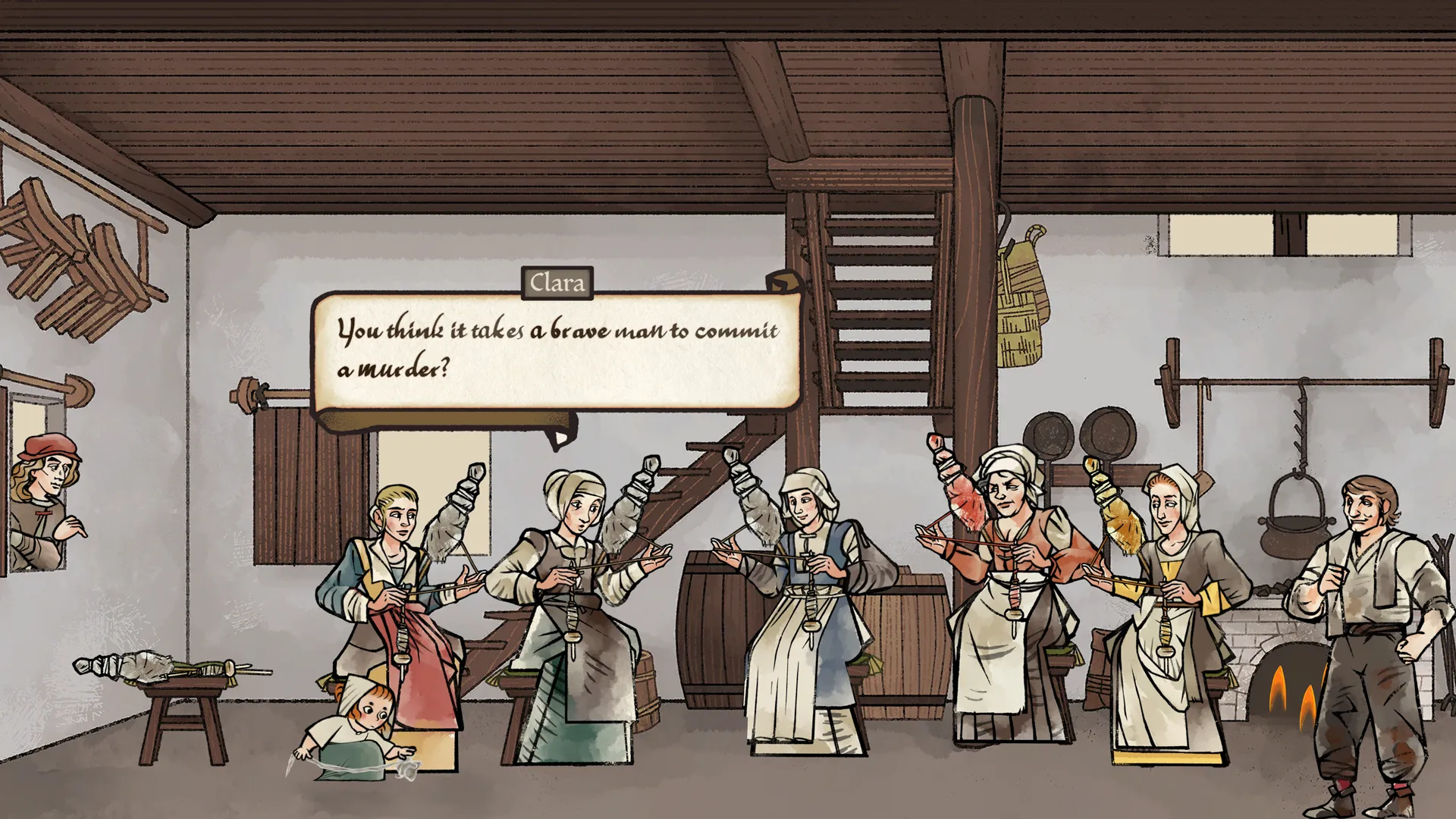
When I joined the RPGFan editorial team early last year, one of my inaugural assignments was to review the Nintendo Switch port of Obsidian Entertainment’s Pentiment. A medieval murder mystery that defies traditional genre constraints, the game immediately struck a chord with our staff. However, I found myself grappling with a specific internal question: how does a piece of interactive digital media hold up against its primary literary progenitor, Umberto Eco’s seminal 1980 novel, The Name of the Rose?
To answer this, I have revisited both works, embarking on a comparative analysis that peels back the layers of history, theology, and human fallibility. Cave argumenti patefactionem—beware of light spoilers, ye who enter here.
A Matter of Perspective: The Investigator’s Lens
The Name of the Rose unfolds over one harrowing, revelational week in 1327 within an Italian Benedictine abbey. The narrative follows William of Baskerville, a sharp-witted former inquisitor, and his young novice, Adso. The parallels to Sherlock Holmes and Dr. Watson are intentional, with Adso serving as the reflective narrator writing of the events decades later. William’s deductive brilliance serves as the novel’s engine, though Eco frequently detours into dense, high-brow treatises on theological rhetoric and the schisms of the 14th-century Church. It is a work for scholars, by scholars.
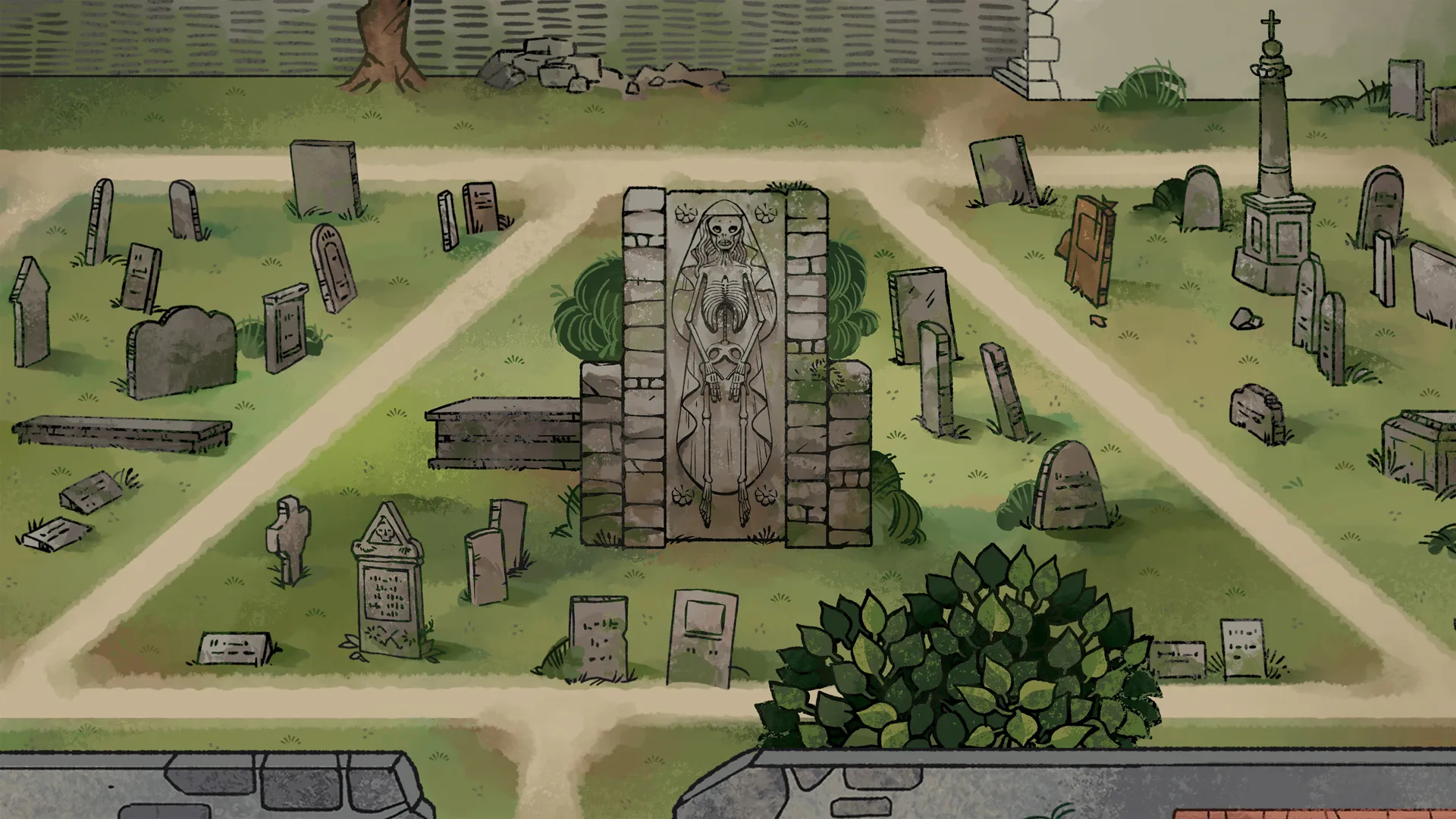
In contrast, Obsidian’s Pentiment takes a more grounded approach. Set in the Alpine town of Tassing and the nearby Kiersau Abbey between 1518 and 1543, it follows Andreas Maler, a journeyman artist. Unlike the cloistered monks of Eco’s world, Andreas is a man of the world. Through the game’s RPG mechanics, the player shapes Andreas—he can be a devout man of faith or an occult-curious skeptic. By shifting the perspective from a high-ranking cleric to a common artist who interacts with peasants, innkeepers, and craftspeople, Pentiment offers a more accessible entry point into the complexities of late-medieval life.
Chronology and Scope: From a Week to a Lifetime
The structural divergence between the two works is profound. The Name of the Rose is claustrophobic and breathless, structured like a 14th-century 24, where each chapter marks a specific hour of the monastic day. It is an exercise in tension, where the apocalypse seems perpetually imminent.
Pentiment, however, spans three acts across 25 years. It is a slow burn that tracks the ripples of a single event through generations. While the murders serve as the catalyst, the game’s true narrative weight lies in the social evolution of Tassing. Where Eco uses the passage of time to demonstrate the rigidity of the Church, Obsidian uses it to show the shifting tides of history, touching upon the looming Protestant Reformation and the changing socioeconomic landscape of the Holy Roman Empire.
Supporting Data: The Architecture of Knowledge
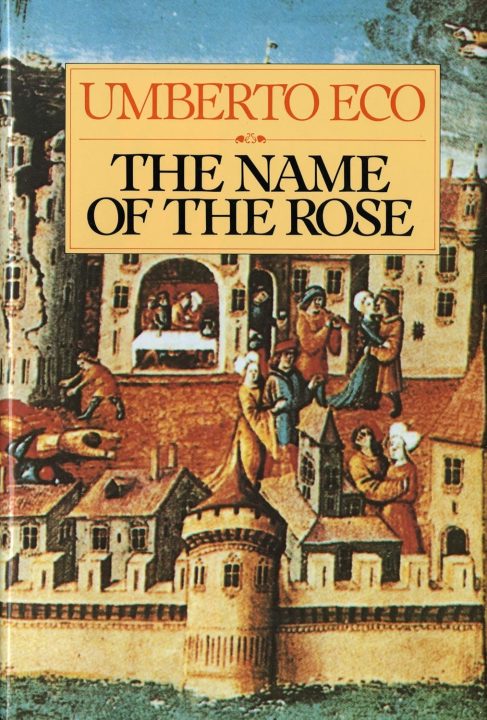
Both narratives are fundamentally concerned with the aphorism scientia potentia est—knowledge is power. In both works, the central conflict is housed within a forbidden, labyrinthine library.
In Eco’s novel, the library is an impenetrable fortress of knowledge, protected by lethal traps and guarded by those who believe certain truths are too dangerous for the laity. Pentiment borrows this motif explicitly; at one point, Andreas discovers a manuscript page containing a map of the very library layout described in Eco’s book. This is more than a "wink" to the reader; it is an acknowledgement of a shared thematic lineage. Both works posit that the "truth" is often sacrificed at the altar of institutional stability. The perpetrators in both stories commit atrocities under the guise of protecting the faith or the status quo, effectively painting over reality until it is obscured.
Sociopolitical Implications: Gender and Agency
Perhaps the most striking departure between the two works is their treatment of gender. The Name of the Rose is almost entirely devoid of female presence, save for a singular, tragic peasant girl who serves as a catalyst for the monks’ repressed desires before being burned for witchcraft. She is a symbol, not a character.
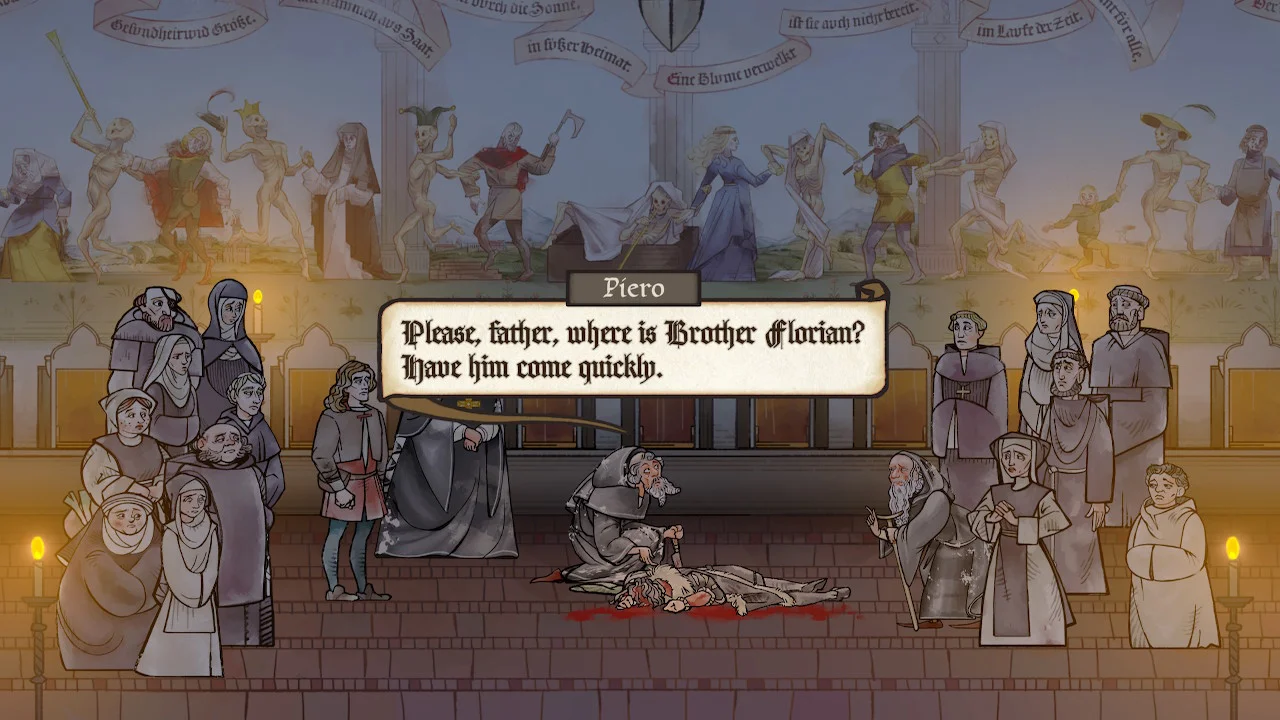
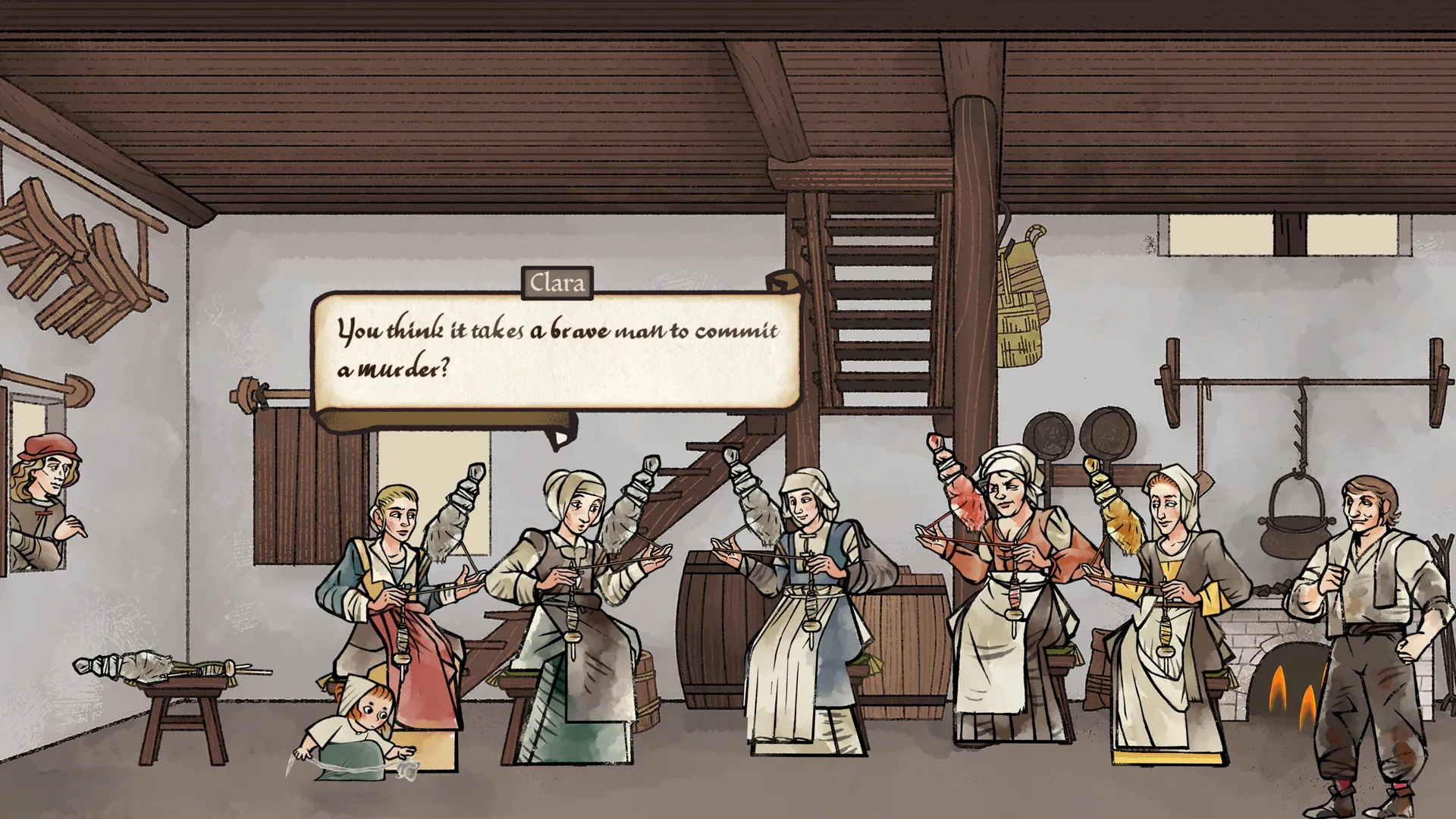
Pentiment consciously corrects this omission. By including both monks and nuns, and by centering the lives of women like the resilient widow Ottilia or the intellectual Magdalene, the game breathes humanity into its setting. Magdalene, who emerges as the protagonist of the third act, represents a pivot toward modern agency. She defies the patriarchal structures of Tassing, balancing her mural work with the heavy burden of investigation. The game does not shy away from the harsh realities of the era—sexual assault, systemic disenfranchisement, and the threat of violence against women—but it provides these characters with a voice that Eco’s 14th-century setting largely silences.
Official Context: The Meaning of the Titles
In his afterword, Umberto Eco explained his choice of a rose is a symbol so rich and overdetermined that it eventually becomes empty of meaning. He believed the author must "die" after finishing a book, leaving the interpretation to the reader.
Pentiment, conversely, takes its name from pentimento—the Italian term for the ghostly traces of an artist’s initial brushstrokes that remain beneath a finished painting. In the context of the game, this is a metaphor for history itself. The "truth" is never a clean image; it is a stack of revisions, erasures, and repaints. As players and readers, we are not just observing history; we are actively participating in the act of uncovering these traces, deciding which layers of the past are worth preserving and which are merely shadows of a lost reality.
Concluding Thoughts: The Murmuring Parchment
As Adso reflects in his old age, the library is a place of "centuries-old murmuring," a dialogue between parchments that survives the death of its authors. Both The Name of the Rose and Pentiment succeed because they treat the past not as a dead, static object, but as a living conversation.
While The Name of the Rose remains a towering achievement in high-concept historical fiction, Pentiment offers a vital, humanist expansion of those same themes. Through its branching narrative and its focus on the common folk, Obsidian has created a digital "palimpsest"—a work that invites us to look closer, question the authority of the narrator, and acknowledge that the truth is rarely singular. In the end, both the novel and the game serve as a reminder that while the centers may not hold, the stories we tell about the past remain the most powerful tools we have to understand our own uncertain present.












No comments yet. Be the first to join the conversation!