Layla Zulfa
In the highly saturated landscape of the Quick Service Restaurant (QSR) industry, where price wars and promotional fatigue often dominate the narrative, Papa Johns is attempting a sophisticated pivot. Under the leadership of CMO Jenna Bromberg, who joined the brand in November 2024, the company is moving beyond mere discounting, opting instead for a strategy rooted in cultural relevance, technological integration, and global brand cohesion.
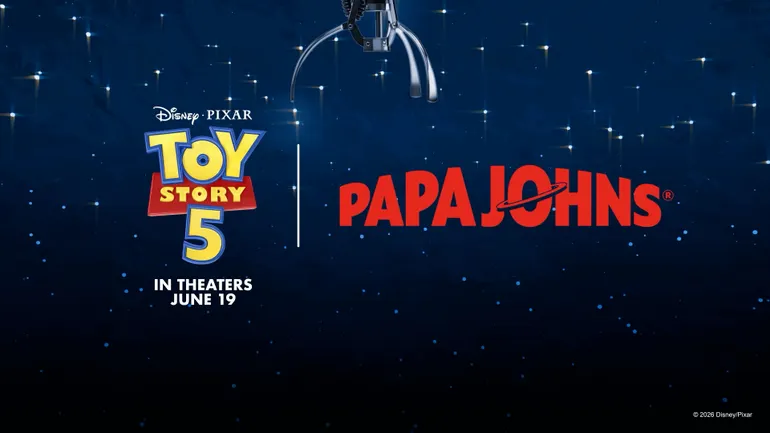
This week, the chain unveiled its most ambitious maneuver to date: a massive international partnership with Disney and Pixar to support the June 19 release of Toy Story 5. This collaboration represents a watershed moment for the pizza giant, serving as both a celebration of the film’s multigenerational appeal and a calculated effort to revitalize the brand’s market position amidst a challenging financial climate.
A Chronology of Creative Disruption
Since Bromberg’s arrival, Papa Johns has aggressively shed its traditional marketing skin. The brand has prioritized "cultural relevance" through a series of unconventional activations designed to capture social media attention and deepen consumer engagement.
- Late 2024 – Early 2025: Following Bromberg’s onboarding, the brand launched a string of "viral-first" campaigns. These included quirky, limited-edition merchandise like garlic sauce-scented bath bombs and dough-shaped stress balls. The intent was clear: to move Papa Johns from a transactional utility to a lifestyle brand.
- Mid-2025: The brand expanded its reach through physical activations, including deli-themed pop-ups in Los Angeles designed to promote its foray into oven-toasted sandwiches. Simultaneously, the company launched a tongue-in-cheek campaign aiming for a Michelin star, signaling a newfound confidence in its culinary quality.
- Early 2026: The company leaned into operational efficiency with the launch of "Lou AI," an artificial intelligence-powered ordering agent developed in collaboration with Google Cloud.
- May 2026: The official announcement of the global Disney/Pixar Toy Story 5 partnership marked the culmination of this 18-month momentum-building phase.
Supporting Data: Navigating a "Difficult Consumer Environment"
Despite the creative flair, the cold reality of the QSR market remains. Papa Johns recently reported a 6.4% decrease in North American comparable sales compared to the previous year. This dip reflects a broader industry trend where inflation-weary consumers are pulling back on discretionary spending, forcing brands into a "race to the bottom" regarding promotional pricing.
However, Bromberg views the current market volatility not as a failure of the brand, but as an opportunity to sharpen its value proposition. "Value is what you get for what you pay," Bromberg stated in an interview with Marketing Dive. She emphasized that while competitors focus strictly on price, Papa Johns continues to leverage its "better ingredients, better pizza" mantra, bolstered by the inclusion of its signature free garlic sauce and peperoncini—items that, while small, act as powerful differentiators in the eyes of the consumer.
The company is also doubling down on its "Papa Pairings" menu, a $6.99 mix-and-match platform that serves as a cornerstone of its value strategy. By consistently refreshing this menu with new items, the brand aims to maintain affordability without eroding its premium positioning.
The Toy Story 5 Partnership: A Global Blueprint
The collaboration with Disney and Pixar is significant not only for its scale but for its scope. For the first time, Papa Johns is executing a global program across more than 40 countries.
"There are not a lot of franchises out there that have this kind of enduring staying power and multigenerational appeal," Bromberg explained. "This isn’t just a North America program. It’s something that spans the planet."
Key Elements of the Collaboration:
- Collectible Packaging: The brand is releasing three illustrated, character-themed pizza boxes.
- Character-Inspired Recipes: A trio of new menu items, each featuring unique flavor profiles, will be introduced alongside a new "Rootin’ Tootin’ Ranch Dip."
- Integrated Digital Experiences: The partnership includes a dedicated in-app game for Papa Rewards members, allowing them to earn points toward "Papa Dough."
- Cinematic Integration: The television spots feature original animation from Pixar, placing beloved characters directly into a Papa Johns kitchen to emphasize the "better ingredients" story.
Crucially, the partnership hints at a deeper narrative alignment. With the film’s fictional "Pizza Planet" acting as a cultural touchstone for fans, Bromberg suggested that the chain may tap into this in-universe lore in meaningful ways throughout the promotional window.
Technological Transformation and Loyalty Evolution
Beyond the silver screen, Papa Johns is betting heavily on data-driven personalization. The brand’s loyalty program, which underwent a major overhaul in late 2024 to function as a "cashback-style" system, remains the primary engine for consumer retention.
"Loyalty has been a significant engine for us for years," Bromberg noted. By utilizing first-party data, the brand has transitioned from generic mass-market offers to personalized incentives based on individual taste preferences.
The integration of Lou AI represents the next phase of this digital journey. Developed with Google Cloud, the tool solves the common consumer friction point of "group ordering anxiety." By calculating how much pizza is needed for a specific number of guests and applying relevant deals automatically, the AI creates a frictionless, hands-free ordering experience. According to Bromberg, the early results are promising, with more collaborative projects with Google currently in the pipeline.
Operational Strategy: The Return of the Co-op
A pivotal component of the current turnaround is the reintroduction of marketing co-ops. With approximately 50 co-ops now covering 50% of the system, Papa Johns is decentralizing its outreach to better serve local communities.
"Pizza is a game played nationally but won locally," Bromberg remarked. This structure allows franchisees to engage in hyper-local marketing—sponsoring Little League teams, local colleges, or Chamber of Commerce events—while maintaining a cohesive connection to the national brand. This synergy ensures that local carry-out offers and national innovation messages (like the Toy Story campaign) do not compete, but rather amplify one another.
Implications for the Brand’s Future
The shift toward Leo Chicago as the brand’s agency of record six months ago signaled a strategic pivot in visual storytelling. Having moved through the "Meet the Makers" campaign, which highlighted the human element of pizza crafting, the brand is now entering a phase of "product romanticization."
By focusing on the product through high-quality creative work, Papa Johns is attempting to reclaim the narrative of "better" in a world where consumers are increasingly skeptical of fast food quality. The implication of these combined moves—the Disney partnership, the AI investment, and the local co-op model—is a brand that is attempting to become "omnipresent" in the customer’s life, not just through discounted food, but through shared cultural experiences and technological ease.
Whether these efforts will be enough to reverse the 6.4% decline in comparable sales remains to be seen. However, in the high-stakes world of QSR, Papa Johns has clearly decided that waiting for the market to improve is not an option. Instead, the company is betting that by aligning itself with global icons and leaning into the precision of AI and local community engagement, it can carve out a more resilient, relevant, and profitable future.
As the Toy Story 5 campaign hits full stride this June, the industry will be watching closely to see if a box of pizza can indeed hold the same cultural weight as one of the world’s most enduring film franchises.

 Lina Hope
 Siti Muinah