Asep Darmawan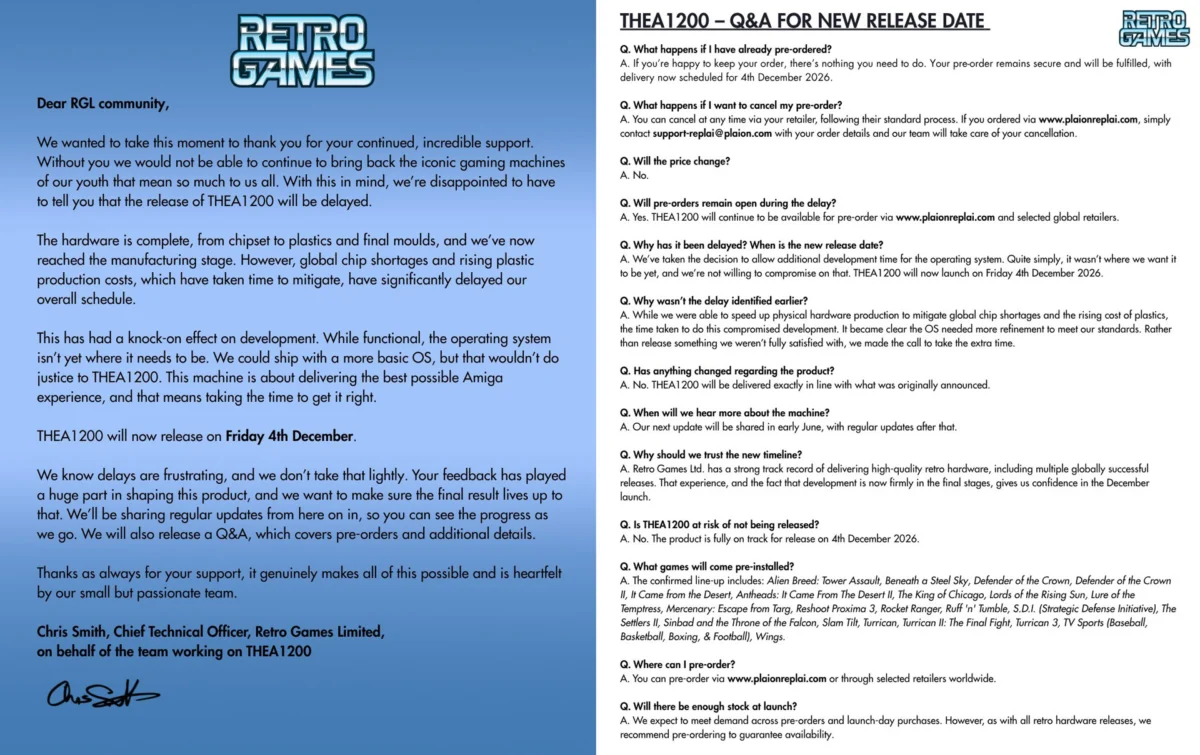
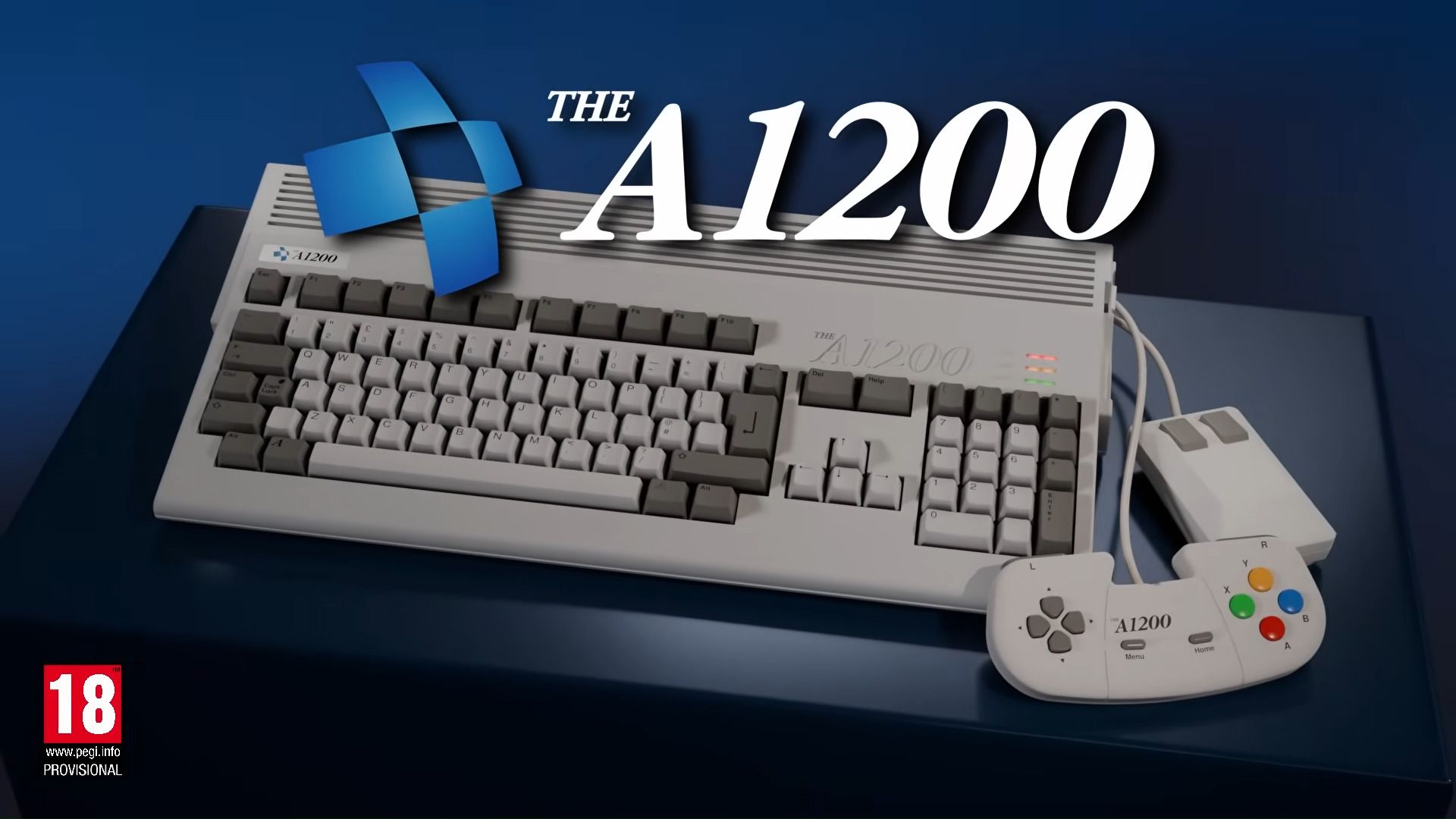
The promise of reliving the golden age of 16-bit computing has hit a significant snag. Retro Games Limited (RGL), the company celebrated for its faithful recreations of iconic hardware, has officially announced that the highly anticipated release of TheA1200—a full-sized, Commodore Amiga-emulating computer—has been pushed back by nearly six months.
For enthusiasts who have been waiting in anticipation since the product was first opened for pre-orders in November 2025, the news comes as a blow. The device, which was originally scheduled to reach doorsteps on June 16, 2026, will now not be available until December 4, 2026. This delay underscores the persistent volatility in the global hardware market, even for manufacturers operating within the niche retro-gaming space.
A Chronology of the Anticipation
The journey of TheA1200 has been marked by high expectations and a design philosophy focused on authenticity. When RGL first teased the project, the retro-computing community was electrified. The A1200 was, after all, one of the most beloved iterations of the Amiga line, known for its advanced graphics and sound capabilities that set the standard for early 90s home computing.
- November 2025: Retro Games Limited officially opens pre-orders for TheA1200. The announcement promised a faithful, full-sized reproduction equipped with modern conveniences like an HDMI output, a functional mechanical keyboard, and a curated library of 25 classic Amiga titles.
- Early 2026: Throughout the spring, community forums and social media channels were abuzz with speculation regarding the final build quality and the specific implementation of the emulation software.
- June 2026 (The Original Deadline): The date circled on every retro fan’s calendar arrived without the expected hardware shipments.
- Mid-June 2026: In a candid social media update, RGL confirmed the six-month delay, moving the official shipping date to December 4, 2026.
The Factors Behind the Delay
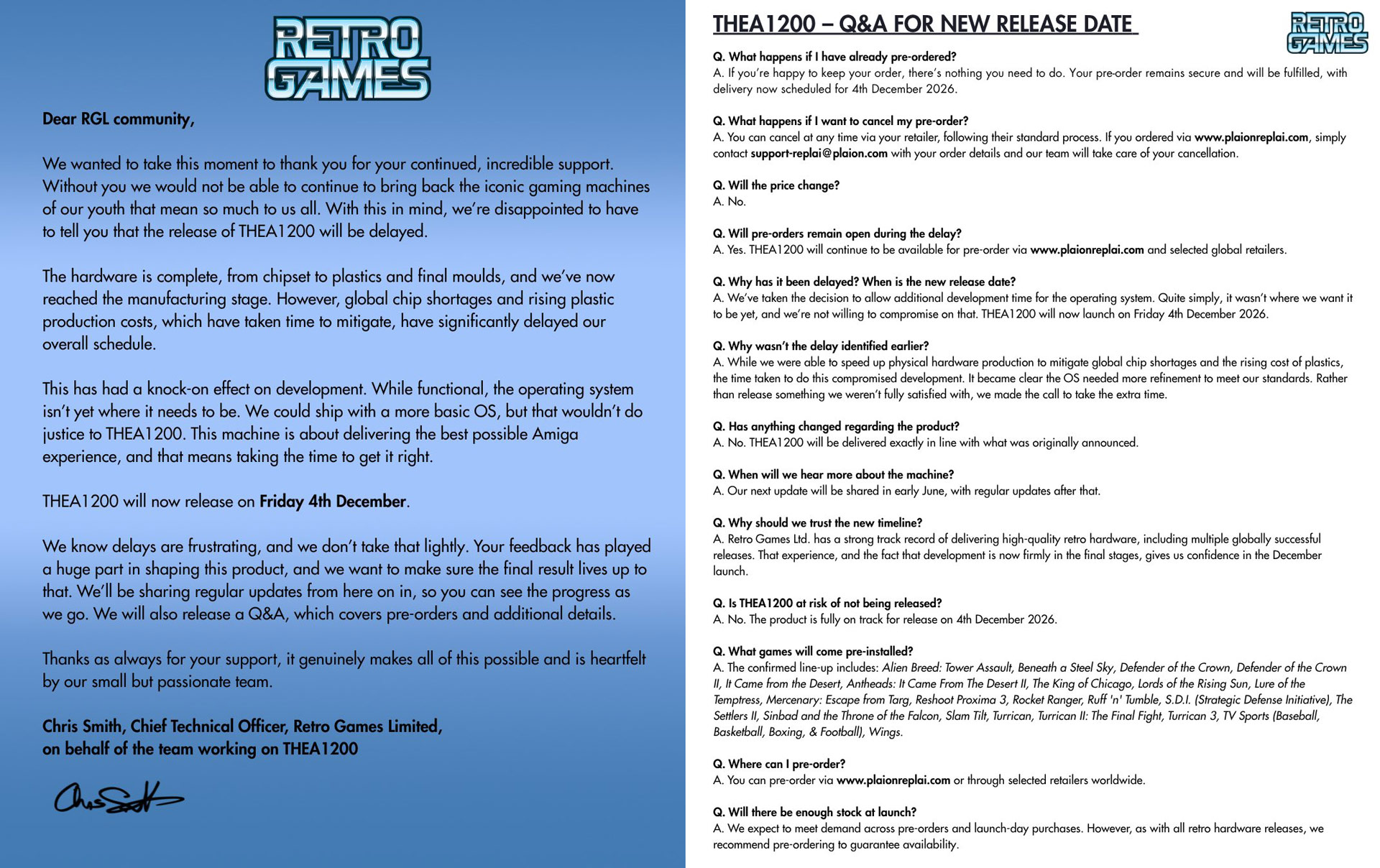
Retro Games Limited has been transparent about the reasons behind this postponement, citing a “perfect storm” of supply chain complications and production overheads. In their official statement, the company pointed to two primary culprits: global chip shortages and rising plastic production costs.
The Impact of Component Scarcity
Despite the tech industry’s efforts to stabilize the semiconductor market, high-end specialized components—even those required for retro-emulation hardware—remain subject to the whims of global supply chains. For a boutique manufacturer like RGL, securing consistent access to these chips is a hurdle that can derail even the most carefully planned production schedules.
Rising Material Costs
Furthermore, the cost of manufacturing high-quality, injection-molded plastics has seen a steady incline. Given that TheA1200 aims for a “full-size” form factor to mimic the original 1992 aesthetic, the volume of plastic required per unit is significant. As production costs for these materials rise, companies must either sacrifice quality or adjust timelines to accommodate more sustainable procurement strategies. RGL has opted for the latter, ensuring that the physical build of the device remains true to their initial quality specifications.
Software Refinement: "Getting it Right"
Beyond hardware supply issues, RGL has admitted that the software experience—the heartbeat of the machine—requires further polish. In their statement, they noted that the OS for TheA1200 “isn’t yet where it needs to be.”
While the current build is functional, RGL emphasizes that they are not willing to ship a product that feels like a compromise. For a device built on nostalgia, the "feel" of the OS—the responsiveness of the Workbench interface, the accuracy of the audio emulation, and the seamlessness of game loading—is paramount. The development team is reportedly using this extra time to refine the user experience, ensuring that when the machine finally reaches consumers, it offers the "best possible Amiga experience."
Official Response and Consumer FAQ
Recognizing the frustration among those who have had their funds tied up in pre-orders for months, RGL has published an extensive FAQ to manage expectations and provide clarity.
Key takeaways from the company’s stance include:
- Price Stability: Despite inflation and increased production costs, RGL has confirmed that the price will remain at the original pre-order rate. There will be no surcharges or price hikes for existing orders.
- Hardware Integrity: The specifications for the machine will remain unchanged. The company is committed to delivering the hardware they originally promised, with no downgrades to components or features to save costs.
- Cancellation Rights: While RGL hopes customers will stick with the project, they have reiterated that pre-orders are refundable for those who find the wait intolerable.
- Firm Commitment: RGL has stated unequivocally that the December 4, 2026 date is their firm target, and they are fully on track to meet that deadline.
The Competitive Landscape
TheA1200 occupies a unique position in the market. Priced at $189.99, it sits in a competitive bracket, especially when compared to RGL’s own previous offering, TheA500 Mini.
The A500 Mini, which retails for approximately $218.95, has been widely praised for its emulation capabilities. However, it lacks the full-size keyboard that defined the Amiga experience for millions of users. TheA1200’s appeal is, therefore, primarily aesthetic and ergonomic. It provides the "real feel" of the original hardware, which is a major draw for collectors and long-time fans who want to replicate the setup they had in their bedrooms or offices decades ago.
Furthermore, in a 2026 market where the cost of entry for hobbyist computing—including Raspberry Pi boards and other Single Board Computers (SBCs)—has been rising due to AI-driven chip demand, $189.99 remains an attractive price point for a complete, plug-and-play solution.
Implications for the Retro Market
The delay of TheA1200 serves as a broader reminder of the fragility of the retro-gaming hardware ecosystem. As companies move from software-only emulation to physical "mini" or "full-size" hardware manufacturing, they are subject to the same pressures as major consumer electronics firms.
For the enthusiast community, this event has triggered a mixed reaction. While disappointment is the dominant emotion, there is also a palpable sense of pragmatism. Many in the retro-computing space would rather wait for a polished, finished product than receive a rushed, buggy, or cheapened device. The "it’s ready when it’s ready" philosophy is becoming increasingly common among consumers who value the longevity and authenticity of these nostalgic projects.
The Road to December
As we look toward December 2026, the success of TheA1200 will depend on RGL’s ability to communicate clearly and deliver on their promise of a high-quality, reliable machine. If they succeed, TheA1200 will likely be remembered as a high-water mark for retro-computing hardware. If the delays continue, however, it may test the patience of even the most dedicated fans, potentially signaling a need for companies like RGL to adjust their pre-order cycles to better align with the realities of modern global manufacturing.
For now, the wait continues. TheA1200 remains a project of immense potential, promising to bring the spirit of Commodore back to modern living rooms—provided that the final product can bridge the gap between 1992 hardware design and 2026 manufacturing realities.

 Nana Muazin
 Pevita Pearce