

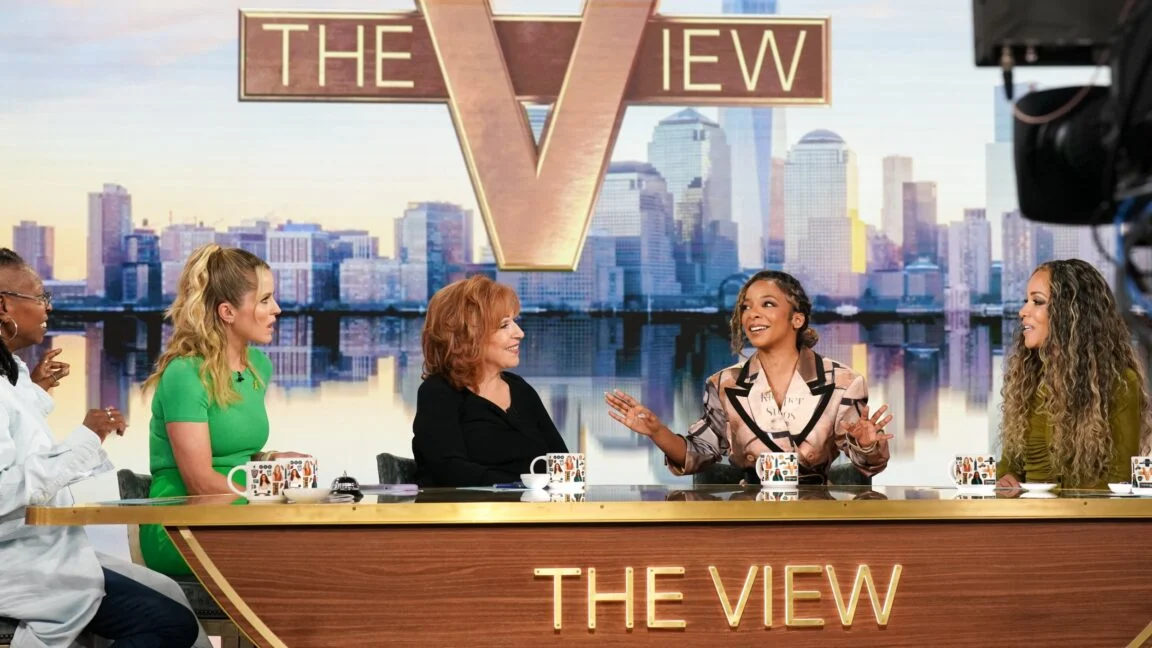
In an escalating confrontation that pits the principles of the First Amendment against the regulatory power of the federal government, ABC has formally pushed back against the Trump administration’s aggressive oversight of its broadcast content. The network, owned by The Walt Disney Company, filed a sweeping legal response this week, arguing that the Federal Communications Commission (FCC)—under the leadership of Chairman Brendan Carr—is engaging in unconstitutional viewpoint discrimination and an unprecedented abuse of administrative authority.
The core of the dispute centers on the FCC’s attempts to police the political content of The View, one of daytime television’s most influential talk shows. By questioning the show’s long-standing status as a "bona fide news interview program," the FCC is threatening to impose the "equal-time rule"—a regulation that would force the network to provide equal airtime to all opposing political candidates, effectively crippling the show’s ability to conduct organic, unscripted interviews.
A Chronology of Conflict: From Jokes to License Reviews
The current stand-off did not emerge in a vacuum; it is the culmination of a months-long campaign by the Trump administration to exert control over broadcast networks that have historically been critical of the White House.
The tension reached a boiling point earlier this year when President Donald Trump and First Lady Melania Trump publicly demanded that ABC terminate late-night host Jimmy Kimmel. The demand followed a segment in which Kimmel made jokes that the White House deemed offensive. Within 24 hours of that public demand, the FCC initiated an unusual and aggressive review of ABC’s broadcast licenses—a move widely interpreted by legal experts and media advocates as a direct, retaliatory effort to punish the network for its editorial choices.
Key Timeline:
- 2000–2002: ABC secures a declaratory ruling from the FCC confirming that The View qualifies as a bona fide news interview program, granting it an exemption from the equal-time requirements of Section 315(a) of the Communications Act.
- 2024: ABC settles a $15 million defamation lawsuit brought by Donald Trump regarding statements made by George Stephanopoulos.
- September 2025: ABC briefly suspends Jimmy Kimmel following initial threats from FCC Chairman Brendan Carr regarding broadcast standards.
- February 2026: The FCC launches a formal investigation into The View, alleging non-compliance with equal-time rules.
- April 2026: The FCC Media Bureau issues an "extraordinary order" demanding the early filing of all ABC license renewal applications, citing an ongoing probe into the network’s diversity, equity, and inclusion (DEI) policies.
- June 2026: ABC files a comprehensive legal challenge, asserting that the FCC is exceeding its statutory authority and violating the First Amendment.
The Legal Argument: Challenging the "Censor-in-Chief"
ABC’s recent filing, submitted by high-profile attorneys Paul Clement and Jennifer Tatel, serves as a forceful rebuttal to the FCC’s procedural maneuvers. The document argues that the FCC’s current interpretation of the equal-time rule is a radical departure from decades of settled law.
"Some may dislike certain—or even most—of the viewpoints expressed on The View or similar shows," the filing states. "Such dislike, however, cannot justify using regulatory processes to restrict those views… The danger is that the government will simply decide which perspectives to regulate and which to leave undisturbed."
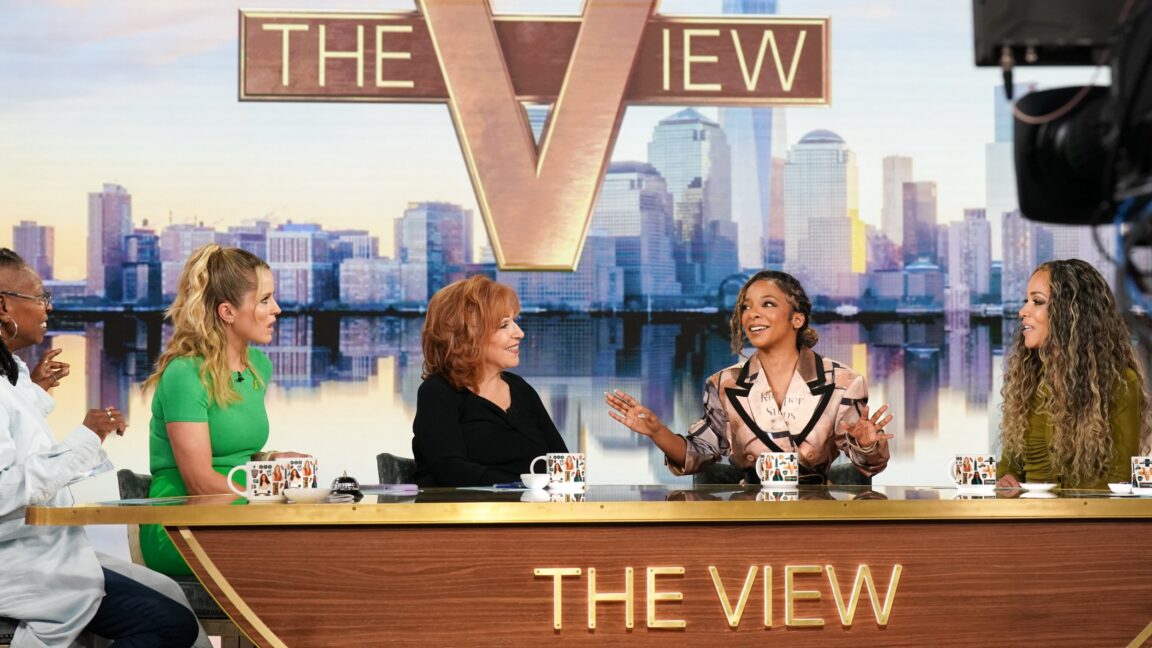
The network’s legal team points to a glaring inconsistency in how the FCC applies these rules. While the Commission has launched an exhaustive investigation into The View, it has conspicuously avoided applying the same rigorous scrutiny to conservative-leaning broadcast radio programs. ABC argues that this selective enforcement constitutes "viewpoint discrimination," a clear violation of the First Amendment rights of broadcasters to exercise editorial discretion.
Supporting Data and the DEI Probe
The FCC’s justification for its heavy-handed licensing review has shifted over time. While the equal-time investigation is the primary public focus, the Commission has simultaneously demanded that Disney and ABC provide exhaustive documentation regarding their internal DEI practices.
According to filings, Disney has already complied with the request to a significant degree, submitting over 11,000 pages of internal documents and responding to extensive inquiries. Despite this, the FCC deemed the response "inadequate," leading to the demand for early license renewal filings across all of the company’s television stations.
Legal observers have noted that this "paperwork war" is a classic regulatory tactic designed to exhaust the resources of a target. By forcing a massive administrative burden upon the network, the Commission hopes to induce self-censorship—a chilling effect that advocacy groups like the Foundation for Individual Rights and Expression (FIRE) have warned against.
Official Responses and Industry Backlash
The FCC’s actions have ignited a firestorm of criticism across the political spectrum. Will Creeley, legal director at FIRE, praised ABC’s decision to stand its ground. "The Federal Communications Commission is not and cannot become the nation’s censor-in-chief, as its chairman once recognized," Creeley stated.
The sentiment was echoed by Seth Stern of the Freedom of the Press Foundation, who characterized the FCC’s legal theories as "frivolous and unconstitutional." Stern added, "It’s about time news outlets start telling Carr and his Donald Trump lapel pin to kick rocks."
Internal support for a fight has also emerged from within the Commission itself. Anna Gomez, the sole Democrat on the FCC, issued a pointed statement on social media, praising Disney for "choosing courage over capitulation" and noting that the public will remember which entities allowed themselves to be intimidated by executive overreach and which ones stood for the independence of the press.

Even among some conservative circles, the abuse of the FCC’s regulatory power has been met with discomfort. Senator Ted Cruz, among others, has previously condemned the use of license reviews as a tool for political retribution, noting that such precedents could just as easily be used against conservative media outlets in the future.
Implications for the Future of Broadcast Journalism
The outcome of this struggle will have profound implications for the future of American broadcast media. If the FCC succeeds in redefining what constitutes a "bona fide news program," it effectively gains the power to curate the guest lists and political discourse of every major network in the country.
1. The Erosion of Editorial Independence
If the FCC is permitted to bypass established legal standards through administrative orders, the barrier between political power and media content will collapse. Networks may be forced to abandon controversial political segments or risk the loss of their broadcasting licenses, which are the lifeblood of their business.
2. The Precedent of Retaliation
The use of license renewals as a weapon against a network’s talent—specifically in the case of the Jimmy Kimmel dispute—establishes a dangerous precedent. It suggests that if an entertainer offends a sitting president, the government can leverage the administrative state to threaten the livelihood of the network that employs them.
3. The Role of the Courts
As ABC notes in its filing, these "abrupt and substantial" changes in long-established policy require the oversight of the courts. The case is likely headed for a protracted legal battle that will test the limits of the FCC’s authority under the Communications Act and the extent to which the First Amendment protects broadcasters from federal retaliation.
As the 2026 midterm elections approach, the role of independent journalism is more critical than ever. ABC’s refusal to yield suggests that the network is betting on the judiciary to uphold the protection of free speech. For the American public, the result of this battle will determine whether the airwaves remain a forum for diverse viewpoints or become a government-sanctioned echo chamber.
For now, the legal filing stands as a line in the sand. Whether the FCC will withdraw its demands or continue to pursue its aggressive regulatory agenda remains to be seen, but one thing is clear: the era of quiet compliance in the face of political pressure has ended.












No comments yet. Be the first to join the conversation!