

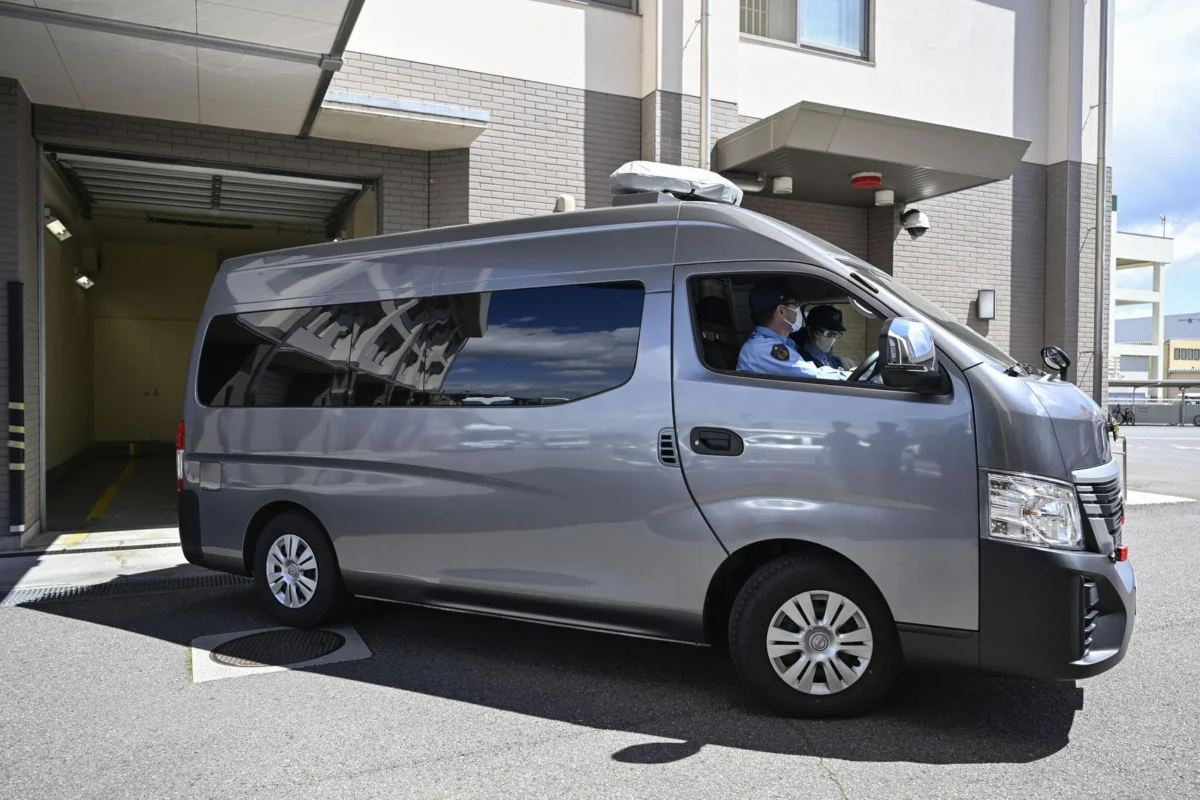
FUKUSHIMA, Japan — A tragic expressway collision that claimed the life of a 17-year-old student athlete has evolved into a sprawling investigation, revealing a disturbing pattern of previous traffic incidents involving the driver and systemic failures in regulatory oversight. As authorities comb through the wreckage and records, the incident has sparked a national debate regarding the safety standards of chartered school transport in Japan.
Main Facts: A Preventable Tragedy
The collision occurred on the morning of Wednesday, [Current Week], on the Banetsu Expressway in Fukushima Prefecture. A minibus, chartered to transport members of a boys’ high school tennis team from Niigata City to a tournament, struck a guardrail with violent force. The impact resulted in the death of a 17-year-old passenger and left 20 others injured, including two occupants of a secondary vehicle caught in the periphery of the crash.
The driver, 68-year-old Tetsuo Wakayama, a resident of Niigata Prefecture, was arrested on-site on suspicion of professional negligence resulting in death and injury. While initial investigations are ongoing, the absence of a dashboard camera—a common safety feature in most modern Japanese transport vehicles—has complicated the reconstruction of the final moments leading up to the impact.
Investigators have confirmed that the crash site showed no skid marks, suggesting that the vehicle did not attempt an emergency stop before hitting the barrier. During preliminary interrogations, Wakayama admitted to "misjudging his speed," though he has steadfastly denied allegations that he had fallen asleep at the wheel.
Chronology of Events and Investigative Findings
The timeline of the disaster and the subsequent fallout points to a failure that extends far beyond the driver’s seat.
- Pre-2025: Wakayama served as a municipal bus driver for Tainai City in Niigata Prefecture, a role he held for three years, concluding in March 2025.
- Early 2025: Investigative sources have disclosed that Wakayama was involved in multiple traffic accidents throughout the current year, raising immediate questions about why he remained behind the wheel of a passenger-carrying vehicle.
- Wednesday Morning: The minibus departed Niigata carrying the tennis team. On the Banetsu Expressway in Fukushima, the vehicle veered into a guardrail. Emergency services arrived to find one student deceased and 20 others requiring medical attention.
- Friday: Transport authorities executed a search warrant at the offices of Kanbara Tetsudo Co., the bus operator based in Gosen, Niigata Prefecture, to seize employment records and safety maintenance logs.
- Saturday: Law enforcement sources confirmed the driver’s history of repeat accidents and the revelation that he lacked the appropriate licensure for commercial passenger transport.
Supporting Data: A History of Negligence
The most damning revelation in the case is the driver’s documented history of vehicular incidents. According to an investigative source, Wakayama had been involved in a series of traffic-related accidents earlier this year alone. This pattern of behavior is now central to the police investigation, which is attempting to determine if the bus operator, Kanbara Tetsudo Co., performed adequate due diligence when hiring Wakayama.
Furthermore, the legal status of the driver has come under intense scrutiny. It has been confirmed that Wakayama did not possess the specific category of driver’s license required under Japanese law to transport passengers for hire. This regulatory breach suggests that the safety protocols at the operating company were either willfully ignored or severely neglected.
The lack of a dashboard camera, while not strictly illegal in every context, is viewed by safety experts as a "critical oversight" for a commercial operator. Without the visual data usually provided by these cameras, investigators are forced to rely solely on forensic analysis of the road surface and the driver’s shifting testimony. The absence of skid marks, combined with the driver’s claim of speed miscalculation, leaves the door open to the theory that the driver may have been incapacitated or distracted for a significant duration before the impact.
Official Responses and Regulatory Pressure
The local and national government responses have been swift, reflecting the gravity of a case involving minors.
The Tainai city government, which employed Wakayama as a bus driver until recently, has stated it is cooperating fully with the Fukushima prefectural police. Officials are currently reviewing their own hiring records from the period of his employment to ensure that no internal procedures were bypassed during his tenure.
The Ministry of Land, Infrastructure, Transport and Tourism (MLIT) has initiated an emergency audit of Kanbara Tetsudo Co. The search conducted on Friday focused on whether the company’s internal safety management systems—which are legally mandated for all chartered bus operators—were functional. Under Japanese law, companies are required to conduct regular health checks and safety training for drivers. The fact that an unlicensed driver with a recent record of multiple accidents was operating a bus filled with students indicates a catastrophic breakdown in these mandated safety checks.
"The safety of students traveling for extracurricular activities is paramount," a spokesperson for the regional education board stated. "We are devastated by the loss of a young life and are committed to uncovering how this allowed to happen."
Implications: The Future of School Transport Safety
The tragic accident has sent shockwaves through the Niigata school system and has ignited a wider conversation about the standards governing "private" or "chartered" school transport.
1. Re-evaluating Hiring Standards
The case highlights the dangers of the "driver shortage" currently plaguing Japan’s transport sector. As the nation faces an aging workforce, companies are under pressure to hire quickly to fill shifts. Experts argue that this pressure may be leading some operators to bypass rigorous background checks on elderly drivers or those with problematic driving records.
2. Mandatory Safety Technology
The lack of a dashboard camera in this minibus is likely to serve as a catalyst for new legislation. There is growing public and political support for a mandate requiring all commercial vehicles—especially those carrying minors—to be equipped with advanced driver-assistance systems (ADAS), including automatic emergency braking and high-definition event data recorders.
3. Oversight of Private Operators
While municipal bus services are subject to strict government oversight, chartered school buses often operate in a gray area of oversight. This incident has exposed the need for more frequent and intrusive inspections of private bus operators, particularly those who contract with educational institutions.
4. Legal Accountability for Management
The investigation into Kanbara Tetsudo Co. will likely set a legal precedent. If prosecutors can prove that the company knowingly allowed an unlicensed driver with a history of accidents to operate a vehicle, the management could face severe criminal charges. This would signal a shift in Japanese law, moving toward holding corporate entities and their executives directly responsible for the actions of their employees in fatal accidents.
Conclusion
As the investigation into the Banetsu Expressway crash continues, the focus remains on the intersection of individual negligence and corporate failure. For the family of the 17-year-old student who lost his life, and for the 20 others now recovering from their physical and emotional wounds, the answers provided by this investigation will be the first step toward justice.
The incident serves as a grim reminder that in the high-stakes environment of public transportation, there is no room for administrative shortcuts. As the authorities in Fukushima prepare their case, the rest of Japan looks on, waiting for changes that will ensure such a preventable tragedy never happens again.












No comments yet. Be the first to join the conversation!