

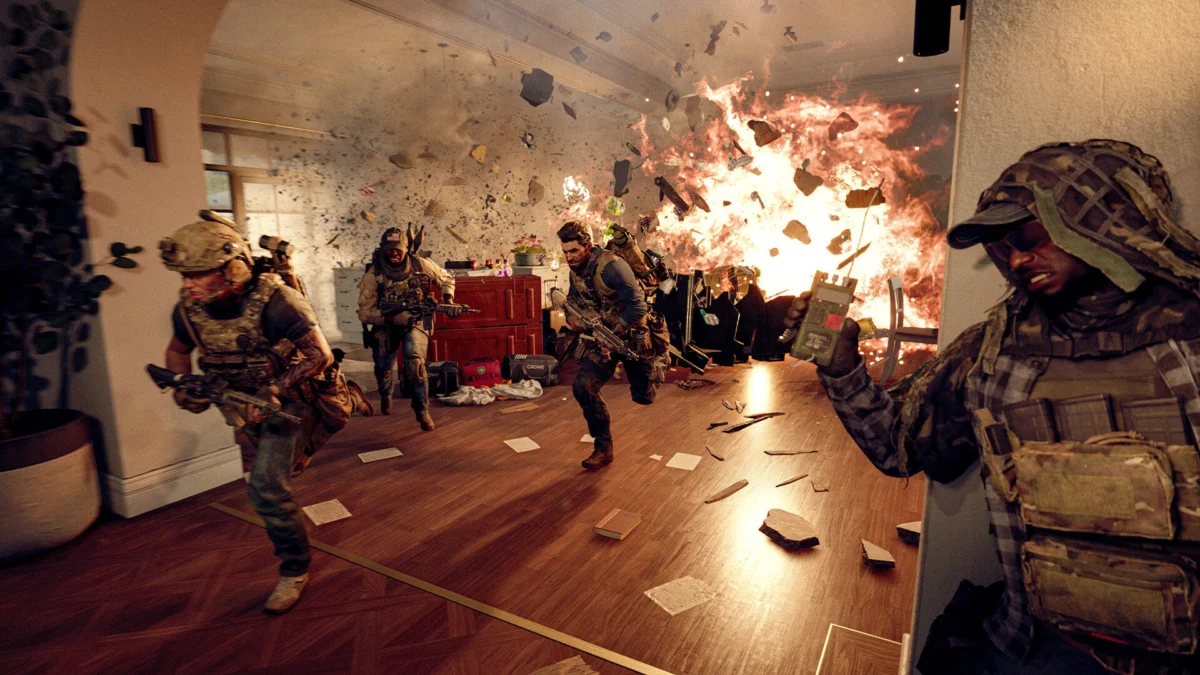
REDWOOD CITY, CA – Electronic Arts (EA) has unveiled the preliminary results for its fourth fiscal quarter and the full fiscal year ending March 31, 2026, announcing a "record" performance primarily fueled by the highly successful launch of Battlefield 6 and robust growth across its live services portfolio. While the publisher celebrated a significant 81.5% surge in net income for the latest quarter, the full fiscal year saw a 20.9% decrease in net income, highlighting a complex financial landscape that belies the headline success. The positive financial news emerges as EA navigates a monumental $55 billion acquisition, expected to finalize in the first quarter of fiscal year 2027, which will see Saudi Arabia’s Public Investment Fund (PIF) potentially holding a dominant stake in the gaming giant.
The triumphant return of the Battlefield franchise stands out as a pivotal driver for the company’s fiscal year 2026 achievements. EA declared Battlefield 6 the "best-performing Battlefield in a fiscal year, setting numerous franchise fiscal year records," underscoring the game’s critical and commercial resonance. Complementing this success, EA’s Global Football titles, including EA Sports FC 26, FC Online, and FC Mobile, reported mid-single-digit net bookings growth for the fiscal year. The battle royale phenomenon Apex Legends also contributed significantly, achieving its strongest net bookings quarter of the fiscal year in Q4, culminating in double-digit year-over-year growth for FY26, testament to its sustained player engagement and monetization strategies.
This period of record performance and strategic growth is unfolding against a backdrop of significant internal restructuring, including recent layoffs at four studios involved in Battlefield 6‘s development, and the imminent change of ownership. The dual narrative of unprecedented success and profound corporate transformation paints a vivid picture of a company in flux, poised at a critical juncture in its storied history.
Main Facts: A Year of Records and Contradictions
Electronic Arts’ financial disclosure for the fiscal year ending March 31, 2026, paints a multifaceted picture of success tempered by underlying complexities. The headline "record" fiscal year is primarily attributed to exceptional revenue generation and player engagement metrics across key titles, particularly the newly launched Battlefield 6. This title, positioned as a flagship release for the year, not only met but exceeded internal expectations, establishing new benchmarks for the venerable first-person shooter series. Its performance is reported to have set "numerous franchise fiscal year records," suggesting unprecedented sales figures, player acquisition rates, or perhaps recurring revenue from in-game purchases and digital content.
Beyond the monumental success of Battlefield 6, EA’s diversified portfolio of live service games demonstrated remarkable resilience and growth. The Global Football ecosystem, now rebranded under EA Sports FC, showcased robust mid-single-digit net bookings growth for FY26. This encompasses the mainline console and PC title EA Sports FC 26, alongside its popular regional variations FC Online and the highly accessible FC Mobile. This sustained growth underscores the enduring appeal of EA’s football simulation and its successful transition post-FIFA licensing.
Further bolstering the live services segment, Apex Legends delivered its strongest financial quarter of the fiscal year in Q4. This performance reflects a sustained momentum in player engagement and monetization, culminating in impressive double-digit net bookings growth year-over-year for the entire fiscal year. The continuous evolution of Apex Legends through seasonal updates, new characters, and engaging battle passes has clearly resonated with its global player base.
However, the celebratory tone of record performance is juxtaposed with a significant financial nuance: while net income surged by 81.5% in the fourth quarter, the full fiscal year saw a 20.9% decline. This discrepancy suggests that while the latter part of the year, driven by Battlefield 6 and strong live service performance, was highly profitable, earlier periods might have been marked by higher operational costs, significant investments in development and marketing, or perhaps the amortization of previous expenses. It could also indicate a strategic shift in revenue recognition or significant one-time charges earlier in the fiscal year.
This period of financial growth and operational success is unfolding concurrently with major strategic shifts for the company. In March, EA undertook a series of layoffs affecting an undisclosed number of employees across four studios involved in the Battlefield 6 development. This move, framed by the publisher as an effort to "better align our teams around what matters most to our community," signals a drive for efficiency and focused development even amidst a successful launch. Most notably, the company is on the cusp of a transformative $55 billion acquisition, overwhelmingly backed by shareholders, which is expected to transfer a significant majority stake, potentially over 93.4%, to Saudi Arabia’s Public Investment Fund. This impending acquisition represents a seismic shift for one of the world’s largest interactive entertainment companies, promising profound implications for its future direction and the broader industry.
Chronology: A Fiscal Year in Review
The fiscal year 2026 for Electronic Arts has been a whirlwind of strategic maneuvers, significant game releases, and profound corporate developments. The narrative of the year is punctuated by several key events that have collectively shaped its financial outcomes and future trajectory.
Pre-Launch Hype and Battlefield’s Legacy (Early FY26 – Q3 FY26):
The anticipation for Battlefield 6 had been building for years, following a mixed reception for its predecessors, particularly Battlefield V and the ambitious but often criticized Battlefield 2042. The franchise, renowned for its large-scale warfare, destructible environments, and class-based combat, carried the weight of player expectations for a return to its roots while innovating for a new generation of hardware. Early in FY26, EA likely ramped up its marketing machine, teasing features, showcasing impressive graphical fidelity, and engaging with the community to gauge sentiment. The development process, spanning multiple studios, was a massive undertaking, requiring significant investment in talent, technology, and infrastructure. This period was crucial for setting the stage for what EA hoped would be a franchise revival, learning lessons from past entries and aiming for a robust, polished launch experience.
The Pivotal Launch of Battlefield 6 (Q4 FY26):
The culmination of years of development arrived in the fourth fiscal quarter with the global launch of Battlefield 6. The immediate success of the title, as highlighted by EA’s "record-setting" declarations, indicates a strong critical reception and overwhelming commercial performance. This success likely translated into millions of units sold within the quarter, robust digital sales, and a vibrant player base engaging with its online multiplayer modes. The game’s performance significantly boosted EA’s Q4 financial results, underpinning the impressive 81.5% rise in net income for the period. This launch was not merely a financial win but a critical validation for the creative teams and a powerful statement about the franchise’s enduring appeal.
Sustained Growth in Live Services (Throughout FY26):
Parallel to the Battlefield 6 launch, EA’s live service offerings continued their strategic expansion and monetization efforts throughout FY26. The EA Sports FC brand, having successfully transitioned from the long-standing FIFA partnership, solidified its position as the premier football simulation. EA Sports FC 26 on consoles and PC, alongside FC Online for Asian markets and FC Mobile for the burgeoning mobile gaming sector, collectively demonstrated mid-single-digit growth in net bookings. This multi-platform strategy ensured broad market penetration and consistent revenue streams through ultimate team packs, season passes, and other in-game purchases.
Apex Legends, a cornerstone of EA’s free-to-play strategy, similarly exhibited consistent strength. Through regular seasonal updates, introduction of new Legends, weapon balance changes, and engaging battle pass content, the game maintained a high level of player engagement. Its performance culminated in its strongest net bookings quarter in Q4, reflecting optimized monetization strategies and a loyal player base, contributing to double-digit year-over-year growth for the entire fiscal year. These live service titles represent a stable and predictable revenue stream, balancing the high-stakes launches of premium games.
Internal Restructuring and Workforce Adjustments (March 2026):
Amidst this period of financial success, March 2026 saw EA implement workforce reductions at four studios associated with the Battlefield 6 development. While the exact number of employees affected remains undisclosed, these layoffs were framed by EA as a necessary step to "better align our teams around what matters most to our community." Such strategic realignments, often occurring post-launch, can be driven by a desire to consolidate development efforts, optimize resource allocation for future content, or pivot teams to new projects. This decision, however, underscored the often-unpredictable nature of game development careers, even within successful projects.
The $55 Billion Acquisition Saga (Q4 FY26 – Expected Q1 FY27):
The most significant corporate development of the year has been the proposed $55 billion acquisition of Electronic Arts. In the latter part of FY26, EA’s shareholders overwhelmingly voted in favor of the deal, paving the way for its expected completion in the first quarter of FY2027. This acquisition is poised to be transformative, with reports indicating that Saudi Arabia’s Public Investment Fund will own over 93.4% of the company post-transaction. Andrew Wilson, EA’s CEO, alluded to a "debt process that was met with strong investor demand" and "ongoing constructive engagement with regulators," indicating the complex financial and regulatory hurdles involved in such a massive deal. The finalization of this acquisition will mark a pivotal moment, fundamentally reshaping EA’s ownership, governance, and long-term strategic direction.
Supporting Data: Unpacking the Financials
While specific numerical details beyond percentage changes are limited in the preliminary report, EA’s characterization of its fiscal year 2026 performance allows for a qualitative understanding of its financial health. The juxtaposition of "record" performance with a full-year net income decline necessitates a deeper look at what these figures might represent in a broader context.
Revenue and Net Bookings: The Core of the "Record" Year
The declaration of a "record FY26" strongly implies that EA achieved its highest ever annual revenue or net bookings figure. Net bookings, a key metric for gaming companies, typically include net revenue from full game downloads, packaged goods, subscriptions, and other live services, adjusted for deferred revenue. The success of Battlefield 6, likely selling tens of millions of units at launch, would have provided a significant immediate boost to these figures. Given the premium pricing of AAA titles, coupled with potential deluxe editions and post-launch content, its contribution to overall bookings would be substantial.
Net Income Fluctuations: A Closer Look
The 81.5% increase in net income for the three months ending March 31, 2026 (Q4 FY26), strongly correlates with the launch window of Battlefield 6. Game launches are typically the most profitable periods, with development costs already expended and revenue flowing in. This quarterly surge suggests robust sales and effective cost management during the immediate post-launch phase.
Conversely, the 20.9% decrease in net income across the entire 12-month fiscal year ending March 31, 2026, requires further interpretation. This could be due to several factors:
- Heavy Investment in Development: The development cycles for major titles like Battlefield 6 are incredibly expensive. Costs associated with talent acquisition, technology, marketing, and prolonged development could have heavily impacted net income in earlier quarters before the game’s revenue stream fully materialized.
- Strategic Spending: EA might have made significant strategic investments in other areas, such as infrastructure for its live services, new IP development, or acquisitions, which would depress net income in the short term but aim for long-term growth.
- Amortization and Depreciation: Accounting practices related to the amortization of development costs or depreciation of assets could have been structured in a way that impacted earlier quarters more heavily.
- One-Time Charges: The company might have incurred one-time charges related to restructuring, legal settlements, or other non-recurring expenses in previous quarters that offset the strong performance of Q4.
Performance of Key Titles and Services:
- Battlefield 6: Being "the best-performing Battlefield in a fiscal year, setting numerous franchise fiscal year records," suggests not only high unit sales but potentially strong engagement with its monetization elements (e.g., battle passes, cosmetic items). This indicates a successful adoption of modern live-service strategies within a premium title.
- Global Football (EA Sports FC, FC Online, FC Mobile): "Mid-single-digit net bookings growth for FY26" is a healthy indicator for a mature franchise, especially after a significant brand transition. It demonstrates the strength of the underlying football simulation and the success of its multi-platform strategy in capturing diverse markets and player preferences.
- Apex Legends: The "strongest net bookings quarter of the fiscal year in Q4" and "double-digit year-over-year growth for FY26" are phenomenal for a free-to-play title several years into its lifecycle. This performance underscores the effectiveness of its seasonal content model, battle passes, and cosmetic item sales in continuously engaging and monetizing its dedicated player base. It highlights the long-term value creation potential of well-managed live service games.
These figures, even in their preliminary state, paint a picture of a company with strong core franchises and a robust live services strategy that can drive significant revenue, even as it navigates complex financial and corporate transitions. The strategic importance of live services in smoothing out the volatility of AAA game launches is clearly demonstrated in these results.
Official Responses: Leadership’s Perspective
Andrew Wilson, CEO of Electronic Arts, articulated the company’s perspective on the fiscal year’s achievements and the ongoing corporate transitions, emphasizing the confluence of internal talent, disciplined execution, and the power of its core intellectual properties.
Wilson’s statement, "Driven by our talented teams and disciplined execution, we delivered a record FY26, highlighted by the incredibly successful launch of our iconic Battlefield franchise," serves as a testament to the internal efforts behind the year’s successes. This quote underscores several key themes:
- Team-Centric Success: By crediting "talented teams," Wilson highlights the collaborative nature of game development and the crucial role of individual and collective expertise in bringing successful titles to market. This also serves as an acknowledgment of the hard work from the development studios and operational staff.
- Disciplined Execution: The phrase "disciplined execution" points to effective project management, adherence to strategic goals, and efficient resource allocation. In the complex landscape of AAA game development, where budgets run into hundreds of millions and timelines stretch for years, disciplined execution is paramount to delivering on promises and achieving commercial success. This could also be an indirect reference to the post-launch support and live service strategy that kept Battlefield 6 engaged.
- Iconic Franchise Power: Highlighting the "incredibly successful launch of our iconic Battlefield franchise" reaffirms the enduring value of established IP. For EA, Battlefield represents a significant portion of its identity and market presence, and its revival is a strategic victory that validates continued investment in its legacy titles.
Beyond the immediate financial and operational successes, Wilson’s statement also addressed the looming corporate acquisition: "With the recent completion of a debt process that was met with strong investor demand and our ongoing constructive engagement with regulators, we look ahead to closing the transaction and the opportunities it will unlock." This part of his statement provides crucial insight into the advanced stages of the $55 billion acquisition:
- Debt Process Completion: The mention of a "debt process" implies the financial structuring required for such a massive acquisition, likely involving securing financing for the transaction. "Strong investor demand" suggests confidence from the financial markets in the value and future prospects of EA, even under new ownership.
- Regulatory Engagement: "Ongoing constructive engagement with regulators" is a standard but critical phase for any large-scale merger or acquisition. Regulatory bodies (e.g., antitrust commissions in the US, EU, and UK) scrutinize such deals to ensure they don’t stifle competition or harm consumers. Wilson’s description of the engagement as "constructive" indicates a positive outlook on overcoming these hurdles, suggesting that EA and the acquiring entity are actively addressing any concerns raised.
- Future Opportunities: The forward-looking statement about "the opportunities it will unlock" reflects the strategic rationale behind the acquisition from EA’s leadership perspective. These opportunities could range from expanded market access, increased investment in game development, diversification into new technologies, or enhanced global reach under the new ownership structure. It signals a belief that the acquisition, despite its transformative nature, will ultimately benefit the company’s long-term growth and innovation capabilities.
Concurrently, EA’s official stance on the March layoffs at Battlefield studios, which stated that "select changes within our Battlefield organization" were made to "better align our teams around what matters most to our community," reflects a common corporate communication strategy during such events. This framing seeks to justify workforce reductions as strategic optimizations rather than solely cost-cutting measures, focusing on efficiency and responsiveness to player feedback. It implies a recalibration of development priorities and a sharpened focus on the core elements that players value most in the Battlefield experience. These official responses collectively paint a picture of a company that is confident in its strategic direction, its talent, and its ability to navigate significant corporate change, all while continuing to deliver compelling gaming experiences.
Implications: A New Era for Electronic Arts
The record-breaking fiscal year, spearheaded by Battlefield 6‘s phenomenal success, coupled with the impending $55 billion acquisition by Saudi Arabia’s Public Investment Fund, ushers in a new and profoundly transformative era for Electronic Arts. The implications of these developments reverberate across the company, the gaming industry, and potentially the broader geopolitical landscape.
For Electronic Arts: Strategic Shifts and a New Ownership Structure
The success of Battlefield 6 has undoubtedly injected renewed vigor into the franchise, potentially cementing its future as a tentpole release for EA for years to come. This triumph could lead to increased investment in the series, including more robust post-launch content, further innovation in gameplay mechanics, and potentially faster development cycles for future installments. It also validates EA’s strategy of investing heavily in its core, established IPs. The consistent growth of EA Sports FC and Apex Legends further solidifies the critical importance of live services, ensuring stable revenue streams and continuous player engagement. This dual strategy of high-impact premium launches and enduring live services will likely remain central to EA’s business model.
However, the most significant implication lies in the ownership change. The acquisition by Saudi Arabia’s PIF, which could result in a staggering 93.4% stake, will fundamentally alter EA’s corporate governance and strategic autonomy. While initial statements from EA leadership may emphasize continuity and "unlocked opportunities," a majority ownership by a sovereign wealth fund often comes with a shift in long-term strategic priorities. This could mean:
- Increased Capital for Investment: The PIF, with its vast financial resources, could inject unprecedented capital into EA, allowing for more ambitious game development projects, expansion into new technologies (e.g., cloud gaming, AI), or even further acquisitions of smaller studios and IPs.
- Diversification and Market Expansion: The PIF’s global investment mandate might push EA to explore new geographic markets, particularly in the Middle East and Asia, or diversify its portfolio beyond traditional console/PC gaming into areas like esports infrastructure or immersive entertainment.
- Long-Term Vision over Short-Term Gains: Sovereign wealth funds often operate with a longer investment horizon than traditional public companies, potentially allowing EA to pursue more ambitious, multi-year projects without the immediate pressure of quarterly earnings calls.
- Leadership and Operational Independence: While Andrew Wilson’s statement suggests continuity, the degree of operational independence EA’s current management will retain under PIF ownership remains to be seen. Major strategic decisions, board appointments, and financial allocations will ultimately be influenced, if not dictated, by the new majority owner.
The layoffs at Battlefield studios, even amidst a successful launch, could also signal a new operational efficiency mandate, possibly in preparation for the acquisition or as an early indication of a more streamlined approach to development under new ownership.
For the Gaming Industry: A Shifting Power Dynamic
The acquisition of a gaming behemoth like EA by a sovereign wealth fund marks a significant trend in the industry. It highlights the increasing influx of non-traditional investors viewing gaming as a high-growth sector. This could prompt other sovereign wealth funds or large institutional investors to eye similar opportunities, leading to further consolidation and changes in ownership across the industry. The sheer scale of the $55 billion deal underscores the immense valuation of major gaming publishers.
Furthermore, the involvement of the PIF raises questions about the cultural and ethical implications of foreign ownership, particularly from regions with different societal norms. This could spark debates about content creation, censorship, and corporate responsibility within the gaming community and among advocacy groups.
For Players: What Does This Mean for the Games?
For the millions of players who engage with EA’s vast portfolio, the implications are less immediately clear but potentially profound.
- Increased Game Quality and Innovation: With potentially more capital, EA might be able to invest more in its development studios, leading to higher-quality games, more ambitious projects, and greater innovation across its franchises.
- New IP and Franchise Expansion: The long-term investment horizon of the PIF could encourage EA to take more risks on new intellectual properties or revive dormant franchises that might not have met short-term revenue targets under previous structures.
- Content and Regionalization: There could be a strategic push for content that appeals more directly to emerging markets, potentially leading to a broader diversity of games or region-specific offerings. Conversely, some might worry about potential influences on narrative or thematic content to align with new ownership’s values.
- Pricing and Monetization: While speculative, new ownership could influence pricing strategies, subscription models, or in-game monetization approaches.
Regulatory and Geopolitical Considerations:
Andrew Wilson’s mention of "constructive engagement with regulators" indicates that the acquisition is undergoing rigorous scrutiny. Regulatory bodies are increasingly vigilant about consolidation in the tech and gaming sectors, particularly when it involves significant market power or foreign influence. The approval process could be protracted and conditional, potentially shaping the final terms of the deal or imposing operational restrictions. The geopolitical dimension is also undeniable, as the acquisition represents a significant investment by a Middle Eastern nation into a major Western cultural industry, adding another layer to the complex global economic landscape.
In conclusion, Electronic Arts stands at a precipice. Its record fiscal year, propelled by a successful Battlefield 6 and robust live services, provides a strong foundation. However, the impending acquisition by the Saudi Arabian PIF signals a monumental shift, promising a future that is both ripe with opportunity and fraught with potential challenges and transformations for one of the gaming world’s enduring titans. The coming quarters will undoubtedly reveal the true scope of this new era.












No comments yet. Be the first to join the conversation!