

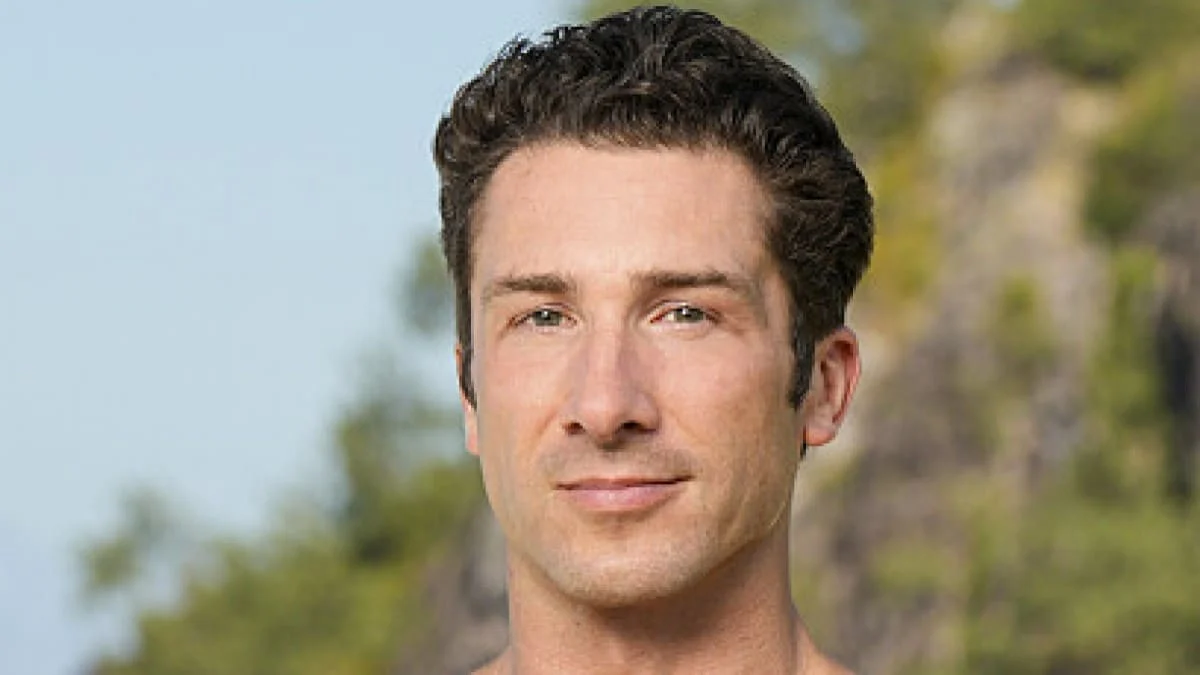
The landscape of modern reality television is often defined by the friction between a contestant’s self-perception and the narrative arc crafted by producers. In the wake of Survivor 48, Episode 9, few castaways have sparked as much conversation regarding this dichotomy as David Kinne. Following his elimination as the ninth-place finisher and the third member of the season’s jury, the discourse surrounding Kinne has shifted from his strategic maneuvers on the island to the high praise—and historical comparisons—offered by the show’s executive producer and host, Jeff Probst.
On a recent episode of the On Fire podcast, Probst provided an in-depth look at the casting process and the production’s internal reception of Kinne, revealing that the player was viewed as a "blast" from the moment he entered the casting cycle. As the "New Era" of Survivor continues to evolve, the case of David Kinne serves as a fascinating study of character archetypes, the complexities of the editing room, and the enduring influence of the show’s most legendary figures.
Main Facts: The Blindside of a Polarizing Power Player
David Kinne’s journey on Survivor 48 concluded in a dramatic fashion during the ninth episode of the season. Entering the episode, Kinne was positioned as a vocal, often overconfident strategist who wasn’t afraid to lean into the "villain" or "big character" role. However, the shifting sands of the "New Era" game—characterized by rapid-fire alliances and the constant threat of advantages—eventually caught up with him.
Kinne was voted out in a maneuver that solidified his status as the third member of the jury. This position is pivotal; as a juror, Kinne will now transition from an active participant to a silent observer of Tribal Councils, ultimately holding the power to decide which of his former competitors walks away with the $1 million prize.
Since his exit, Kinne has been vocal across social media and in exit interviews, suggesting that his portrayal on screen did not fully capture the nuances of his social game. Specifically, he has pointed toward "missing footage" that he claims would provide more context to his interactions and strategic positioning. Furthermore, Kinne has made headlines by alleging that fellow contestant Joe Hunter exhibited "bullying" behavior during their time in Fiji—a claim that has added a layer of controversy to the season’s off-camera narrative.
Chronology: From Casting Zoom Calls to the Fijian Sunset
The story of David Kinne’s Survivor experience began long before he set foot on the beaches of Fiji. According to Jeff Probst, Kinne was a standout from his very first interaction with the casting department.
The Casting Phase
During the casting process for Survivor 48, potential contestants undergo rigorous interviews, including Zoom sessions with high-level producers and CBS executives. Probst noted that Kinne made an immediate impression on the "CBS brass." He was described during these sessions as "sensitive" yet "boastful," a combination that production found irresistible for television.
Probst recalled a specific moment of pre-game bravado where Kinne looked him in the eye and predicted total dominance. "I will win every challenge on Survivor, and when I set the record with my sixth win, then you must say, ‘David, you were right,’" Kinne reportedly told the host. This level of earnest confidence is rare even among the most competitive applicants and immediately signaled to the production team that Kinne was "meant for Survivor."
The Island Trajectory
Once the game commenced, Kinne’s trajectory followed the path of a high-variance player. He was deeply involved in the social mechanics of his original tribe and remained a focal point of the narrative following the merge. His gameplay was characterized by a desire to control the pace of the game, which often put a target on his back. By the time Episode 9 arrived, the "threat level" Kinne had cultivated—partly through his own boastful nature—became a liability he could no longer manage.
The Post-Game Fallout
Following his elimination, the chronology of Kinne’s story moved into the digital sphere. His claims regarding the editing process and his public rift with Joe Hunter have kept his name at the forefront of the Survivor community’s discussions, even as the remaining players continue to fight for the title of Sole Survivor.
Supporting Data: The "Coach" Comparison and Archetypal Analysis
Perhaps the most significant revelation from Jeff Probst’s recent podcast appearance was the comparison made between David Kinne and one of the most iconic players in the history of the franchise: Benjamin "Coach" Wade.
The Coach Archetype
Benjamin Wade, known to fans as "The Dragon Slayer," appeared in Survivor: Tocantins, Heroes vs. Villains, and was the runner-up in South Pacific. Coach is remembered for his eccentric stories, his rigid (if sometimes contradictory) code of honor, and a level of self-assuredness that bordered on the cinematic.
Jeff Probst revealed that fellow producer Matt Van Wagenen saw "Coach-esque qualities" in Kinne from the start. This comparison is high praise in the world of reality TV production, as it suggests a player who is not merely playing a game but is providing a performance that is "earnest" in its grandiosity.
Performance vs. Reality
The data from Kinne’s season shows a discrepancy between his pre-game goals and his actual performance:
- Challenge Wins: While Kinne predicted he would break the record with six individual immunity wins, he exited the game without reaching that milestone.
- Placement: Finishing 9th places him in the top half of the cast, but short of the "legend" status usually reserved for those who reach the finale or dominate the strategic endgame.
- Edit Consistency: Kinne’s claim of "important footage being left out" is a common refrain among players who feel their strategic depth was sacrificed for a more "cartoonish" or "boastful" character edit.
Official Responses: Probst Weighs In on the "On Fire" Podcast
Jeff Probst’s On Fire podcast has become an essential companion piece for the show, providing a platform for the host to address fan theories, production secrets, and player evaluations. In the latest episode, Probst’s tone regarding Kinne was overwhelmingly positive, despite the player’s controversial exit.
"David was a blast. He gave so much to the show," Probst told his co-hosts. "I liked him out of the gate."
Addressing the "Boastful" Label
Probst elaborated on the specific brand of confidence Kinne brought to the season. He noted that while Kinne was indeed boastful, it was done with an "earnestness" that made him likable to the production team. In the eyes of the producers, Kinne wasn’t playing a character for the cameras; he truly believed in his own narrative. This authenticity is what separates a "villain" that audiences love to hate from a player who feels manufactured.
The Production’s Defense
While Probst did not directly address Kinne’s specific claims of bullying by Joe Hunter or the "missing footage" in detail during this segment, his praise for Kinne’s contribution to the show suggests that production views him as a successful "get" for the season. The podcast serves as a tool for Probst to bridge the gap between the edited 60-minute episodes and the 24/7 reality of the Fijian camps.
Implications: The Future of the Franchise and the Road to Survivor 50
The elimination of David Kinne and the subsequent commentary from Jeff Probst have broader implications for the Survivor franchise as it approaches historic milestones.
The Jury’s Role in Season 48
As Kinne joins the jury, his "sensitive" and "earnest" nature will likely influence how he evaluates the final three. If he feels betrayed by certain players or feels that others played with the "honor" he values, his vote—and his influence at the Ponderosa jury villa—could swing the $1 million decision.
Survivor 49 and 50
As Survivor 48 continues its broadcast run, production for Survivor 49 is already underway in Fiji. The success of characters like Kinne reinforces the casting department’s current strategy: seeking out high-energy, self-aware individuals who can articulate their internal monologue, even if it borders on the hyperbolic.
Furthermore, the buzz surrounding Kinne raises questions about the highly anticipated Survivor 50. Probst has already confirmed that the 50th season will feature returning players. While Kinne finished 9th, his "Coach-esque" qualities and his popularity with the CBS brass make him a potential candidate for a "Second Chance" or "Heroes vs. Villains" style return.
The "Traitors" Effect
The reach of Survivor stars now extends beyond CBS. With rumors of a "dream cast" for The Traitors Season 4 circulating—potentially featuring Survivor and Big Brother alums—players like David Kinne represent the type of polarizing, vocal personalities that thrive in the social deduction format.
In conclusion, while David Kinne’s quest for six immunity wins and the title of Sole Survivor ended prematurely, his impact on Survivor 48 is undeniable. Through the lens of Jeff Probst’s commentary, Kinne is seen not just as a contestant who fell short, but as a vital component of the show’s modern era—a player who embraced the grandiosity of the game and left an indelible mark on the producers and the audience alike. As the season marches toward its finale, Kinne’s presence on the jury ensures that his "boastful earnestness" will have one last part to play in the crowning of a winner.









No comments yet. Be the first to join the conversation!