

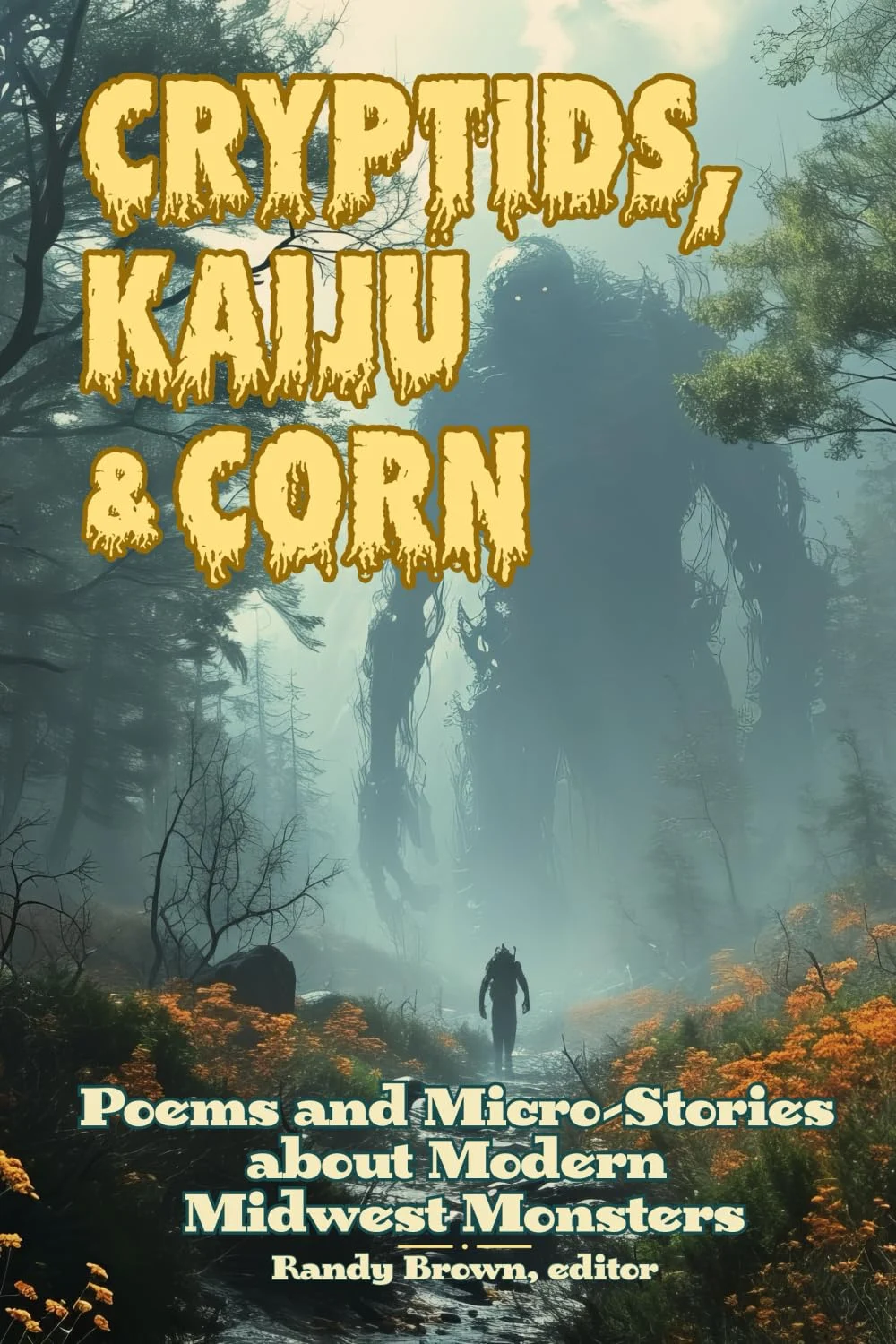
The American Midwest has long been mythologized as the "breadbasket of the world," a sprawling, flat expanse defined by agricultural stoicism, quiet isolation, and the relentless rhythm of the seasons. However, a new literary collection, Cryptids, Kaiju & Corn, suggests that beneath the golden stalks of maize and the calm surfaces of inland lakes, something else is stirring. Featuring seventy-seven poems and micro-stories, this anthology reframes the "flyover country" as a fertile breeding ground for the uncanny, the prehistoric, and the monstrous.
The titular elements—cryptids, kaiju, and corn—serve as the thematic pillars of the collection. While the anthology leans heavily into the lore of legendary beasts, it uses these monsters to explore the specific anxieties of a region that exists, as contributor Logan Garner aptly describes it, as "a place between places. A border with a thinness to it."
The Genesis of the Anthology: A Chronology of the Uncanny
The development of Cryptids, Kaiju & Corn represents a shift in contemporary regional literature. Rather than leaning into the sentimental nostalgia often associated with rural American writing, the contributors move toward a "weird fiction" aesthetic that feels uniquely tied to the soil of the Midwest.
- Early Conceptualization: The editors sought to curate a collection that mirrored the geography of the Midwest—a landscape that is often dismissed as mundane, yet hides deep, prehistoric roots.
- The Selection Process: Over several months, the editorial team compiled works ranging from flash fiction to experimental poetry, ensuring a mix of traditional cryptid lore (Bigfoot, the Ohio Grassman) and original, genre-bending narratives.
- Publication and Reception: Released to bridge the gap between speculative horror and regionalist literature, the collection has found an audience among those who see the Midwest not as a static landscape, but as a dynamic, haunted space.
- Pedagogical Integration: The inclusion of discussion prompts at the end of the volume marks a strategic effort to bring speculative fiction into the classroom, bridging the gap between recreational reading and academic inquiry.
Supporting Data: The Triad of Terror
To understand the collection, one must examine its three pillars in reverse order, as they represent a spectrum of the familiar turning into the grotesque.
1. Corn: The Menacing Harvest
Corn is the quintessential Midwestern crop, yet in these stories, it is frequently depicted as a sentient, occasionally predatory force. In Tyler Stallings’ "The Cornfather," the desperation of a struggling farmer leads to the planting of stolen, mutated seeds. The resulting harvest is not a source of sustenance, but a biological nightmare that defies natural law. Conversely, Seán Betzer’s "The Family Farm" portrays corn as a mystical, if unsettling, guide—a protector that demands respect and punishes those who would violate the sanctity of the land.
2. Kaiju: The Unexpected Goliath
The "kaiju" element presents a fascinating anomaly. In the Midwestern landscape, giant monsters are rare, which makes their presence all the more jarring. The standout piece in this category is Juan Manuel Pérez’s "Godzilla at the Pow Wow." The poem captures a surreal moment where the King of the Monsters seeks solace at a pow wow after a battle. By juxtaposing the sacred, rhythmic power of the drumbeat with the absurdity of a radioactive titan, Pérez elevates the narrative above camp, suggesting a spiritual resonance between the kaiju and the indigenous traditions of the plains.
3. Cryptids: The Local Monsters
The collection is most densely populated by cryptids—the Hogdags, the Wendigo, and the elusive Dogman. These entities are treated not as exotic terrors, but as neighbors. John Tyler Leonard’s "The Harvest Men" captures the intimacy of this terror, highlighting the "blind spots" in our understanding of the land. These cryptids occupy a space that feels deeply personal, as if they are part of the local ecology, hiding in plain sight.
Official Perspectives and Critical Analysis
The collection has drawn praise for its ability to ground high-concept horror in the mundane realities of rural life. The editorial decision to include a wide range of voices—from those who view the Midwest through a lens of environmental decay to those who see it as a site of ancient, dormant power—creates a multi-faceted portrait of the region.
One recurring device that has sparked discussion among critics is the "first-person monster" narrative. While occasionally bordering on the trope-heavy, works like Mia Dalia’s "The Loveland Frogman" effectively utilize this perspective to explore themes of alienation and social performance. Dalia’s narrator, a frogman attempting to pass as a human, offers a poignant, if dark, reflection on the necessity of "fitting in" within a rigid society.
The "water-based" entries, such as those focusing on mosasauri and invasive species, also offer a chilling reminder of the Midwest’s prehistoric history. By tapping into the geological reality that the Midwest was once a vast inland sea, the authors suggest that the land is merely waiting for the water to return, and with it, the ancient predators that once ruled the depths.
Implications for the Future of Regional Literature
The implications of Cryptids, Kaiju & Corn extend beyond its immediate entertainment value. As a cultural artifact, it challenges the "flyover country" narrative. It posits that regional identity is not merely defined by politics or economy, but by the myths we create to fill the silence of the prairie.
Educational Value
The inclusion of seven, well-structured discussion prompts suggests that the editors intend for this work to be a living document. By moving away from the "tacked-on" feel of most anthology study guides, the prompts encourage readers to analyze the intersection of environment, folklore, and personal identity. For educators, the text provides a safe but engaging entry point into horror literature—one that is "harrowing enough to interest advanced middle school or high school students but not so horrific as to offend parents."
The "Otherness" of the Midwest
Perhaps the most significant implication of the book is its treatment of "otherness." Whether it is the invasive Asian carp in John Tyler Leonard’s prose or the unrecognizable lake monster in Liam Espinoza-Zemlicka’s "Little Lost Lake Monster," the collection argues that horror is fundamentally about the failure of categorization. When the environment stops behaving according to the rules of logic, the result is a profound, existential unease.
Conclusion: A Haunting Portrait
Cryptids, Kaiju & Corn is more than just an anthology of monster stories; it is an atmospheric map of a misunderstood region. It captures the tension between the domestic and the feral, the known and the unknowable. For those who live in the heart of the country, these stories may feel less like fiction and more like an acknowledgment of the strange, quiet whispers heard at the edge of the cornfield.
As the collection demonstrates, the Midwest is not merely a place of production; it is a place of mystery. By looking closely at the shadows between the rows of corn, the editors have successfully unearthed a new tradition of regional storytelling—one that is occasionally unnerving, often delightful, and always deeply, undeniably rooted in the land. Whether through the lens of a dancing Godzilla or a tentacled horror rising from the silt, the message remains clear: the monsters are here, and they have been waiting for a long time to be noticed.









No comments yet. Be the first to join the conversation!