

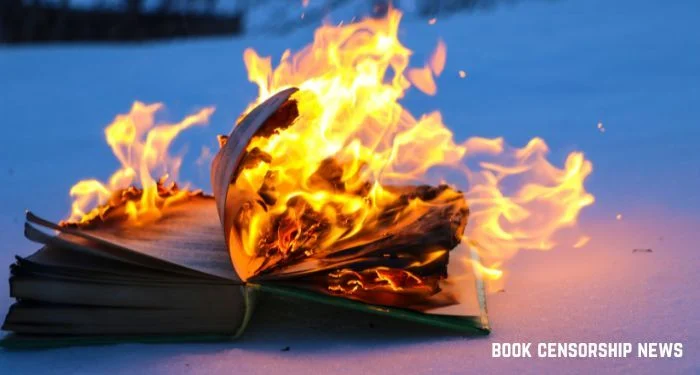
This spring marks a sobering milestone in American cultural history: five years of unprecedented, systemic, and escalating attacks on books and libraries. Since the spring of 2021, the landscape of intellectual freedom in the United States has undergone a seismic shift, transforming from isolated local disputes into a coordinated, multi-state effort to narrow the scope of available literature in public schools and community libraries. As 2026 unfolds, organizations dedicated to civil liberties and literacy are marking this anniversary not merely to document the damage, but to mobilize a defense of equitable access to information.
The battle is complex, often obscured by what librarians call "quiet censorship"—the subtle removal of titles or the deceleration of new acquisitions to avoid controversy. However, the documented data paints a harrowing picture of a movement that prioritizes ideological conformity over the fundamental right to read.
The Anatomy of an Escalation: A Chronology of Censorship
The meteoric rise of book banning in America did not occur in a vacuum. It emerged as a direct byproduct of the post-pandemic political climate. Following the 2020 lockdowns, right-wing political rhetoric pivoted from "reopening schools" to a targeted campaign against curriculum content. The momentum grew through slogans such as "unmask the kids" and "don’t vax the kids," before settling into a sustained offensive against what critics termed "diversity, equity, and inclusion" (DEI) and "gender ideology."
By 2021, this rhetoric solidified into a legislative and grassroots strategy. What began as school board protests quickly morphed into state-level policy. By 2024, states like Utah and South Carolina had codified mechanisms allowing for the wholesale removal of books from public school systems. Tennessee, while yet to decree an official state-wide ban through legislative fiat, has seen a climate of fear lead to the preemptive removal of thousands of titles.
This five-year arc reveals that the attack was never truly about the books themselves. It is a strategic strike against the ideas those books contain: narratives that challenge white Christian nationalism, scientific consensus on climate change, and the existence of marginalized identities.
Quantifying the Unquantifiable: Data and Methodology
Tracking censorship is an exercise in identifying the "tip of the iceberg." Because the vast majority of book removals happen behind closed doors—without a public board meeting or a press release—the numbers provided by organizations like PEN America and the American Library Association (ALA) represent only a fraction of reality.
Official Lists and Reporting Bodies
To understand the scope, researchers rely on four primary data streams:
- The American Library Association (ALA): Having tracked challenged titles since 1981, the ALA provides the most consistent longitudinal data. Their "Top Ten Most Challenged Titles" list, released annually during National Library Week, captures complaints lodged across a broad spectrum of institutions.
- PEN America: Since the 2021–2022 school year, PEN has documented specific book bans in public schools. Their work is vital for identifying themes and regional clusters of censorship.
- State-Sanctioned Lists: Utah and South Carolina have formalized the process, maintaining official state lists of "prohibited" materials.
- Institutional Records: Internal reports from school boards and state departments of education, such as Florida’s State Board of Education, which has issued specific, albeit "unofficial," demands for book removals.
According to PEN America, over 23,000 books have been documented as banned since the 2021 school year. When accounting for the "chilling effect"—where librarians, fearing job loss or litigation, choose not to purchase or promote controversial titles—that number is estimated to be significantly higher.
The Targets: Who and What is Being Silenced?
A rigorous analysis of the most banned books and authors between 2021 and 2026 reveals a distinct pattern: the focus is almost exclusively on marginalized voices.
The Most Targeted Authors
Authors such as Ellen Hopkins frequently top the lists. Hopkins, known for writing unflinchingly about the realities of teen struggles, has become a primary target. However, the data suggests that censorship is not just a reaction to content, but a reaction to identity. Six out of the eight most banned authors since 2021 identify as having marginalized genders or identities.
While some authors, like Hopkins, have been vocal in their defense of intellectual freedom, others remain silent, reflecting the broader environment of intimidation that permeates the publishing and educational industries.
The Age of the "Dangerous" Book
One of the most persistent myths pushed by book banners is that they are "protecting children" from "new, dangerous, and inappropriate" literature. The data, however, exposes this as a fabrication.
The average publication date of the most banned books in America is 2008. The median date is 2012. Many of the books currently being targeted were sitting on library shelves for decades—often when the very people currently calling for their removal were themselves students. For example, The Perks of Being a Wallflower, consistently one of the most banned titles, was published in 1999.
This discrepancy between the age of the books and the urgency of the "moral panic" surrounding them suggests that the goal is not protection, but the erasure of historical and diverse perspectives from the public square.
Official Responses and the "Parental Rights" Movement
The rise of the "parental rights" movement has fundamentally changed the role of the public school. Proponents argue that parents should have ultimate control over what their children encounter in the classroom. Critics, however, argue that this movement seeks to enlist the government to perform "full-throated parenting," effectively insulating children from any perspective that contradicts a narrow, exclusionary worldview.
When a school removes a book on climate change, they aren’t just removing a title; they are removing a scientific framework. When they remove a book about a child with two moms, they aren’t just removing a story; they are removing the legitimacy of that child’s family structure.
The Broader Implications for Democracy
The implications of this five-year campaign are profound. By restricting access to literature, proponents of censorship are narrowing the capacity for empathy and critical thinking in the next generation.
The strategy relies on a fundamental misunderstanding—or perhaps a deliberate misrepresentation—of how libraries function. Books do not simply appear on shelves. They are selected by trained professionals who adhere to rigorous collection development policies, often involving peer reviews and professional trade journals. The "alternative" review sites created by activist groups, by contrast, rely on volunteers with no pedagogical training, who often target books they haven’t even read, based on keywords or summaries.
As we move past the five-year mark, the challenge is clear: we must move beyond defensive postures. The fight against censorship requires a proactive investment in library funding, the protection of librarians’ professional autonomy, and a public education campaign that clarifies the value of inclusive collections.
Moving Forward: The Call to Action
The data from 2021 to 2026 serves as a clarion call. It proves that the "panic" is manufactured, the targets are systemic, and the goal is the erosion of public education as a bastion of inquiry.
Advocates are now turning their attention to 2026 as a pivotal year for resistance. There is an urgent need for citizens to document "quiet" censorship—the subtle, undocumented removals that occur during Pride month or throughout the school year. By sharing these stories, communities can shine a light on the mechanisms of control and ensure that the legacy of these five years is not one of successful erasure, but of a reinvigorated commitment to the freedom to read.
As we look toward the future, we must ask ourselves: what kind of society do we want to foster? One that hides from the complexities of the human experience, or one that empowers its youth to engage with those complexities through the transformative power of literature? The answer lies not in the books we ban, but in the books we choose to protect, share, and defend.









No comments yet. Be the first to join the conversation!