Basiran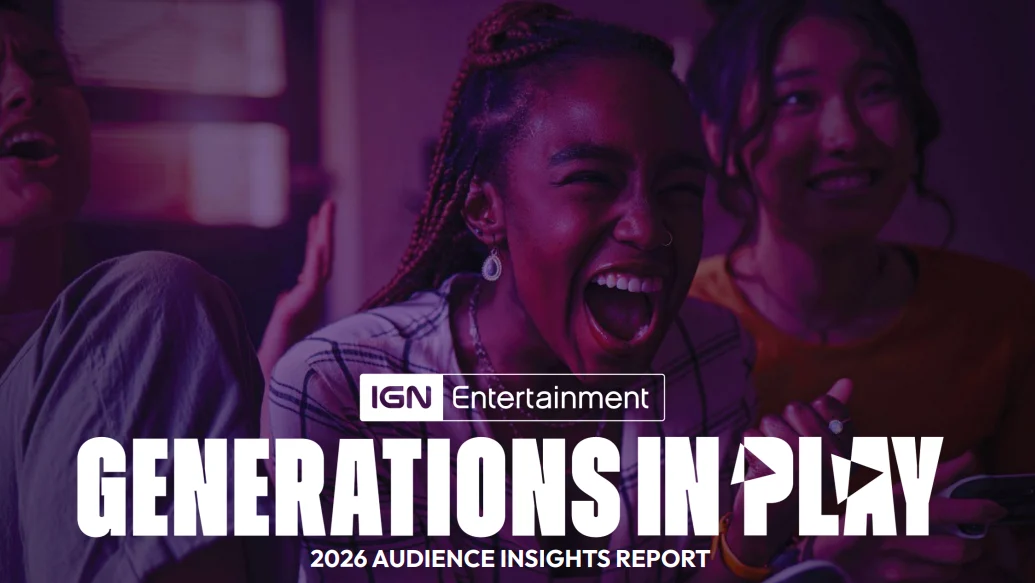
The landscape of interactive entertainment is undergoing a seismic shift, driven not just by technological advancements, but by the deeply ingrained habits of different generational cohorts. A groundbreaking new report, Generations in Play, recently published by IGN Entertainment (IGNE) in collaboration with research heavyweights Kantar and the University of California, Berkeley, sheds light on these divergent behaviors. By analyzing the consumption patterns of thousands of "highly committed" gamers and cinephiles across the US, UK, and Australia, the report offers a rare, data-backed glimpse into how different age groups navigate the increasingly complex world of modern media.
The findings reveal a stark contrast: while Generation X approaches gaming with a traditional "completionist" mindset, Gen Z views digital platforms as social ecosystems where community, influence, and continuous participation take precedence over traditional narrative endings.
The Core Findings: A Tale of Two Generations
At the heart of the Generations in Play study is the realization that "gaming" is no longer a monolith. It is a fragmented experience where the motivation to play is as varied as the players themselves.
The Gen X Completionist
For Generation X—those who grew up during the dawn of the console era—gaming remains a task-oriented pursuit. According to the report, this cohort is characterized by a "completionist" mentality. They are more likely to utilize search engines like Google to find walkthroughs, hidden secrets, and optimization strategies to ensure they get the "most juice out of the lemon." Their habits are rooted in the era of midnight store openings, physical game ownership, and the sanctity of the single-player experience.
The Gen Z Socialite
Conversely, Gen Z’s relationship with gaming is inextricably linked to digital social infrastructure. For this generation, the game is rarely the final destination; it is the venue. They are less concerned with "beating" a game and more concerned with their status within a community. They prioritize platforms where they can demonstrate expertise, share content, and socialize. In the Gen Z world, a game "doesn’t end"—it evolves into a persistent, social space where identity is constructed through community interaction and real-time contribution.
Chronology: From Internal Tracking to Public Insight
The publication of Generations in Play marks a significant departure from IGN Entertainment’s standard operating procedure. For over a decade, the organization has been gathering granular data on consumer habits, though this information was historically siloed within the company.
- 2010: IGN begins internal tracking of gaming consumption habits to assist with client presentations and business strategy. For years, this data remained proprietary, serving only as a backdrop for high-level marketing pitches.
- The Shift: Recognizing the increasing complexity of audience intent, IGNE leadership decided to pivot from purely gaming-focused metrics to a broader analysis of total entertainment consumption.
- The Partnership: IGNE joined forces with Kantar and UC Berkeley to formalize their research methodology. The goal was to move beyond the "casual gamer" demographic and target "highly-committed" consumers—those who view entertainment as a primary pillar of their disposable time.
- The Launch: Following the success of their internal analysis, the team decided to publish the report, making it accessible to the wider industry to foster a better understanding of how audience intent is shifting across multiple entertainment formats.
Supporting Data: Understanding the "Highly Committed" Consumer
To ensure the report’s validity, the researchers filtered out casual users. The study focused on individuals who are deeply invested in their hobby, those who sacrifice significant weekly hours to gaming and cinema.
"We identified people to ask the questions to," says Karl Stewart, SVP of IGNE Global Marketing. "They were highly qualified entertainment cinephiles, gamers consuming a lot of stuff weekly… we’re not talking about casual here. We’re talking about people who basically say: ‘I only have so many hours in the week, and this is still where I choose to spend my disposable time.’"
This methodological rigor provides a clearer picture of the "enthusiast" segment, which often acts as the canary in the coal mine for broader consumer trends. By focusing on these power users, IGNE has been able to identify the specific touchpoints where Gen Z is leaning into new forms of digital expression, providing a roadmap for developers and marketers who are struggling to keep up with changing engagement metrics.
Official Responses: The Strategic Vision
The leadership at IGN Entertainment views this data not merely as an academic exercise, but as a compass for the future of their business.

"We started realizing, ‘this is great data. We should put this out, give it to everybody, and show how the shift is,’" says Stewart. For IGNE, the report serves as a diagnostic tool. By understanding that Gen Z is shifting toward community-centric, social-platform-based gaming, the company can better align its editorial and advertising strategies.
Tate Fiebing, Senior Director of Business Intelligence at IGNE, emphasizes that the company has always been in the business of understanding audience intent, but the Generations in Play project represents a quantum leap in sophistication. "We’ve done a version of this forever," Fiebing notes. "But it was historically very focused on gaming… It’s never been published."
The report’s insights are already being integrated into the company’s technological infrastructure, most notably the Imagine AI targeting tool. By feeding these generational behavioral profiles into their AI systems, IGNE aims to provide more relevant advertising and content recommendations, ensuring that their platforms remain indispensable to users across all age brackets.
Implications: The Future of Entertainment Marketing
The Generations in Play report carries profound implications for the gaming industry at large.
1. The Death of the "One Size Fits All" Strategy
Publishers and developers can no longer rely on a singular marketing strategy to capture all audiences. If a game is built for the Gen X completionist, it needs to emphasize narrative, mechanics, and value for money. If it is built for Gen Z, it must prioritize social features, shareability, and community-driven content.
2. The Rise of "Always-On" Services
The shift in Gen Z behavior highlights why "live service" models have become so dominant. Because this demographic values persistent social spaces, the industry has responded by moving away from finite, single-purchase experiences toward ecosystems that require constant engagement.
3. Data-Driven Personalization
As tools like Imagine gain traction, the industry will likely see a shift toward hyper-personalized content. Understanding that a user falls into a specific generational consumption pattern allows for a more tailored delivery of information—whether it’s a detailed technical walkthrough for a Gen X user or a community event invitation for a Gen Z user.
4. The Future of Monetization
The report suggests that monetization models must also evolve. Gen X may still be comfortable with the traditional "full price" model, whereas Gen Z’s preference for platforms suggests they are more accustomed to micro-transactions, digital collectibles, and subscription-based access that facilitates their social participation.
Conclusion
The Generations in Play report is more than a collection of charts and demographics; it is a testament to the fact that the way we play is a mirror of how we perceive the world. As we look toward the future, the divide between the completionist and the community-builder will likely continue to influence the trajectory of software development and media consumption.
For industry stakeholders, the message is clear: to remain relevant, one must stop viewing the audience as a homogenous mass and start engaging with the distinct, deeply held values of the generations that define the digital age. Those interested in the full scope of the findings are encouraged to visit generationsinplay.com, where IGNE has made a summary available, providing a window into the future of our interactive world. As the industry continues to evolve, this report will undoubtedly serve as a foundational document for understanding the next decade of digital entertainment.


 Reynand Wu
 Pevita Pearce