Nana
Nana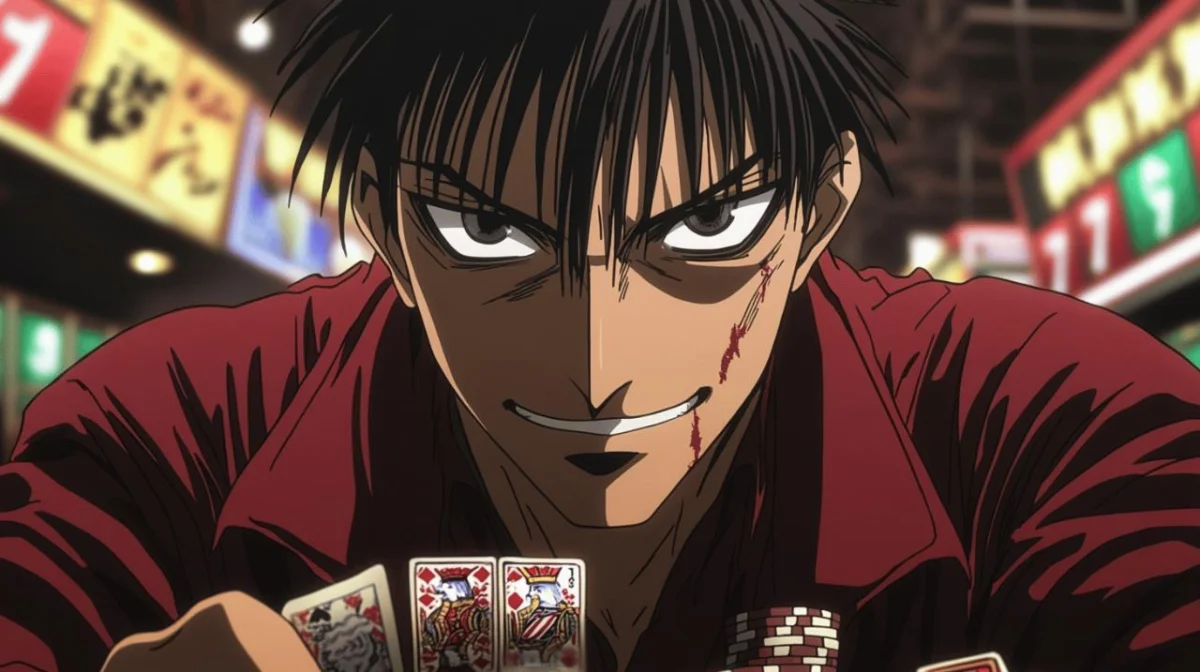
In the landscape of Japanese seinen manga, few works have achieved the visceral, claustrophobic intensity of Nobuyuki Fukumoto’s Kaiji: Ultimate Survivor. Since its inception in 1996, the series has served as a dark mirror to the socio-economic anxieties of the modern era, chronicling the harrowing journey of a man caught in the predatory jaws of a debt-ridden existence. Beyond its status as a gripping thriller, Kaiji stands as a seminal critique of late-stage capitalism, illustrating how the desperate pursuit of financial salvation can lead to the total annihilation of the human spirit.
Main Facts: The Anatomy of a Psychological Nightmare
Kaiji: Ultimate Survivor is not merely a story about gambling; it is a masterclass in psychological warfare. The narrative centers on Kaiji Itou, a listless young man living in the shadows of Japanese society. His existence is defined by a crushing debt of 3,850,000 yen (approximately 28,705 euros), a figure that serves as the catalyst for his descent into an underworld managed by the yakuza.
Unlike traditional hero-driven narratives, Kaiji is fundamentally ordinary. He is not endowed with superhuman strength or innate luck. Instead, he possesses a raw, desperate intelligence and a capacity for agonizing introspection. When he is coerced into boarding the Espoir—a ship dedicated to high-stakes, life-or-death gambling—the story shifts from a social drama to an intense survival thriller. In this environment, the rules of civilized society are stripped away, replaced by the cold, calculating logic of the "restricted rock-paper-scissors" and the "human derby."
The core appeal of the series lies in its ability to translate abstract financial desperation into tangible, physical stakes. Whether it is the rhythmic, maddening mechanical sounds of the "SWAMP" pachinko machine or the psychological manipulation inherent in the E-Card game, Fukumoto ensures that every victory is pyrrhic and every defeat is existential.
Chronology: A Legacy of Despair and Triumph
The trajectory of Kaiji from a serialized manga in Kodansha’s Young Magazine to a global cultural phenomenon is a testament to its enduring relevance.
- 1996: The initial chapters of the manga are published, immediately garnering attention for their stark, angular art style and unflinching exploration of human greed.
- 1998: The series receives the prestigious Kodansha Manga Award in the "General" category, cementing its place as a critical darling.
- 2007–2008: The first season of the anime adaptation, produced by Madhouse, introduces a new generation to the suffocating tension of Kaiji’s plight.
- 2009: The first live-action film, Kaiji: Jinsei Gyakuten Gēmu, is released, proving that the property has cross-media appeal.
- 2011: A second season of the anime and a sequel film further expand the lore, introducing the infamous Pachinko "SWAMP" arc.
- 2020: The release of Kaiji: Final Game marks the culmination of the live-action franchise, keeping the character relevant in a post-recession economy.
- 2019–Present: With over 21.5 million copies in circulation, the franchise continues to exert a profound influence on global media, most notably serving as a spiritual blueprint for modern survival dramas.
Supporting Data: The Economics of Exploitation
To understand Kaiji, one must understand the math of his misery. The initial debt of 3.85 million yen is a deliberate choice by the author. It is a sum that is theoretically payable but functionally impossible for someone in Kaiji’s precarious employment status. This gap between the "achievable" and the "unobtainable" is where the yakuza thrive.
The Pachinko "SWAMP" arc serves as the ultimate data point for the series’ stakes. With balls priced at 4,000 yen each and a potential jackpot of 700 million yen, the game is designed to be a vacuum that pulls in every spare resource of the player. Statistically, the odds are insurmountable, yet the narrative demonstrates how the illusion of a "big win" can override rational risk assessment.
The sales figures of 21.5 million copies serve as a proxy for the public’s appetite for stories regarding economic inequality. In an era of stagnant wages and rising costs of living, the "Kaiji" model of gambling as a last resort resonates with a global audience that feels increasingly disenfranchised by systemic financial structures.
Official Responses and Creative Intent
Nobuyuki Fukumoto has frequently stated in interviews that Kaiji was never intended to be an endorsement of gambling, but rather a warning about the fragility of the individual against institutional power. By using a distinct, grotesque art style—characterized by elongated noses, exaggerated facial expressions, and sharp, angular shadows—Fukumoto forces the reader to confront the physical toll of anxiety.
The "official" consensus among critics is that Kaiji serves as a "Seinen" masterpiece because it refuses to provide easy comfort. The creator deliberately avoids the "power fantasy" tropes common in shonen manga. When Kaiji loses, he loses spectacularly, often suffering physical mutilation or psychological breakdown. This commitment to realism, within a fantastical setting, is what has garnered the series its cult following.
Furthermore, the production team behind the anime adaptations has noted that the sound design and pacing were meticulously crafted to mimic the feeling of a panic attack. The rhythmic clicking of cards and the whirring of machines are designed to keep the viewer in a state of high-alert, mirroring the protagonist’s own hyper-awareness.
Implications: The "Kaiji Effect" on Modern Media
The cultural footprint of Kaiji is undeniable, particularly when analyzing the surge of "death game" media.
The Squid Game Parallels
The most prominent example of Kaiji’s influence is the global sensation Squid Game. Both series share a foundational premise: a group of debt-ridden, desperate individuals are gathered by a mysterious organization to play childhood games for life-altering sums of money. The implications of this are significant—it suggests that the "death game" genre has evolved from simple horror into a sociological critique of wealth inequality.
In both Kaiji and its modern successors, the "game" is a metaphor for the real-world labor market. The participants are treated as expendable assets. The yakuza in Kaiji serve the same role as the masked administrators in Squid Game; they are the invisible hand of a market that values capital over human life.
A Mirror to the Modern Condition
The enduring legacy of Kaiji lies in its portrayal of the "victim-gambler." The series forces the viewer to ask: if the system is rigged against you, is it truly a moral failing to try to cheat back? Kaiji’s journey is one of moral erosion. He begins as a sympathetic, if flawed, victim, but to survive, he must adopt the same ruthlessness as his oppressors. This transformation is the series’ most tragic implication: that in order to survive the system, one must eventually become part of it.
Conclusion: Why Kaiji Remains Essential
Kaiji: Ultimate Survivor remains a vital work of fiction not because of its high-octane gambling, but because of its unwavering focus on the human cost of debt. It is a story about the fragility of middle-class stability and the thin line between a functioning life and a total collapse. As the world continues to grapple with economic uncertainty, the image of Kaiji Itou—sweating, bleeding, and calculating his next move against impossible odds—serves as a powerful, uncomfortable, and deeply necessary reminder of the stakes of the human experience.
Whether one is a fan of psychological thrillers or a student of social commentary, Kaiji offers a profound look into the dark heart of the human psyche. It is a series that does not ask for your pity, but demands your attention, forcing us all to wonder: how much of our own humanity would we be willing to wager to get out of the red?


 Siti Muinah
 Azzam Bilal Chamdy