Lina Irawan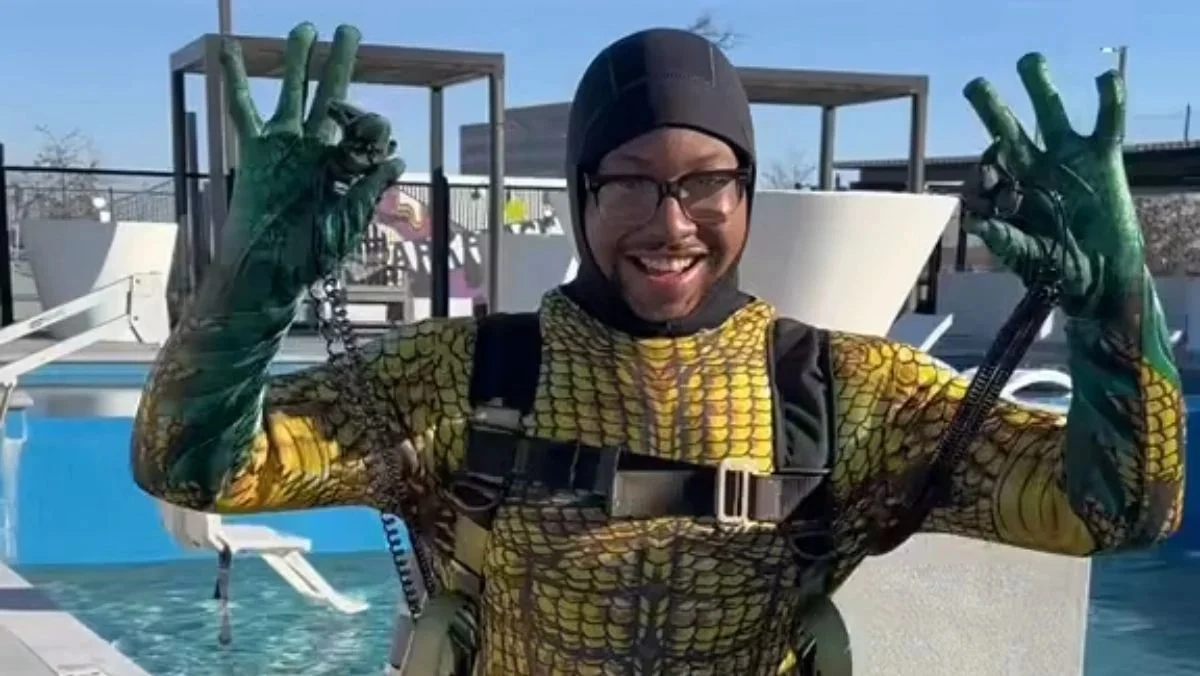
The intersection of pop culture fandom and high-level mechanical engineering has reached a new, watery frontier. For decades, enthusiasts have pushed the boundaries of what is possible, bringing the fantastical weaponry and attire of the silver screen into the tangible world. From the precision-engineered lightsabers of the Star Wars universe to the complex hydraulics of Iron Man’s armor, the "Maker" community has consistently proven that imagination is merely the precursor to physical reality.
The latest marvel to capture the internet’s attention is a fully functional, water-ready Aquaman suit designed and piloted by the engineering content creator known as Kaemen the Creator. By blending aesthetic fidelity to Jason Momoa’s iconic cinematic portrayal with the raw power of modern propulsion technology, Kaemen has turned the dream of being the King of the Seven Seas into a high-octane reality.
Main Facts: Engineering the King of the Seven Seas
At its core, the project is a masterclass in modular costume design and marine engineering. The suit is meticulously crafted to mirror the signature gold-and-green scaled aesthetic of the DC Extended Universe’s Aquaman. However, beneath the cinematic exterior lies a robust support system designed for aquatic locomotion.
The most significant feature of the build is the integration of high-powered underwater jetpacks. Mounted securely to the wearer’s back, these propulsion systems allow the user to glide through water with a speed and agility that mimics the character’s fabled swimming abilities. To complete the ensemble, Kaemen incorporated a modified trident capable of discharging high-pressure water, adding a functional combat element that elevates the build from a mere cosplay piece to a piece of performance hardware.
Chronology: From Concept to Aquatic Test Drive
The journey of the suit began, as many such projects do, in a workshop filled with raw materials and blueprints. Kaemen, whose online presence is defined by his penchant for translating sci-fi concepts into mechanical reality, spent weeks conceptualizing the structural integrity of the armor.
- Phase I: The Aesthetic Build: The initial phase involved sourcing lightweight, water-resistant materials to replicate the iconic scale mail worn by Jason Momoa. The challenge here was balancing visual accuracy with the need for hydrodynamic efficiency.
- Phase II: Propulsion Integration: Once the chassis was complete, the focus shifted to the jetpacks. This required careful weight distribution; the suit had to remain buoyant enough to be safe, yet stable enough to withstand the force of the water jets.
- Phase III: The Trident Fabrication: The trident was designed not just as a prop, but as a secondary utility tool, requiring a pump system capable of drawing water in and firing it at velocity.
- Phase IV: The Test Drive: The project culminated in a highly publicized, and somewhat hilarious, test drive. Captured in a viral video, the test drive showcased the suit’s capabilities—and its limitations—as Kaemen navigated the water, providing a candid look at the friction between cinematic grace and real-world physics.
Supporting Data: The Mechanics of Underwater Flight
To understand the complexity of Kaemen’s build, one must look at the physics involved. Moving a human body through water requires overcoming significant drag. Standard human swimming is limited by the surface area of the limbs and the cardiovascular capacity of the swimmer.
By utilizing jet propulsion, the suit effectively bypasses traditional stroke mechanics. The jetpack system functions similarly to a Diver Propulsion Vehicle (DPV), which is standard equipment for technical divers. However, by housing this tech within a wearable suit, Kaemen has effectively created a "wearable submarine."
- Propulsion Force: The jetpacks provide consistent thrust, allowing for speeds that would be unsustainable for a human swimmer.
- Material Selection: The use of closed-cell foam and reinforced polymers ensures that the suit does not become a liability when soaked.
- Hydrodynamics: The "scales" of the suit are angled to reduce turbulence, a nod to the biomechanics of actual marine life, which have evolved over millions of years to slice through water.
Official Responses and Public Reception
The viral nature of the project has triggered a wave of responses across the engineering and fan communities. While there has been no official statement from DC Studios or Warner Bros., the project has been widely celebrated as a triumph of "fan-made" innovation.
Commentators and fellow engineers have praised the project for its ingenuity, particularly the decision to prioritize functionality over pure screen-accuracy. "It’s not just about how it looks," notes one industry observer, "it’s about the fact that he actually got into the water and made it work. That’s the difference between a costume designer and an engineer."
The lighthearted nature of the test drive—which featured several "bloopers" of the creator losing his balance—has endeared the project to a public that is often cynical about highly produced internet content. It provided a humanizing look at the trial-and-error process inherent in all experimental engineering.
Implications: The Future of Wearable Tech
The success of the functional Aquaman suit raises interesting questions about the future of recreational and specialized aquatic gear. If a hobbyist can create a localized propulsion suit in a home workshop, what does this mean for the future of professional diving or search-and-rescue operations?
1. Advancements in Personal Mobility
The technology utilized by Kaemen represents a democratization of marine propulsion. Historically, such tech was the domain of military or commercial divers. As components become cheaper and more accessible, we may see a rise in "extreme" aquatic sports where individuals use similar, purpose-built suits for exploration.
2. The Influence of Fandom on Innovation
Projects like this underscore the "Nerd Economy"—a phenomenon where high-level engineering is driven by the desire to fulfill a childhood dream. This often leads to breakthroughs in design that traditional, rigid-corporate-structure firms might overlook. By attempting to solve the problem of "how to look like Aquaman while swimming," Kaemen has inadvertently solved a problem of "how to integrate wearable thrust in a confined space."
3. The Need for Safety and Regulation
As these projects become more sophisticated, the line between "fun project" and "potential hazard" blurs. The sight of an unprotected face in rapidly moving water is a reminder that these builds, while impressive, carry real risks. Future iterations will likely require more robust protective gear, such as integrated masks or neck supports, to ensure that the user remains safe while pursuing their nautical ambitions.
Conclusion: The Horizon of Possibility
The Aquaman suit is more than just a costume; it is a testament to the power of the human spirit to bridge the gap between myth and reality. Whether it is a lightsaber that can actually cut through cardboard or a jet-powered suit that allows one to mimic a superhero, these projects remind us that the limits of our world are often self-imposed.
Kaemen the Creator has invited us to look at the water not as a barrier, but as a playground. While we may not all be ready to step into the role of the King of the Seven Seas, we can certainly appreciate the vision, grit, and engineering prowess required to make the impossible, however briefly, a reality. For those looking to see what else is on the horizon, the project serves as a compelling invitation to explore the other mechanical wonders housed on the creator’s platform. Perhaps one day, with the help of a "real-life Bruce Wayne" and mass production, the local pool will never be the same.


 Siti Muinah
 Azzam Bilal Chamdy