

Introduction: A Strategic Reorientation
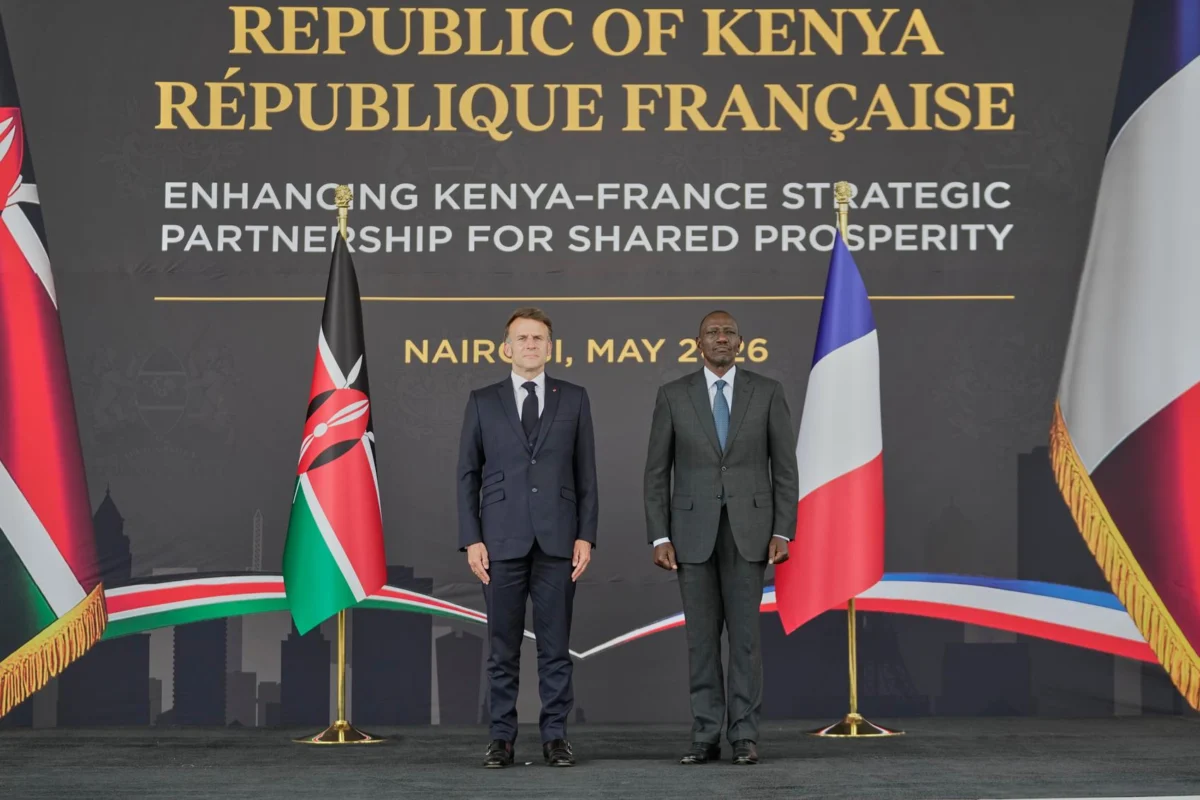
French President Emmanuel Macron arrived in Nairobi this Sunday, marking the commencement of a high-stakes diplomatic mission that seeks to fundamentally redefine France’s engagement with the African continent. The visit, serving as a prelude to the "Africa Forward Summit," represents more than a routine diplomatic trip; it is an attempt to navigate the complex legacy of Françafrique—the decades-old system of economic, political, and military influence that has defined France’s presence in its former colonies since their independence.
As the summit convenes, Paris is attempting to shed the skin of a former colonial hegemon in favor of a modern "partnership of equals." However, the path to this new era is fraught with challenges, ranging from the recent, acrimonious withdrawal of French troops from the Sahel to deep-seated domestic concerns within the host nation of Kenya.
The Core Facts: A Summit of Transition
The Africa Forward Summit, spanning two days starting Monday, is poised to host 30 heads of state, with ten already in attendance in Nairobi. The choice of Kenya—an Anglophone nation—is highly symbolic. Historically, French diplomatic outreach has been concentrated in its former Francophone colonies. By selecting Nairobi, the Elysée Palace is signaling a desire to broaden its diplomatic horizons beyond historical linguistic and colonial boundaries.
The summit is designed to pivot away from the security-heavy focus of the past—which often saw France intervening militarily in regional conflicts—toward a model centered on innovation, human capital, and sustainable development.
Chronology: From Colonial Sway to Modern Partnership
To understand the current tension, one must look at the timeline of France’s evolving relationship with Africa:
- The Post-Independence Era (1960s–2000s): France maintained a firm, often paternalistic, grip on its former colonies through the Françafrique doctrine. This involved preferential trade deals, currency pegs (the CFA Franc), and the permanent stationing of military forces to ensure stability and protect French strategic interests.
- The Rise of Anti-French Sentiment (2010s–2023): Over the last decade, a growing generation of African leaders and activists began to view the French military presence as a violation of sovereignty. This culminated in the forced withdrawal of French troops from Mali, Burkina Faso, and Niger following military coups and widespread public protests.
- The Strategic Pivot (2024–Present): Recognizing that its waning regional influence had created a power vacuum often filled by Russian and Chinese interests, the Macron administration began dismantling its military bases, opting instead for collaborative investment programs.
- Sunday’s Arrival: President Macron’s touchdown in Nairobi serves as the official launch of this new policy, emphasizing economic partnerships over military intervention.
Supporting Data: Investment and Economic Synergy
The visit has already yielded concrete results, with France and Kenya signing 11 bilateral agreements on Sunday. These are not merely symbolic gestures but represent significant capital injections into sectors critical to Kenya’s "Bottom-Up Economic Transformation Agenda."
Key Investment Areas:
- Nuclear Energy: An ambitious memorandum has been signed to explore the development of a nuclear energy plant. Kenya aims to diversify its power grid, which is currently heavily reliant on geothermal and hydropower, to support its burgeoning industrial sector.
- Modernized Transport: Agreements include financing for the expansion and digitization of transport infrastructure in Nairobi, aimed at alleviating urban congestion and improving logistics for regional trade.
- Sustainable Agriculture: France has committed technical and financial support for climate-resilient farming, a crucial initiative given the recurrent droughts affecting East Africa.
These investments are framed by President Macron as "investments in human capital." By focusing on innovation and the continent’s demographic dividend—its massive, young population—France hopes to pivot from being seen as an extractor of resources to an enabler of local growth.
Official Responses: Navigating Divergent Views
The rhetoric surrounding the summit highlights the delicate balance both Nairobi and Paris are attempting to maintain.
The View from the Elysée
President Macron, addressing the geopolitical shifts that have seen France pushed out of West Africa, maintained a nuanced stance. "France can disagree with governments, but it never disagrees with the people," Macron stated on Sunday. This comment is an attempt to distance the French state from the unpopular regimes it previously supported, positioning France instead as a long-term partner to the African citizenry.
The View from Nairobi
Kenyan President William Ruto, eager to position his country as a regional powerhouse and a neutral gateway for global powers, rejected the idea of picking sides. "We are neither looking East nor West," Ruto declared, asserting that Kenya is "looking forward." By hosting this summit, Ruto is signaling that Kenya is "open for business" to any nation that respects its sovereign development goals, effectively playing the role of a bridge between the Global North and South.
Internal Dissent: The Domestic Opposition
The summit has not been without its critics. Kalonzo Musyoka, a prominent Kenyan opposition leader, has launched a scathing critique of the event, arguing that the summit provides a veneer of legitimacy to a government he claims is eroding democratic norms.
"There will be an air of pretense that we are a cohesive nation," Musyoka said in a statement. "We know that is far from the truth." Musyoka’s concerns touch on the broader issue of political stability in Kenya, citing threats to the opposition, human rights violations, and fears regarding the integrity of the upcoming 2027 general elections. For the opposition, the arrival of world leaders is a distraction from the structural issues plaguing the Kenyan state.
Implications: The Geopolitical Stakes
The Africa Forward Summit serves as a microcosm of the "new scramble for Africa." As France attempts to recalibrate its influence, it faces competition from China’s infrastructure-led development model and Russia’s security-contractor approach.
The Challenge of Credibility
France’s greatest hurdle is the deep-seated skepticism regarding its intentions. The term "partnership of equals" is frequently used, but critics argue that the economic disparities and the history of military intervention make this a difficult narrative to sustain. Whether Macron can successfully transition from a military guarantor to an economic partner depends on the durability of the agreements signed in Nairobi.
Implications for Regional Stability
If the France-Kenya partnership succeeds, it could serve as a blueprint for how European powers can engage with African nations without relying on colonial-era military footprints. However, if the investments fail to produce tangible improvements in living standards for the youth, France risks further alienation across the continent.
The Democratic Question
Finally, the summit underscores a fundamental tension in Western diplomacy: the need to partner with regional stable-makers versus the commitment to democratic values. By holding the summit in a country where the opposition feels marginalized, France is navigating a diplomatic minefield where the pursuit of economic stability may be perceived as an endorsement of the current political status quo.
Conclusion: A New Chapter or a Failed Facade?
As the 30 heads of state convene in Nairobi, the eyes of the international community are fixed on whether this summit will represent a genuine shift in policy or merely a change in branding. President Macron’s visit to Kenya is an admission that the old ways of doing business in Africa are no longer viable.
The success of the "Africa Forward" initiative will not be measured by the number of agreements signed, but by the ability of France to sustain a presence that is welcomed rather than merely tolerated. For Kenya, the summit is a high-stakes gamble to secure the capital needed for its future while attempting to maintain its reputation as a democratic anchor in East Africa. As the proceedings begin, the world waits to see if a "partnership of equals" is a truly achievable reality or a fleeting ambition in an increasingly complex global landscape.












No comments yet. Be the first to join the conversation!