

The 79th Cannes Film Festival has become a watershed moment for Japanese cinema, marking a historic confluence of talent, industry growth, and international recognition. For the first time in a quarter-century, three of the nation’s most acclaimed directors—Hirokazu Koreeda, Ryusuke Hamaguchi, and Koji Fukada—are competing simultaneously for the Palme d’Or, the festival’s most prestigious accolade.
This rare triple-threat arrival coincides with Japan being named the official "Country of Honor" at the 2026 Marché du Film. As the first East Asian nation to receive this designation, Japan is utilizing the global platform to showcase not only its auteur-driven dramas but also the vast, vibrant landscape of its animation and genre-film sectors.
The Weight of History: A Rare Confluence
The last time Japan witnessed such a significant presence in the main competition was in 2001. That era was defined by the transition of Japanese cinema into the new millennium, a period that saw the rise of directors who would eventually become household names globally. Today, the 2026 iteration of Cannes mirrors that sense of excitement, yet it is backed by an industry that is currently experiencing a domestic financial renaissance.
The designation of Country of Honor is more than a ceremonial title. Throughout the festival, the Marché du Film has hosted a series of panels, immersive screenings, and high-level networking events designed to bridge the gap between Japanese studios and international distributors. By highlighting the structural evolution of Japanese cinema—from the technical mastery of its animation studios to the narrative depth of its independent dramas—the festival has underscored Japan’s position as a vital engine of the global film economy.
Economic Vitality: A Domestic Industry in Bloom
The excitement in Cannes is firmly anchored in the robust health of the Japanese domestic market. After the stagnation experienced during the pandemic years, 2025 served as a year of unprecedented recovery and expansion.

According to industry reports, annual box office revenues in Japan soared to a staggering $1.79 billion in 2025, a 32% increase year-on-year. This figure effectively shattered the previous record of $1.70 billion set in 2019, proving that Japanese audiences have returned to cinemas with renewed fervor. Even more impressive is the volume of production: 694 Japanese films were released in 2025, marking an all-time high in output.
This domestic boom has provided the capital and confidence necessary for filmmakers to experiment with larger budgets, bolder themes, and more ambitious co-productions. The success at the box office has acted as a catalyst, allowing visionary directors to command the resources required for international-grade productions, as evidenced by the high-profile entries currently screening on the Croisette.
The Competition: Three Visions of Humanity
The buzz at this year’s festival is centered on the three distinct directorial voices currently vying for the top prize. Each film offers a unique exploration of the human condition, reflecting the diverse range of contemporary Japanese storytelling.
1. Sheep in the Box: Hirokazu Koreeda’s Sci-Fi Pivot
Hirokazu Koreeda, who previously secured the Palme d’Or in 2018 for Shoplifters, is perhaps the most closely watched figure in this year’s competition. Known for his sensitive, naturalistic explorations of family dynamics and domestic grief, Koreeda has surprised critics with Sheep in the Box.
In a sharp tonal departure, the film ventures into the realm of speculative fiction. Set in the near future, the narrative centers on a married couple—portrayed by Haruka Ayase and the comedic talent Daigo—who choose to adopt a humanoid robot modeled after their deceased son. The film functions as a profound meditation on the ethics of AI, the nature of parental grief, and the blurring boundaries between biological and synthetic existence. By transplanting his signature style into a futuristic setting, Koreeda challenges the audience to consider how we might "archive" our loved ones in an increasingly technological age.

2. All of a Sudden: Ryusuke Hamaguchi’s Global Outlook
Ryusuke Hamaguchi, already a darling of the festival circuit following the worldwide success of Drive My Car (which won the Academy Award for Best International Feature), returns to Cannes with a project that signals his transition into a truly global filmmaker.
All of a Sudden is a French-language co-production, moving away from his traditional Japanese-language roots. Set against the backdrop of rural France, the story follows a woman managing a struggling nursing home, who forms an unlikely, life-altering connection with a stage director living with a terminal diagnosis. Starring Virginie Efira and Tao Okamoto, the film is a masterclass in stillness and dialogue. Hamaguchi uses the encounter between these two characters to facilitate a deep, meditative reflection on mortality, the dignity of the aging process, and the universality of human connection.
3. Nagi Notes: Koji Fukada’s Meditative Ascent
Koji Fukada, while perhaps less globally recognized than Koreeda or Hamaguchi, is arguably the director with the most momentum at this year’s festival. After winning the Un Certain Regard Jury Prize in 2016 for Harmonium, his elevation to the main competition represents a long-awaited recognition of his stylistic maturity.
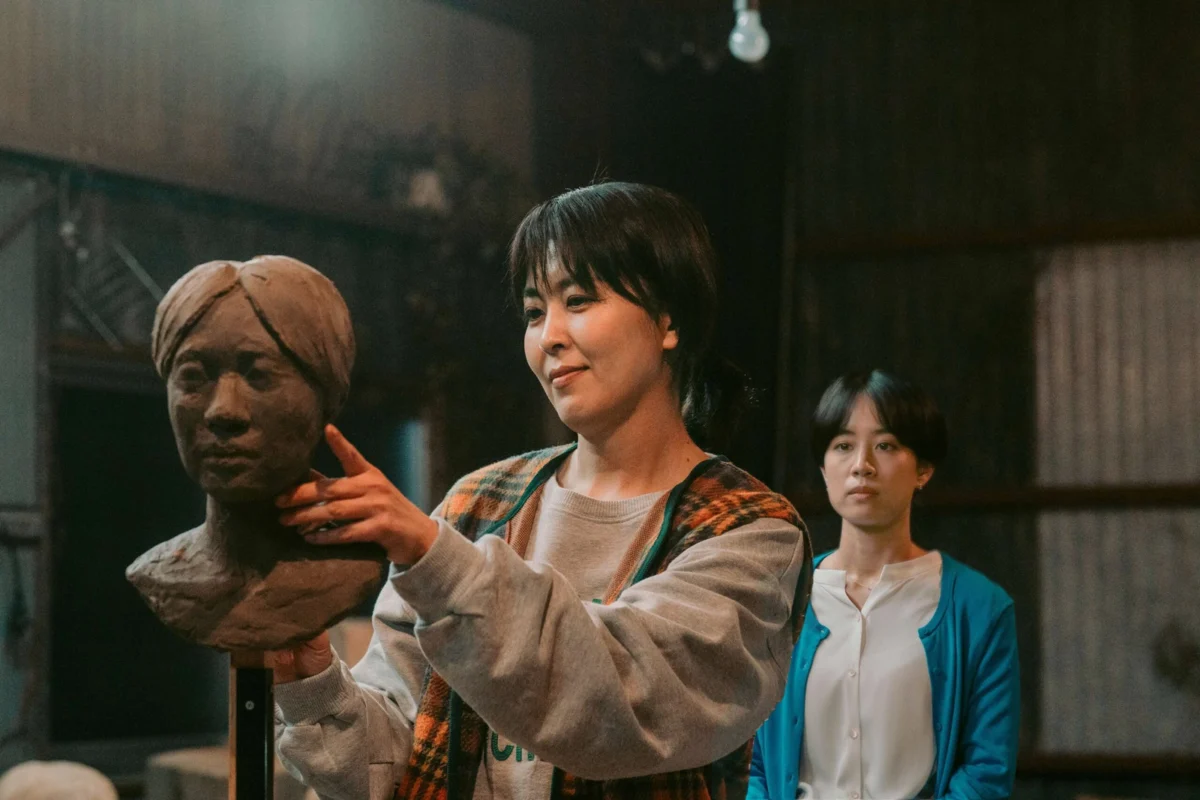
Nagi Notes is a character-driven drama set in the serene, rural town of Nagi, Okayama Prefecture. The film follows Yoriko, a sculptor whose quiet, isolated life is disrupted by the arrival of her former sister-in-law, Yuri, an architect from Tokyo. As the two women navigate the quiet of the countryside, the film slowly unspools their shared history. Fukada is a master of the "slow-burn" aesthetic; his work here is quiet, understated, and emotionally resonant. It is a film about the weight of unresolved past experiences and the healing power of place, making it a dark horse favorite for the jury.
Jury Perspectives and Industry Implications
The fate of these films rests with a jury chaired this year by the legendary South Korean director Park Chan-Wook. The selection of a chairperson with such a deep understanding of Asian cinema dynamics has fueled speculation about whether the jury might be particularly receptive to the themes of memory, technology, and isolation presented by the Japanese entries.

The implications of a potential win—or even a strong showing—are significant. For the Japanese film industry, a Palme d’Or win would validate the current domestic investment strategies and encourage further international co-productions. Moreover, it would solidify the "Japan Brand" at a time when the nation is actively seeking to export its cultural output more aggressively.
From a critical standpoint, the success of these three films would confirm that Japanese cinema is no longer categorized solely by its traditional, slow-paced arthouse roots. Instead, it is a dynamic, evolving industry capable of moving seamlessly between high-concept science fiction, international multilingual dramas, and intimate rural portraits.
Conclusion: A New Chapter
As the festival draws toward its conclusion, the focus on Japan remains intense. Whether or not one of these three films takes home the top prize, the 2026 Cannes Film Festival has already served its purpose: it has reaffirmed Japan’s status as a powerhouse of global cinema.
The confluence of Koreeda’s philosophical science fiction, Hamaguchi’s global humanism, and Fukada’s meditative storytelling represents the best of what cinema can offer—a mirror to our own lives, reflected through the unique lens of a nation in the midst of a creative and economic renaissance. As the curtains rise on the final screenings, the world waits to see which of these Japanese masterpieces will define the cinematic landscape of the coming year.












No comments yet. Be the first to join the conversation!