

In the increasingly saturated world of Mobile Virtual Network Operators (MVNOs), market differentiation usually hinges on price, data caps, or perks like free streaming subscriptions. However, a new player has entered the T-Mobile-powered landscape with a mission statement that transcends standard telecom metrics: Radiant Mobile. Billing itself as the world’s first "Christian mobile carrier," the service is targeting a demographic that feels underserved by the "morally bankrupt" corners of the modern internet. By implementing aggressive, network-level content filtering, Radiant Mobile promises to act as a digital gatekeeper, shielding its subscribers—and specifically their children—from content deemed incompatible with a faith-based lifestyle.
The Genesis of a Filtered Network
The launch of Radiant Mobile arrives at a time when parents are arguably more anxious than ever about the digital exposure of their children. While Google, Apple, and various third-party software developers provide robust parental control suites, Radiant Mobile argues that these solutions are essentially "whack-a-mole" tactics that can be easily bypassed by tech-savvy minors.
Radiant’s solution is a "nuclear option" for digital safety. Rather than relying on device-level settings that can be toggled off or uninstalled, the carrier applies filters directly to the data stream at the network level. This means that, theoretically, the "bad" parts of the internet never reach the device in the first place.
A Chronology of Digital Restrictions
The development of such a service was not an overnight endeavor. According to the company’s internal roadmap, the rollout followed a rigorous multi-stage process:
- Phase 1: Infrastructure Partnerships: Securing an MVNO agreement with T-Mobile to ensure national 5G coverage, providing the foundation for their proprietary filtering layer.
- Phase 2: Algorithmic Calibration: Developing a "Full Content Filter" list. This list is not static; it is a continuously updated database of domains, keywords, and metadata categories ranging from pornography and gambling to more niche, culturally sensitive topics like fashion models, piercings, and cybersecurity threats related to hacking.
- Phase 3: The "Radiant Life" Ecosystem: Integrating a curated portal for original Christian content, which serves as a value-add for subscribers who wish to replace the filtered "secular" content with faith-based alternatives.
- Phase 4: Multi-Environment Deployment: Addressing the challenge of Wi-Fi usage, which typically circumvents carrier-level controls, through the development of a proprietary system that claims to intercept traffic even when the user is off the cellular network.
The Anatomy of the Filter: Where the Lines Are Drawn
The most controversial aspect of Radiant Mobile is the specific criteria used to restrict access. By examining their public documentation, one can see a nuanced—and arguably subjective—approach to digital morality.
Categorical Restrictions
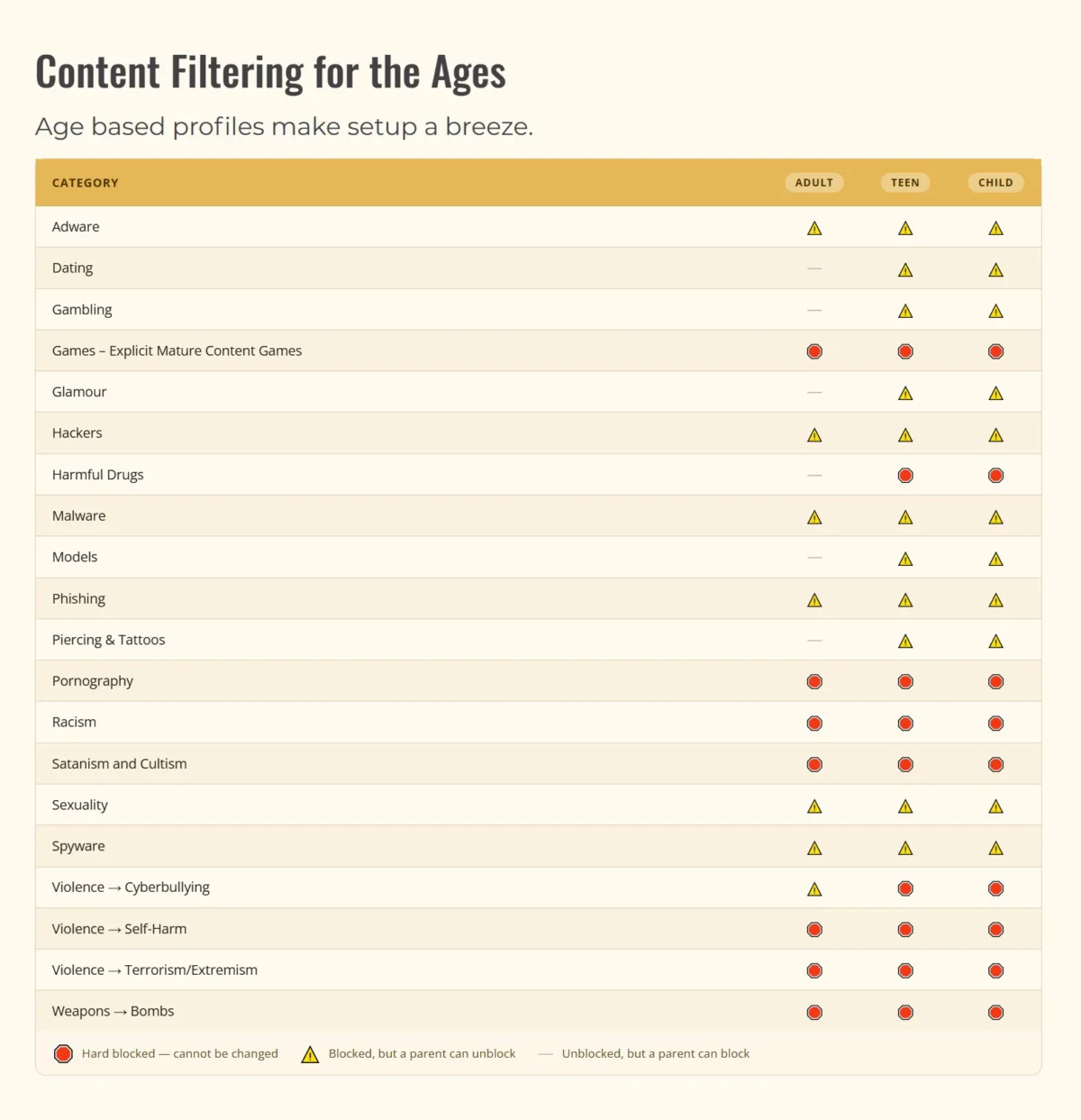
The filtering system is tiered, acknowledging that adults and children have different needs, though some blocks are absolute.
- Hard Blocks: Content such as pornography is restricted across the board, with no option for the subscriber to opt out. This is a non-negotiable term of service for all users on the network.
- Conditional Blocks: Categories such as "harmful drug content" are restricted for minors by default, but the carrier provides a toggle for adult users to access this material if they choose.
- Parental Override: Topics like tattoos or certain fashion-related content—which might be deemed "improper" for a specific household—are blocked for children, but parents retain the administrative power to override these settings.
This creates a "moral tiered" experience. The service is positioned not just as a tool for parents, but as a lifestyle choice for adults who feel they lack the willpower to avoid certain digital distractions, effectively outsourcing their self-regulation to a corporate filter.
The "Wi-Fi Problem" and Technical Skepticism
Perhaps the most significant technical claim made by Radiant Mobile is its ability to maintain these filters while the device is connected to Wi-Fi. Typically, when a phone connects to a local network, carrier-level controls are bypassed because the data traffic no longer routes through the cell towers.
Radiant claims that their system "intercepts traffic before other VPNs can override it" and insists there is "no noticeable impact on performance." This claim has been met with intense scrutiny by cybersecurity experts.
The Privacy Paradox
The fundamental question remains: How does a carrier filter encrypted traffic without decrypting it? Modern web traffic is almost entirely encrypted via HTTPS. To "see" the content of a page, a middle-man service must either possess the decryption keys (a "Man-in-the-Middle" or MitM attack) or rely on metadata analysis.
Radiant maintains that it "blocks harmful content without reading private messages or decrypting sensitive data like banking transactions." This creates a logical friction point. If the system cannot read the data, how does it differentiate between a secure banking transaction and a forbidden website? Industry experts argue that such a filter likely relies on DNS-level blocking and SNI (Server Name Indication) inspection. While effective at blocking entire domains, these methods are notoriously difficult to use for granular content filtering (like distinguishing between a fashion blog and a pornography site) without deep packet inspection, which contradicts the company’s privacy claims.
Official Stance and Market Positioning
In a series of statements, Radiant Mobile executives have framed the service as a response to the "moral decline" of the internet. By offering a clean, curated digital experience, they hope to attract families who are concerned about the influence of algorithms on their children’s worldviews.
The company is aggressive in its pricing strategy to ensure it remains competitive with mainstream MVNOs. Plans start at $30 per month for a single line, which includes unlimited 5G talk, text, and data. Recognizing their target demographic—often larger, faith-based families—they have introduced tiered discounts that cater specifically to large households, including a plan for families of eight or more. This "Quiverfull-friendly" pricing structure demonstrates a deep understanding of their target market’s socioeconomic profile.
Implications for the Future of Connectivity
The launch of Radiant Mobile carries significant implications for the broader debate on net neutrality and the future of internet access.
1. The Fragmentation of the Web
If services like Radiant Mobile gain significant market share, we may see the rise of "siloed internets." Instead of a single, open web, families may effectively subscribe to a version of the internet that has been pre-sanitized by a private corporation. While this provides peace of mind for some, it raises questions about the long-term impact on information literacy and the ability of users to encounter diverse or challenging perspectives.
2. The Privacy vs. Protection Trade-off
Radiant Mobile highlights a growing trend where consumers are willing to trade away their digital autonomy for a sense of safety. As deep packet inspection and network-level filtering become more sophisticated, the line between a "service provider" and a "content moderator" continues to blur. If users consent to these restrictions, are they truly protected, or are they simply narrowing their horizons to suit the moral framework of a specific service provider?
3. The Precedent of Corporate Censorship
By setting their own standards for what constitutes "objectionable" content, Radiant Mobile is essentially acting as a private censor. While they are well within their legal rights as a private business to determine their own terms of service, the scale of this operation could set a precedent. If other niche groups—whether political, religious, or philosophical—follow suit, we could see a future where our mobile carrier dictates not just our connectivity, but our entire digital reality.
Conclusion
Radiant Mobile is more than just another budget-friendly carrier running on T-Mobile’s infrastructure; it is an ideological project. It provides a sanctuary for those who view the modern internet as an existential threat to their values. Whether the technology behind their filtering can truly deliver on its promises without compromising user privacy or speed remains a subject of intense debate.
For now, Radiant Mobile offers a compelling, albeit controversial, alternative. It challenges the "one-size-fits-all" model of the internet and invites users to ask themselves a difficult question: How much of the world are you willing to filter out to feel truly safe? As the service scales, it will undoubtedly serve as a case study for the intersection of technology, faith, and the ongoing struggle for control over the digital landscape.












No comments yet. Be the first to join the conversation!