

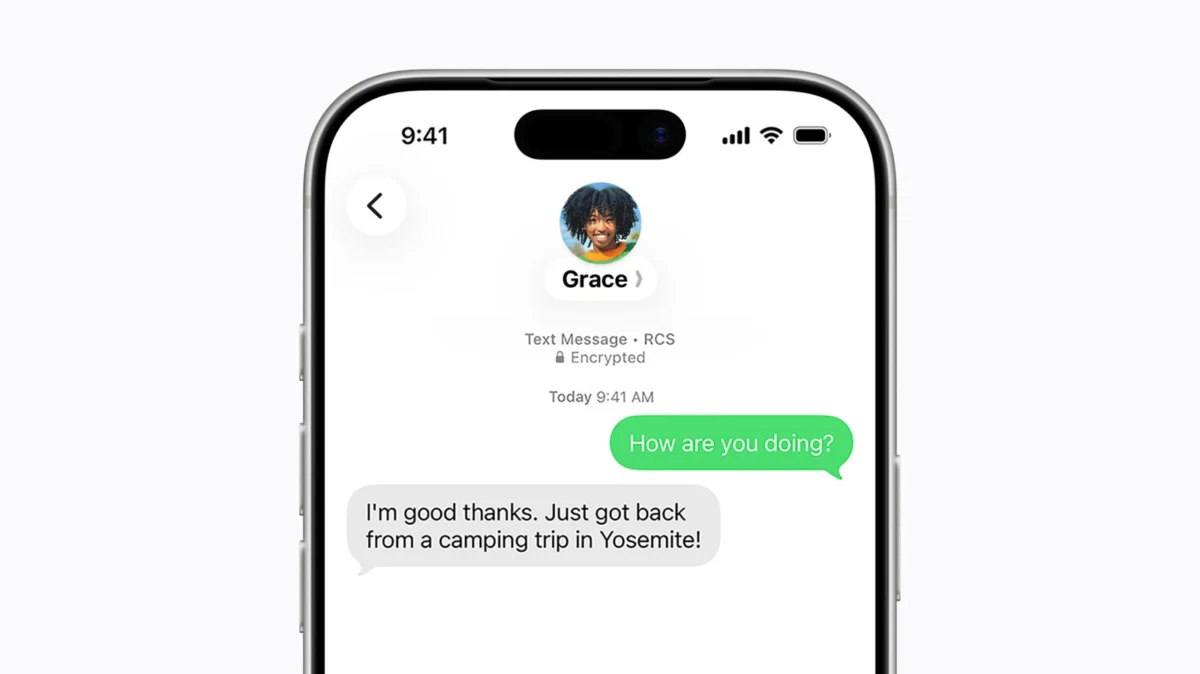
In a landmark development for cross-platform communication, Apple has officially initiated the rollout of end-to-end encrypted (E2EE) Rich Communication Services (RCS) support with the launch of iOS 26.5. This long-awaited update signals a historic bridge between the historically siloed ecosystems of Apple’s iMessage and Google’s Android-based messaging infrastructure. For millions of users, the move marks the beginning of the end for the "green bubble" insecurity that has plagued cross-platform texting for over a decade.
Main Facts: What You Need to Know
The core of today’s announcement is the implementation of the Universal Profile for RCS, augmented with end-to-end encryption. As of iOS 26.5, iPhone users can now engage in more secure, feature-rich messaging with Android users without needing to rely on third-party intermediaries like WhatsApp, Signal, or Telegram.
To benefit from this new security layer, both the sender and the recipient must meet a specific set of criteria:
- Software Requirements: The iPhone user must be running iOS 26.5. Android users must have the latest version of the Google Messages app installed.
- Network Compatibility: The device must be connected to a wireless carrier that supports E2EE over RCS. In the United States, major carriers including AT&T, T-Mobile, and Verizon have confirmed day-one support.
- Verification: Users will know their conversation is secure by the presence of a new "lock" icon displayed at the top of the chat interface.
Apple has confirmed that this encryption is enabled by default. Over the coming weeks, the company plans to automatically transition existing, eligible RCS conversations to this encrypted state, ensuring that users do not need to navigate complex settings menus to secure their communications. It is important to note, however, that communication between Apple devices will remain routed through the proprietary iMessage protocol, which continues to operate under its own distinct security architecture.
A Chronological Odyssey: The Long Road to RCS
The transition to RCS was not an overnight decision; it was the culmination of a protracted, often contentious industry struggle.
The SMS/MMS Era (2007–2020)
For years, the "blue vs. green bubble" debate dominated tech discourse. While iMessage provided a sophisticated, encrypted experience for Apple users, texts sent to Android devices reverted to the antiquated SMS/MMS standard. This resulted in low-resolution media sharing, a lack of read receipts, and, most crucially, a complete absence of encryption.
The Pressure Campaign (2021–2024)
Recognizing the widening gap in user experience, Google launched a public-facing pressure campaign in 2022, effectively shaming Apple for its refusal to adopt the modern RCS standard. Google’s advertisements and social media outreach targeted the lack of security and the "stigma" associated with the green bubble, positioning Apple as the primary obstacle to a unified, secure messaging future.
Regulatory Intervention and Compliance (2024–2026)
While public pressure played a role, it was arguably the shift in global regulatory landscapes—specifically in the European Union and China—that forced Apple’s hand. As regulators began scrutinizing the "walled garden" nature of major tech platforms, Apple realized that interoperability was no longer just a feature request; it was a matter of legal survival. By 2025, Apple formally announced it would adopt the GSMA’s RCS Universal Profile, setting the stage for the current 26.5 release.
Supporting Data and Technical Nuance
The technical architecture underpinning this update is the RCS Universal Profile. Unlike standard SMS, which transmits data in plain text across cellular networks, the new implementation on iOS 26.5 utilizes the Signal Protocol—the gold standard for E2EE—to ensure that messages remain private from the carrier and, in theory, from unauthorized interception.
According to data from industry analysts, the shift to RCS will impact nearly 1.5 billion active iPhone users. However, the efficacy of this rollout depends heavily on carrier infrastructure. While major US carriers were quick to adopt the protocol, global penetration remains fragmented. In regions with smaller or regional carriers, the transition may be slower, as these networks must first update their IMS (IP Multimedia Subsystem) cores to support the specific requirements of the iOS 26.5 RCS implementation.
Furthermore, the "suggested places" feature in Maps and the new Pride-themed "Luminance" wallpapers, which accompany the iOS 26.5 release, serve as a reminder that Apple continues to bundle functional security updates with aesthetic and ecosystem-wide enhancements, ensuring that the update feels substantial to the average consumer.
Official Responses and Corporate Positioning
Apple’s official stance on the rollout remains focused on user privacy and "seamless integration." In their press release, Apple emphasized that while they are opening the doors to RCS, they remain committed to the superiority of iMessage for Apple-to-Apple communication.
"We have always prioritized the privacy of our users," a spokesperson noted. "By integrating RCS with end-to-end encryption, we are ensuring that even when our users communicate outside of our own platform, they are afforded a level of security that aligns with modern standards."
Google’s response, conversely, was one of understated victory. In a brief statement, a representative for Google’s Android team noted, "We are pleased to see the industry moving toward a common, secure standard. When everyone uses the same, encrypted protocol, the entire ecosystem becomes safer for everyone."
The industry consensus is that Apple has performed a delicate balancing act. They have complied with the demands for interoperability without relinquishing the "exclusivity" of the iMessage experience for their core user base.
Implications: The Death of the "Green Bubble" Stigma?
The implications of this update are profound for both consumer social dynamics and enterprise communication.
Social Dynamics
For years, the color of a chat bubble has served as a social marker, particularly among younger demographics in the US. The "green bubble" was often associated with lower-quality media and the inability to participate in advanced group chat features. With RCS, the functional gap is largely closed. While the color difference may persist for branding reasons, the underlying technology now allows for high-resolution photo/video sharing and read receipts, effectively removing the technical incentive to force users onto a single platform.
Privacy and Security
From a security perspective, this is a massive win for the general public. By moving millions of conversations from unencrypted SMS to encrypted RCS, the volume of data vulnerable to interception by cellular service providers or malicious actors is drastically reduced. This is particularly significant for users in countries where third-party messaging apps like WhatsApp are restricted or banned.
The Competitive Landscape
This rollout effectively neutralizes one of the biggest competitive advantages held by third-party "over-the-top" (OTT) messaging services. If the native messaging app on every smartphone is now encrypted and feature-rich, the necessity for users to download secondary apps decreases. This could lead to a consolidation of the messaging market, though it may also trigger a new phase of innovation where these apps must offer more than just basic messaging to remain relevant.
Conclusion
The release of iOS 26.5 represents a watershed moment in the history of telecommunications. While the "long RCS nightmare" is indeed over, the journey highlights the tension between proprietary walled gardens and the necessity of universal standards in a connected world. As we look forward, the success of this transition will serve as a case study for how large tech corporations can be compelled to adopt open standards without sacrificing the core value propositions of their respective ecosystems.
For the average user, the takeaway is simple: your texts are now more secure, regardless of who you are talking to. The walls haven’t entirely come down, but for the first time in the history of the smartphone, the gates are finally open.












No comments yet. Be the first to join the conversation!