

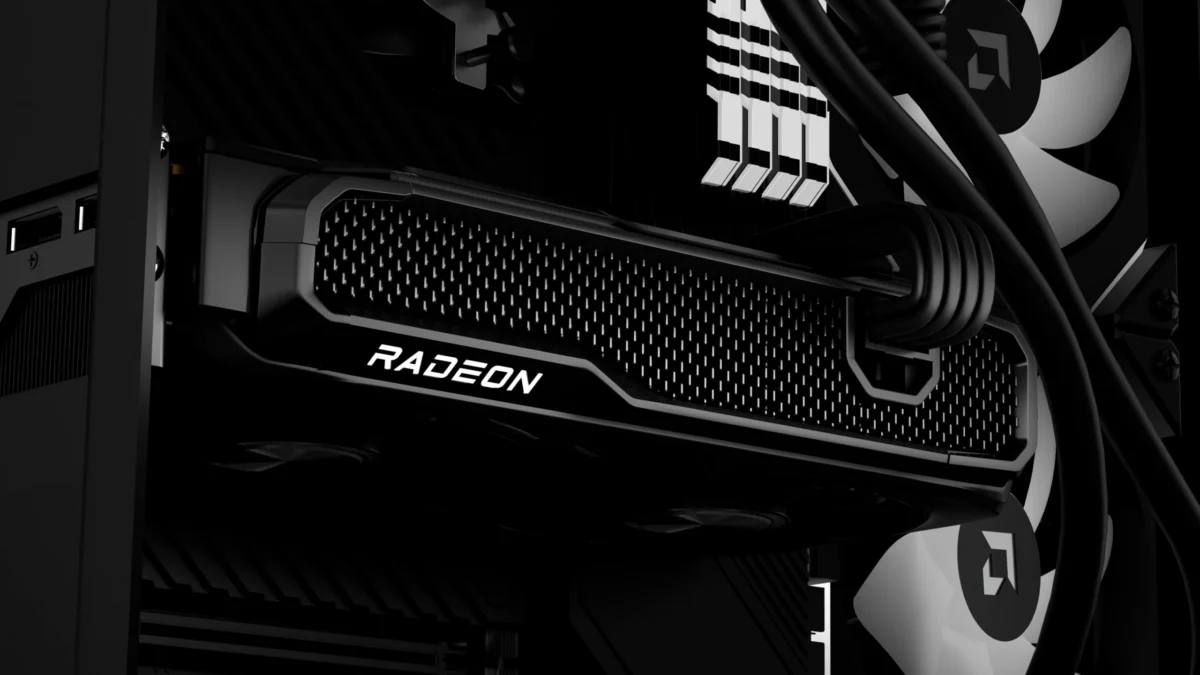
In a surprising pivot that defies the industry’s current trend of scaling back production due to global memory shortages, AMD appears to be doubling down on its RDNA 4 architecture. According to recent reports, the semiconductor giant is finalizing plans for a new entry-level powerhouse: the Radeon RX 9050. Designed to challenge the supremacy of the Nvidia GeForce RTX 5050, this upcoming GPU signifies a potential shift in AMD’s desktop strategy, aiming to provide a compelling alternative for budget-conscious gamers who are increasingly squeezed by rising hardware costs.
Main Facts: What We Know About the Navi 44 XT
The industry buzz, spearheaded by reports from Videocardz, suggests that AMD is currently preparing the Radeon RX 9050, a graphics card built on the Navi 44 silicon. While the "9050" moniker might suggest a lower-tier position in the product stack, its specifications tell a far more aggressive story.
The RX 9050 is expected to feature 2,048 cores, matching the core count of its higher-tier sibling, the RX 9060 XT. This is a significant design choice, as it positions the 9050 as a "high-performance entry-level" card, effectively creating a sandwich effect in AMD’s current lineup. With a game clock reaching 1,920 MHz and a boost clock hitting 2,600 MHz, the card is clearly intended to push the boundaries of what is expected at the $250–$300 price point.
Hardware enthusiasts will also be interested to note the inclusion of 8GB of GDDR6 memory operating on a 128-bit bus. Connectivity remains modern, with the card purportedly sporting two DisplayPort 2.1a ports and one HDMI 2.1b port, alongside the future-proof PCIe 5.0 x16 interface.
A Chronology of RDNA 4 Development
To understand why the RX 9050 is such a point of interest, we must look at the timeline of the RDNA 4 rollout.
- Early 2025: The OEM Silence. AMD began the year by quietly introducing the Radeon RX 9060, a GPU restricted exclusively to system integrators. By keeping this card out of the DIY market, AMD maintained a controlled environment for its launch, ensuring that benchmarks remained relatively obscure.
- Spring 2025: The "Rip and Benchmark" Phenomenon. Independent testers managed to procure the OEM-only RX 9060, revealing performance metrics that sent shockwaves through the industry. The card was found to outperform the RTX 5050 by approximately 20% in specific synthetic and gaming workloads, effectively threatening the market share of Nvidia’s entry-level offering.
- Mid-2025: The Shift to DIY. With the realization that the RX 9060 was a genuine threat to Nvidia’s budget dominance, speculation began regarding a wider release. However, rather than simply rebranding the OEM card, AMD appears to have opted for a new SKU—the RX 9050—to better segment the market and target the specific price-to-performance sweet spot of the RTX 5050.
Supporting Data: Comparative Analysis
The following table outlines the rumored specifications compared to its immediate stablemates, highlighting why the RX 9050 is an anomaly in AMD’s naming conventions.
| Feature | RX 9050 (Rumored) | RX 9060 (OEM) | RX 9060 XT 8GB |
|---|---|---|---|
| GPU Architecture | Navi 44 XT | Navi 44 XL | Navi 44 XT |
| Cores | 2,048 | 1,792 | 2,048 |
| Compute Units (CUs) | 32 | 28 | 32 |
| Boost Clock | 2,600 MHz | 2,990 MHz | 3,130 MHz |
| Memory | 8GB GDDR6 | 8GB GDDR6 | 8GB GDDR6 |
| Bus Width | 128-bit | 128-bit | 128-bit |
The data reveals a deliberate strategy: the RX 9050 shares the same core count and compute unit architecture as the RX 9060 XT but operates at a more conservative clock speed. This allows AMD to utilize high-quality silicon that may not have met the strict power-efficiency or thermal requirements of the XT variant, effectively increasing yields while offering a competitive product.
Official Responses and Industry Speculation
As of today, AMD has remained characteristically tight-lipped regarding the RX 9050. The company has moved away from its traditional practice of holding massive keynote events at trade shows like Computex, opting instead for a more distributed communication strategy.
However, silence from corporate headquarters is rarely an indication of inactivity. Industry analysts suggest that AMD’s decision to develop a new SKU instead of simply releasing the RX 9060 to retail indicates a broader shift in consumer-facing hardware strategy. By creating a distinct product for the DIY market, AMD can better manage its supply chain—a critical factor given the ongoing global volatility in the memory and silicon markets.
"AMD is playing a game of surgical precision," notes one industry analyst. "By filling the gap between the budget-tier RX 9060 and the mid-range offerings, they are forcing Nvidia to defend the $250 price point, which is where the bulk of the volume in the gaming GPU market exists."
Implications for the Gamer and the Market
The implications of this potential launch are threefold:
1. The Death of the "Entry-Level" Compromise
Historically, entry-level GPUs have been synonymous with compromise—lower VRAM, stripped-down memory buses, and abysmal performance in modern titles. The RX 9050, by carrying 2,048 cores and a modern feature set, suggests that AMD is trying to redefine the entry-level experience. If the card performs as rumored, it could allow 1080p gaming at high settings to become the standard for sub-$300 hardware, putting immense pressure on Nvidia to release an "RTX 5050 Super" or face significant loss of market share.
2. Supply Chain Resilience
By introducing the RX 9050, AMD is likely testing the limits of its manufacturing partners. With memory shortages looming, the ability to produce a card that can be sold at a lower margin but higher volume is a strategic necessity. This, combined with the use of the Navi 44 die—which is smaller and cheaper to produce than high-end dies—positions AMD to weather potential shortages better than competitors who rely on more complex, power-hungry architectures.
3. The Future of DIY Gaming
For the DIY community, this is a pivotal moment. The current market has been starved of truly competitive, value-oriented hardware for several years. If AMD brings the RX 9050 to market at a competitive price point, it could reinvigorate the custom PC market, encouraging users who have been holding onto older cards (such as the GTX 16-series or RX 500-series) to finally upgrade.
Conclusion: Looking Toward Computex
With Computex just around the corner in Taipei, the industry is holding its breath. While AMD may not have a central stage to announce the RX 9050, the presence of its AIB (Add-in Board) partners—such as Sapphire, PowerColor, and ASUS—will be telling. If these partners begin showcasing cards with the "9050" branding, it will confirm that AMD has officially declared war on the budget-tier segment.
Whether the RX 9050 is a game-changer or simply a stopgap solution remains to be seen. However, one thing is certain: in a market defined by high costs and supply constraints, AMD’s decision to prioritize an aggressive, high-performance, low-cost entry-level GPU is exactly the kind of disruption the PC gaming industry needs. Gamers, for once, might be the biggest beneficiaries of the upcoming silicon showdown.










No comments yet. Be the first to join the conversation!