Asep Darmawan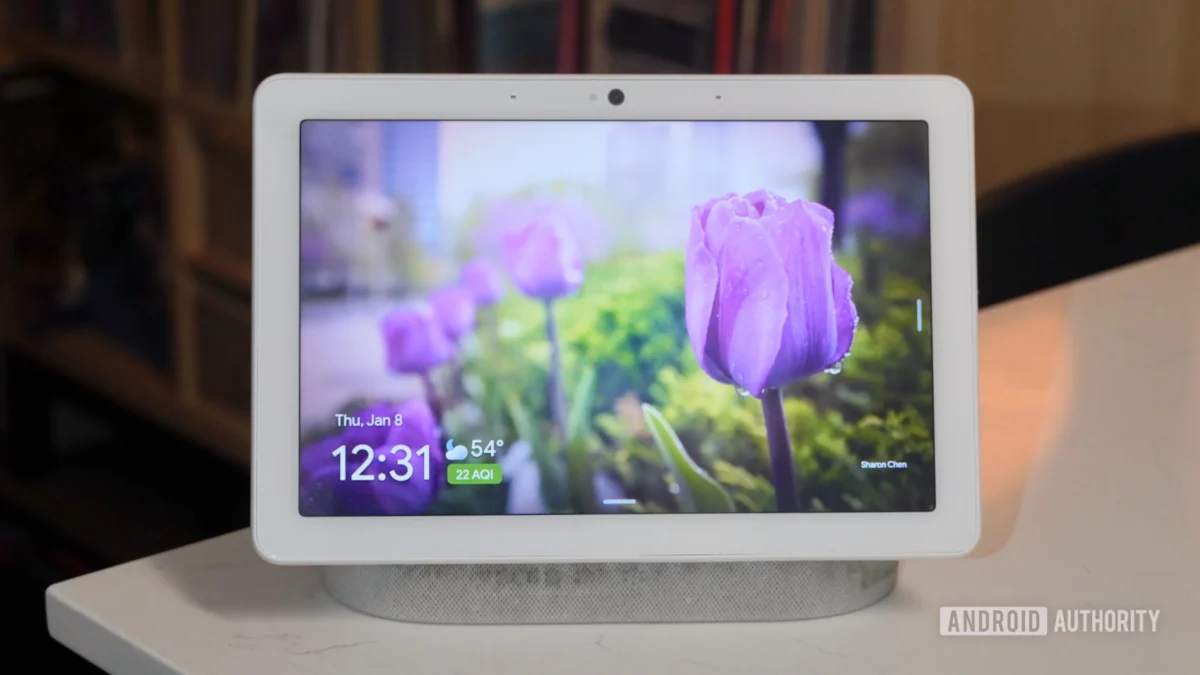
The vision of a truly intelligent, context-aware smart home has long been the "holy grail" of consumer technology. For years, users have navigated a landscape of rigid commands, specific nomenclature, and frustratingly literal voice assistants that often failed to grasp the nuances of daily life. With the latest suite of updates to Google Home and the ongoing integration of Gemini, Google is attempting to bridge the gap between "robotic" automation and the intuitive, proactive home assistant that science fiction once promised.
Following the May 11 release notes and the subsequent rollout of Google Home app version 4.16, the tech giant is demonstrating a pivot toward user-centric refinement. By addressing the critical issue of "household context" and streamlining the physical and digital interfaces of its smart home ecosystem, Google is signaling that its early access experiment with Gemini is finally finding its footing.
The Evolution of the Context-Aware Assistant
At the heart of the recent updates is a fundamental change in how Gemini processes information regarding the user’s personal environment. Historically, voice assistants like Google Assistant struggled with relational data. Asking a speaker to "check on the nanny" or "see who drove the car" was often met with a confused error message because the assistant lacked the connective tissue between a generic term and a specific, tagged identity.
Bridging the Context Gap
The most significant functional advancement in this release is the ability for Gemini to leverage information saved via "Ask Home." By allowing users to define household relationships—such as "our nanny is Alice"—Gemini can now cross-reference this information with camera history. When a user asks, "When did the nanny come home?" the system no longer treats it as a vague inquiry. Instead, it parses the metadata, identifies the face tagged as "Alice," and provides a meaningful, human-like response.
This represents a shift from a command-and-control interface to a semantic one. By reducing the burden on the user to remember device labels or specific naming conventions, Google is effectively lowering the barrier to entry for complex smart home interactions.
Chronology of the Gemini Transition
To understand the trajectory of these changes, one must look at the timeline of Google’s "Gemini for Home" initiative:
- The Early Access Phase: Google launched the Gemini for Home program as an early access feature for Nest users. The initial feedback was mixed; while the model showcased impressive reasoning capabilities, it frequently suffered from latency and a lack of awareness regarding existing smart home configurations.
- The Feedback Loop: Recognizing the friction, Google began a more aggressive iteration cycle. Throughout early 2025, the company introduced incremental updates to backend processing to reduce "cold start" times for voice commands.
- May 11 Release (The Current Milestone): The release of the May 11 notes marks the most substantial update to date, focusing on user feedback mechanisms (thumbs-up/thumbs-down), optimized backend processing for basic tasks like lighting and timers, and the refinement of age-gated filters.
- Version 4.16 Deployment: The concurrent update to the Google Home app (v4.16) aligns the mobile interface with the backend improvements, particularly regarding thermostat management and device pairing.
Supporting Data and Technical Enhancements
Beyond the headline features, Google has implemented several under-the-hood optimizations that directly impact the "feel" of the system.
Responsive Performance
One of the most frequent complaints regarding early Gemini-enabled speakers was the delay between a command and the execution of an action. Google reports that it has streamlined the backend processing specifically for "light-duty" commands. Actions like toggling smart bulbs or initiating timers now pass through a more efficient path, reducing the need for users to repeat themselves.
Refined Content Filtering
The update also addresses the "over-cautious" nature of the AI. Previously, Gemini’s safety filters would occasionally block benign requests if they triggered keyword associations related to restricted topics. With this update, adult users should experience fewer interruptions when asking for recipes or instructional content, such as how to prepare a cocktail, which previously might have been caught by overly aggressive age-restriction algorithms.
Feedback Integration
The introduction of thumbs-up and thumbs-down buttons on smart displays is not merely a UI change; it is a vital data-gathering tool. By crowdsourcing feedback directly at the point of interaction, Google is feeding a continuous learning loop that allows the Gemini model to tune its responses based on actual user satisfaction, rather than just raw performance metrics.
Official Responses and Strategic Pivot
In the official Nest Community post detailing the May 11 update, Google representatives emphasized that the goal is "frictionless interaction." While the company has been careful to label the current state of Gemini for Home as "early access," the tone of their communication suggests a newfound responsiveness to the community.
Google’s strategy seems to be twofold:
- Iterative Refinement: By releasing smaller, frequent updates rather than waiting for massive overhauls, Google is keeping the user base engaged while fixing bugs in real-time.
- Harmonization: A major point of contention has been the disparity between the Android and iOS experiences. The latest update rectifies this by bringing full management capabilities for third-party thermostats and AC units to the iOS version of the Google Home app, ensuring that the platform remains agnostic and inclusive.
Practical Implications for the Modern Smart Home
The implications of these updates extend beyond just "convenience." They represent a fundamental shift in how consumers interact with their physical spaces.
The Death of the "Specific Label"
The most profound implication is the obsolescence of rigid naming conventions. Previously, if you renamed your thermostat, your voice assistant would lose track of it. By enabling the system to understand context and relationships, the smart home is becoming more forgiving. A home that understands "the kitchen lights" vs. "the left bank of recessed lighting" without requiring the user to memorize a directory is a home that is truly "smart."
Simplified Onboarding
The move to a QR-code-based setup flow in the Google Home app is a pragmatic response to the fragmentation of the IoT market. With the rise of the Matter standard, users are connecting a diverse array of devices from various manufacturers. Replacing the old, convoluted menu with a streamlined scanner reduces "setup anxiety," allowing users to integrate new tech into their home ecosystem with minimal friction.
The Future of "Home Briefs"
The "Home Brief" feature—a quick audio summary of household activity—is perhaps the most futuristic aspect of this update. It transforms the speaker from a reactive tool into a proactive messenger. Instead of asking the home, "What did I miss?" the system is being primed to curate relevant information, which is a major step toward the "ambient computing" vision that Google has touted for years.
Conclusion: A Work in Progress
It is essential to maintain perspective: Gemini for Home is still in its infancy. There are undoubtedly still edge cases where the AI will falter, misinterpret a request, or struggle with complex, multi-layered commands. However, the trajectory is clear. By prioritizing context, responsiveness, and user feedback, Google is effectively stripping away the "robotics" of the smart home experience.
For the early adopters currently participating in the early access program, these updates are a sign of good faith. For the average consumer waiting on the sidelines, the message is equally clear: the wait for a truly helpful, intuitive home assistant is nearing its end. As Google continues to iterate, the line between "technology that we use" and "a home that understands us" is becoming increasingly thin. The May 11 updates may be incremental, but in the world of artificial intelligence, these small, consistent steps are exactly how we arrive at the future.

 Iffa Jayyana