

Meta continues to push the boundaries of design language within its flagship messaging platform, WhatsApp. Recent updates to the application’s TestFlight beta environment on iOS suggest that the company is accelerating its transition to the "Liquid Glass" design aesthetic. By migrating core interactive elements—specifically message reactions and context menus—into this new visual framework, WhatsApp is signaling a shift toward a more modern, transparent, and cohesive user interface (UI) that aligns with the contemporary standards set by Apple’s iOS 26.
While the rollout has been incremental and largely restricted to a small cohort of beta testers, the persistence of these design iterations confirms that a comprehensive visual refresh is on the horizon. This article examines the current state of the Liquid Glass redesign, the chronology of its development, and what these changes imply for the future of mobile messaging.
The Core Facts: What is Liquid Glass?
"Liquid Glass" is the term commonly used to describe the design philosophy Meta is adopting to bring WhatsApp in line with the evolving aesthetic of Apple’s iOS. Characterized by the extensive use of transparency, blur effects (often referred to as "frosted glass"), and fluid, high-contrast UI elements, the design language aims to create a more immersive and aesthetically pleasing environment for users.
In the current standard version of WhatsApp, many interface components—such as message reaction trays and long-press context menus—utilize solid, opaque backgrounds. These elements, while functional, lack the depth and modern polish associated with modern system-native iOS apps.

The latest TestFlight builds suggest that Meta is finally addressing this inconsistency. By integrating Liquid Glass into the reaction tray and message context menus, the app will achieve a uniform look where menus feel as though they are "floating" over the conversation layer, utilizing depth-of-field effects to maintain readability while enhancing visual sophistication.
A Chronological Progression of the Redesign
The journey toward a Liquid Glass WhatsApp did not happen overnight. It has been a calculated, multi-phase deployment that began in earnest following the public launch of iOS 26.
Phase 1: The Initial Rollout (Late 2025)
In October 2025, Meta initiated a limited-scale test for a subset of iOS users. This initial phase primarily targeted the "infrastructure" of the app, focusing on the bottom navigation bar and specific headers within the Chats tab. At the time, the reception was positive, though users noted that the changes felt disconnected because the rest of the application remained tied to the older, opaque design language.
Phase 2: Systemic Refinement (Early 2026)
As the months progressed into 2026, the focus shifted to the core functional areas of the app. In March, beta testers discovered that the voice message player—a heavily used feature—was receiving the Liquid Glass treatment. This update introduced subtle transparency to the playback bar, allowing the chat wallpaper to bleed through slightly, creating a more cohesive visual experience.
Phase 3: The In-Chat Interface (May 2026)
By May 2026, reports emerged that Meta was working on a broader overhaul of the in-chat interface. This was a critical step, as the chat bubble environment is where the user spends the vast majority of their time. By applying Liquid Glass to the chat background and message entry fields, the app began to feel less like a rigid utility and more like a fluid, native component of the operating system.
Phase 4: Current Developments (The Present)
The most recent findings from WABetaInfo reveal that the design team is currently fine-tuning the reaction tray and context menus. These are the "final mile" elements of the UI. Once these components are updated to reflect the new language, the app will finally reach a state of visual parity, where no element of the user interface feels like a vestige of an older design era.
Supporting Data: Why Consistency Matters
In the world of UX (User Experience) design, consistency is not merely an aesthetic choice; it is a functional requirement. When an application features a mix of design languages—such as having a modern, transparent navigation bar coupled with a dated, opaque context menu—it creates "cognitive friction."
According to data insights regarding user retention and app satisfaction, users tend to perceive apps that adhere strictly to platform design guidelines (in this case, Apple’s Human Interface Guidelines) as being more "trustworthy" and "efficient." By adopting Liquid Glass, Meta is effectively:
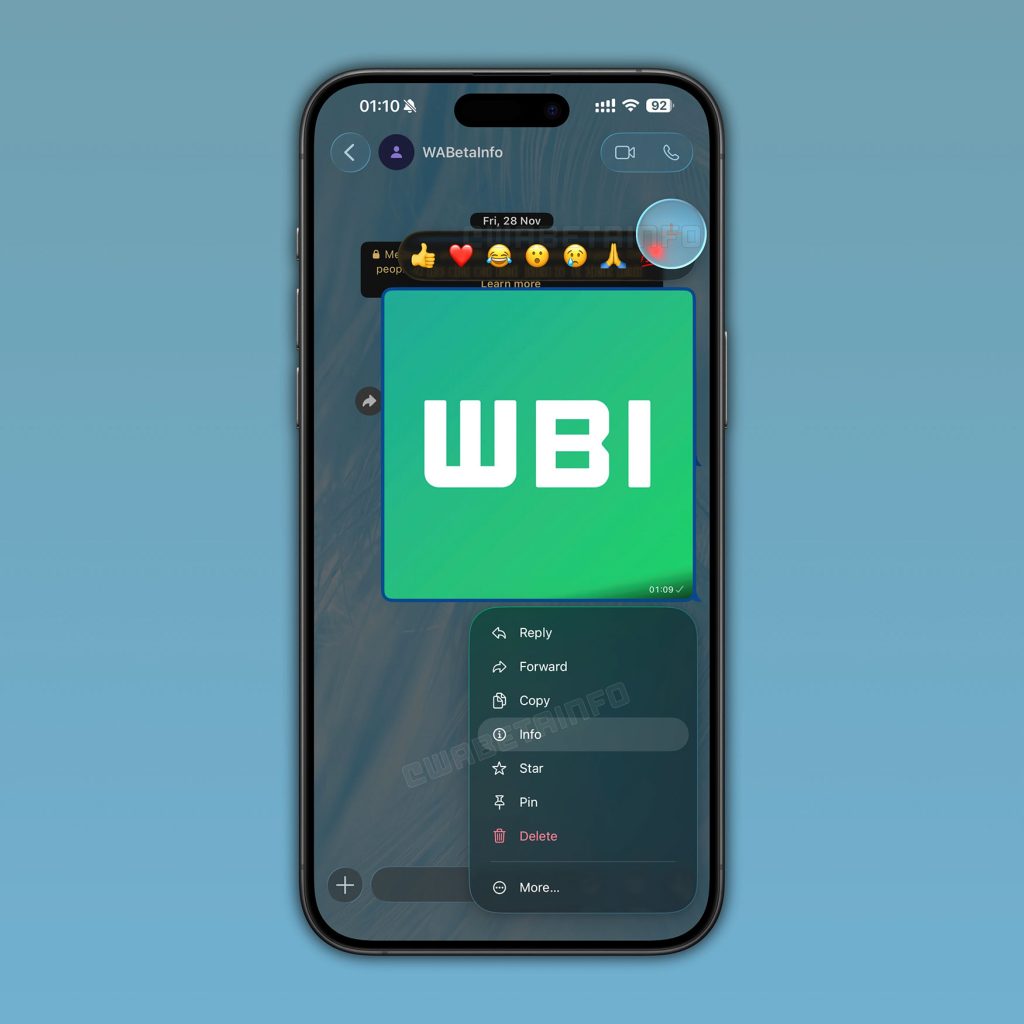
- Reducing Visual Noise: Transparent menus allow the user to maintain a sense of location within the app, as the blurred content behind the menu provides context that the menu is a layer above the primary content.
- Modernizing Brand Identity: As Apple updates its own design language, apps that fail to adapt are often perceived as "abandoned" or "outdated," even if they receive regular functional updates.
- Improving Accessibility: Modern blur effects are often paired with improved typography and spacing, which can assist in making interactive elements more distinct and easier to tap for users with varying levels of motor dexterity.
Official Responses and Developer Strategy
Meta has remained characteristically tight-lipped regarding the specific timeline for a global rollout. However, the company’s strategy of using TestFlight as a sandbox environment is standard procedure for large-scale deployments. By controlling the rollout through limited beta testing, Meta can monitor performance metrics—such as load times and GPU usage—to ensure that the added transparency effects do not negatively impact the battery life or performance of older iPhone models.
The decision to keep these features in the "hidden" state within the beta build indicates that they are not yet ready for mass consumption. WABetaInfo, which regularly dissects these builds, has noted that while the code for these features is present, they require manual activation, suggesting that the feature flags have not yet been toggled for the general beta testing population.
The Broader Implications: What This Means for Users
The transition to Liquid Glass is more than just a cosmetic upgrade. It represents a significant shift in Meta’s philosophy toward the WhatsApp ecosystem. For years, WhatsApp maintained a distinct, "neutral" design that looked essentially the same on iOS and Android.
The move toward Liquid Glass signifies a pivot toward platform-specific optimization. By embracing the unique design language of iOS, Meta is acknowledging that WhatsApp users on Apple devices expect a premium, native experience.

What users should expect in the coming months:
- A "Floating" Experience: Once the update rolls out, you will likely notice that menus no longer feel like "pop-ups" that block the view. Instead, they will appear as delicate, translucent overlays.
- Enhanced Depth: The interaction between the chat wallpaper and the UI will become more dynamic. You may find that your chosen chat wallpaper feels more integrated into the overall conversation flow.
- Potential Performance Trade-offs: While modern iPhones are more than capable of handling these effects, users on older hardware (such as the iPhone 11 or earlier) might notice subtle variations in how quickly these menus render.
Conclusion: A More Refined Future
The ongoing work on the Liquid Glass redesign highlights Meta’s commitment to keeping WhatsApp at the forefront of mobile messaging technology. While the rollout has been slow and methodical, the cumulative effect of these changes will be a significantly more polished and professional application.
For the average user, these changes may seem minor in isolation. However, when viewed as part of a larger, systemic overhaul, they represent a significant step toward a unified and modern user experience. As the company continues to test these features in the shadows of the TestFlight environment, we can expect a formal announcement or a quiet, widespread update to follow in the coming months.
Until then, the Liquid Glass redesign remains an exciting "work in progress," a testament to the fact that even the world’s most popular messaging app is constantly evolving to stay relevant in a rapidly changing digital landscape. Whether you are a casual user or a power user of WhatsApp, the future of the app looks significantly more transparent—in the best way possible.












No comments yet. Be the first to join the conversation!