


As the United States approaches its 250th anniversary—the Semiquincentennial—the nation stands at a unique historical crossroads. Two and a half centuries of independence have yielded a complex tapestry of triumph, struggle, evolution, and reflection. For many Americans, this milestone is not merely a date on the calendar, but an invitation to re-examine the foundational documents, the forgotten voices, and the transformative movements that have defined the American experiment.
In an era of digital noise, there is perhaps no better way to commemorate this quarter-millennium of history than by turning to the written word. From the stirring rhetoric of the Founding Fathers to the grassroots perspectives of those who labored in the shadows, literature serves as our most reliable bridge to the past. By exploring curated collections of historical non-fiction, readers can gain a deeper understanding of the values that continue to shape the American consciousness.

The Pillars of Democracy: Foundational Texts
The Semiquincentennial demands a return to the source. To understand the "why" of the United States, one must grapple with the "what" of its origins.
Walter Isaacson, in The Greatest Sentence Ever Written, provides a masterclass in dissecting the revolutionary language that gave birth to a new democratic ideal. Isaacson’s work acts as a vital reminder that the American project was built on radical, transformative ideas that remain as aspirational today as they were in the 18th century. Similarly, the republication of Thomas Paine’s Common Sense—supported by insightful commentary from historian Gordon S. Wood—reminds us of the sheer audacity required to break from an empire and chart an unknown course toward sovereignty.

The legal and political framework of the nation, the U.S. Constitution, is often cited but rarely fully understood by the average citizen. Jill Lepore’s Pulitzer Prize-winning We the People: A History of the U.S. Constitution serves as an essential companion for those wishing to move beyond rote memorization. Lepore’s narrative nonfiction offers a sharp, necessary look at the document’s history, legacy, and the ongoing struggle to live up to its promise.
Chronology of a Nation: From Revolution to Reflection
The narrative of American history is not a static line; it is a series of overlapping, often contradictory, events.
The story begins in earnest with the struggle for independence. David McCullough’s 1776 (Deluxe Slipcase Edition) remains a gold standard for understanding the sheer fragility of the early American military and political efforts. Through meticulous research into both American and British archives, McCullough captures the desperate, high-stakes nature of the conflict. For a more granular look at the tactical maneuvers of the era, Kostya Kennedy’s The Ride: Paul Revere and the Night That Saved America strips away the mythic layers of the famous midnight ride, revealing the human reality behind the legend.
Moving into the internal dynamics of the founding, Stacy Schiff’s The Revolutionary: Samuel Adams provides a vital character study. While the "Founding Fathers" are often viewed as a monolith, Schiff teases out the enigma of Adams—a fiery orator and tactical mastermind who was arguably the most essential architect of the colonial rebellion.

As we look toward the broader arc of the nation, DK’s The History of the USA Year by Year offers a comprehensive, chronological roadmap. This volume is an indispensable reference for tracking the evolution of the United States from its 1776 inception through the industrial age, the global conflicts of the 20th century, and into the complexities of the present day.
The Un-Whitewashed Story: Diversifying the Narrative
A truly robust examination of the Semiquincentennial requires a commitment to inclusivity. The traditional "great man" theory of history has frequently obscured the contributions of those who were marginalized by the very systems they helped build.

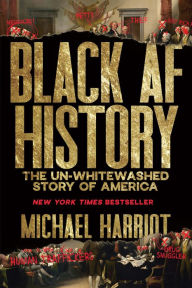
Michael Harriot’s Black AF History: The Un-Whitewashed Story of America is a piercing, necessary intervention in the historical canon. Combining deep-dive research with a sharp, humorous, and direct delivery, Harriot highlights the omissions in standard textbooks, ensuring that the history of Black Americans is recognized as central—not peripheral—to the American story.
Similarly, Norah O’Donnell’s We the Women: The Hidden Heroes Who Shaped America performs a vital service by bringing the overlooked architects of change to the forefront. By focusing on the scientists, artists, and abolitionists who were often barred from the halls of power, O’Donnell provides a fuller, more accurate picture of the nation’s development.
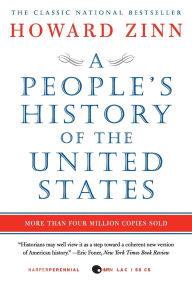
For a broader sociological perspective, Howard Zinn’s A People’s History of the United States remains a seminal text. By focusing on the cross-section of scholarly research and approachable prose, Zinn forces the reader to contend with the complexities of the American experience—from the perspective of the laborer, the immigrant, and the protester. This approach is further bolstered by Tad Stoermer’s A Resistance History of the United States, which catalogues the acts of rebellion—such as the Underground Railroad—that have consistently served as the conscience of the nation.
Implications for the Future
The Semiquincentennial is more than a retrospective; it is a diagnostic tool for the present. When we read Joshua Bennett’s We (the People of the United States)—a sweeping, book-length poem exploring identity, parenthood, and the American spirit—we are reminded that history is not just about what happened, but about who we are becoming.

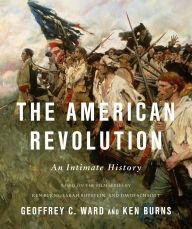
The books mentioned here, from the intimate, detailed historical analysis provided by Ken Burns and Geoffrey C. Ward in The American Revolution: An Intimate History to the poetic explorations of the national identity, suggest that the American story is one of constant iteration.
Key Takeaways for the Reader
- Historical Literacy: The 250th anniversary provides a structured opportunity to revisit foundational texts and modern revisions.
- Multiple Perspectives: Understanding the United States requires acknowledging the "un-whitewashed" reality of the nation’s past.
- The Power of Narrative: Whether through biographies, scholarly histories, or poetry, storytelling remains the most effective medium for processing the complexity of national identity.
Official Responses and Cultural Significance
As the nation prepares for official celebrations and the "Semiquincentennial" begins to occupy more space in public discourse, cultural institutions and publishers are aligning their efforts to foster a more informed citizenry. The goal of this collective endeavor is not to produce a singular, celebratory narrative, but to encourage a multi-faceted inquiry into the American experience.
Educational initiatives are increasingly emphasizing the "hidden figures" of history, ensuring that the 250th anniversary is marked by a more equitable distribution of historical memory. As these books demonstrate, the best way to celebrate 250 years is not to bury the past in monuments, but to exhume it, examine it, and engage with its ongoing implications.
In conclusion, the path to the Semiquincentennial is paved with books. By engaging with these texts, we do not merely look back at 1776; we look forward, using the hard-won wisdom of our ancestors to navigate the challenges of the future. The United States, after all, is not a static destination—it is a work in progress, defined by the people who continue to read, learn, and rewrite its history.

For those interested in building their own library of American history in anticipation of the 250th anniversary, more resources and historical collections can be found through authorized retailers like Barnes & Noble.












No comments yet. Be the first to join the conversation!