

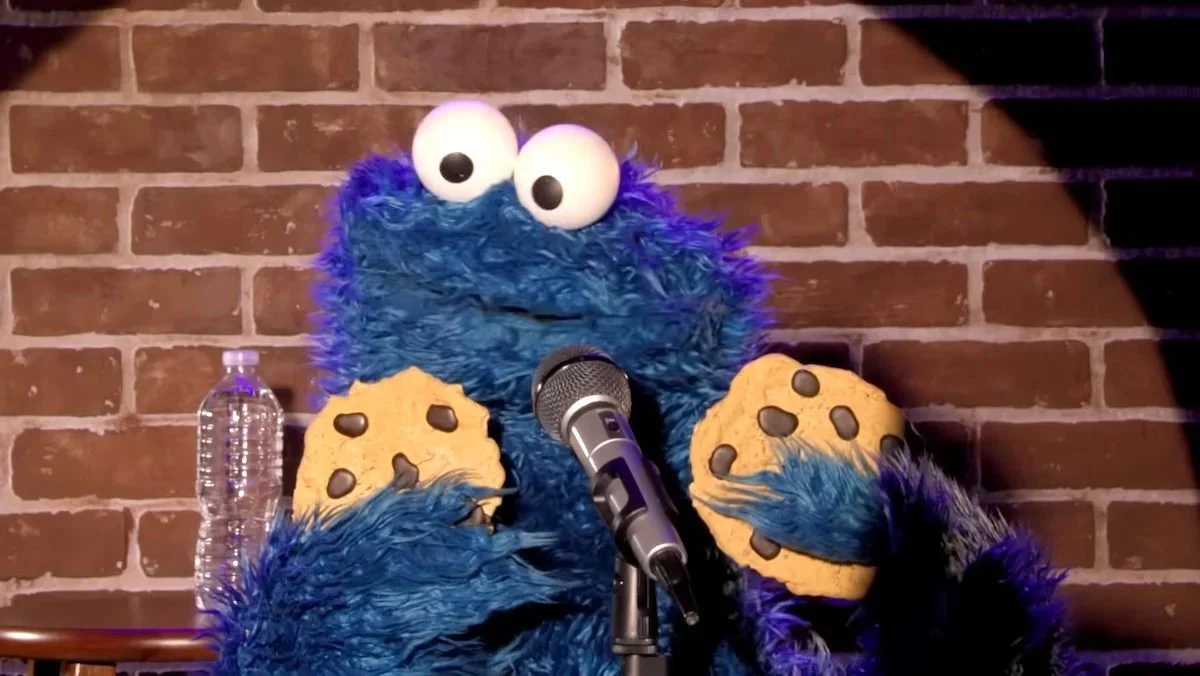
For over 55 years, the residents of Sesame Street have served as the architects of early childhood education, teaching generations of children how to count, spell, and navigate the complexities of human emotion. However, as the legendary show edges toward its sixth decade, it has proven that its appeal is not limited to the sandbox. In a surprising, hilarious, and deeply meta collaboration with Netflix’s "Netflix Is a Joke" festival, the iconic puppets have stepped away from their familiar stoops and trash cans to test their mettle in the most unforgiving of environments: the standup comedy club.
The resulting short, which has quickly become a viral sensation, features an ensemble cast—including Elmo, Bert, Ernie, Cookie Monster, Grover, and even Slimey the Worm—attempting to navigate the high-stakes world of the open mic circuit. The premise is simple, yet brilliant: place the world’s most wholesome characters in front of a cold, unforgiving brick wall and see if they can land a punchline.
The Chronology of a Comedy Experiment
The genesis of this unexpected project lies in the promotional efforts surrounding the "Netflix Is a Joke" festival. Netflix, aiming to bridge the gap between their sophisticated adult comedy programming and the enduring cultural ubiquity of Jim Henson’s creations, commissioned a short-form sketch that flips the script on traditional Sesame Street morality plays.
The timeline of the production saw the production team recreating a classic "dive bar" comedy club aesthetic. The shoot involved several key sequences:
- The Setup: The iconic characters are introduced as aspiring comedians, each bringing their signature quirks to the stage.
- The Performance Phase: A rapid-fire montage of Elmo, Bert, Ernie, and others delivering "jokes" that range from innocent observational humor to complete non-sequiturs.
- The Heckler’s Gallery: The inclusion of Oscar the Grouch, acting as the ultimate arbiter of taste, sitting in the back of the room and ruthlessly critiquing the performances.
- The Closer: A final performance by Grover that subverts the expectations of the entire ensemble, providing a comedic high point that even the most cynical viewers found impressive.
Decoding the Humor: Why the Jokes (Mostly) Fail
To understand why this sketch works, one must analyze the intentionality of the failure. In the professional comedy world, "dying on stage" is a rite of passage. In this sketch, the Sesame Street characters are not meant to be good; they are meant to be earnest.

The Breakdown of the Set
- Elmo: Attempts to rely on his high-energy, infectious personality, but finds that "Elmo loves his goldfish" doesn’t quite translate to a room full of skeptical adults.
- Bert and Ernie: The duo attempts a double act, but their dynamic—typically used for educational friction—becomes a masterclass in anti-comedy. Ernie’s lack of awareness regarding "timing" creates a meta-layer where the audience laughs not at the joke, but at the sheer absurdity of Ernie trying to be a standup comic.
- Cookie Monster: His performance is literal. He approaches the microphone with the same single-minded focus he applies to chocolate chips. While he provides physical comedy, his inability to move past his own cravings highlights the genius of the sketch: the characters are trapped by their own archetypes.
- Grover: The standout. Grover’s delivery is the only one that feels "pro." He manages to capture the cadence of a seasoned road comic, proving that even a blue monster can handle a room if he understands the mechanics of the "setup and payoff."
The Grouch Perspective
Oscar the Grouch serves as the essential foil. By positioning Oscar as the primary critic, the show acknowledges the absurdity of the premise. Oscar represents the audience’s inner cynic. When he mocks the performances, he is voicing the viewer’s own realization that puppets have no business trying to be the next George Carlin.
Supporting Data: The Longevity of Sesame Street
Sesame Street’s ability to pivot into new genres—like adult-oriented standup—is supported by its remarkable institutional longevity. Since its debut in 1969, the show has:
- Produced over 4,600 episodes.
- Garnered over 200 Emmy Awards.
- Expanded into 150 countries and dozens of languages.
The data shows that the brand is not merely "nostalgic," but "adaptive." By leveraging the Netflix partnership, Sesame Workshop demonstrates that it understands the demographic shift of its audience. The parents who watched the show in the 1980s and 90s are now the target demographic for Netflix’s comedy specials. This collaboration serves as a bridge, allowing the show to maintain its relevance in a crowded digital media landscape.
Official Responses and Creative Direction
While there hasn’t been a formal press conference regarding the sketch, spokespeople from Sesame Workshop have previously noted that the organization encourages its characters to "explore new environments" to stay relevant. The creative direction for this project was likely spearheaded by the desire to lean into the "so bad it’s good" aesthetic.
In the world of comedy, intentional failure is an art form. By forcing the characters to perform in an environment that is diametrically opposed to their nature, the writers created a vacuum of humor that the audience rushes to fill with laughter. It is a sophisticated nod to the audience, acknowledging that we know these characters, we love them, and we know exactly how they will fail.
The Implications for Future Content
The success of this short has significant implications for how legacy media brands utilize streaming platforms. We are seeing a move away from the "siloed" approach to intellectual property. In the past, Sesame Street would have strictly limited its characters to educational or family-friendly contexts.
However, this Netflix collaboration suggests that the brand is willing to experiment with "brand dilution" in exchange for "brand vitality." By allowing the characters to be "terrible" at comedy, the show actually reinforces their core identities. We laugh because we know who they are, and we know they aren’t comedians—they are monsters, birds, and children’s icons.
Why We Are Still Laughing
Ultimately, the brilliance of this piece is its self-awareness. We are not laughing at the jokes; we are laughing at the attempt. The show has successfully identified that its adult audience finds joy in seeing these characters "out of water."
As we look toward the future of Sesame Street, this experiment provides a blueprint. It shows that even after 56 years, the show is not afraid to break the fourth wall, acknowledge the aging of its audience, and poke fun at its own rigid archetypes.
Whether it’s Slimey the Worm’s mediocre set or Grover’s unexpected professionalism, the short reminds us that Sesame Street isn’t just for children—it’s for anyone who can appreciate the absurdity of a monster holding a microphone in a dark club, trying to find a laugh in a world that is usually much sunnier. And if that makes us a bunch of Grouches for enjoying it, then so be it. Sometimes, the best way to honor a legacy is to take it out of the classroom and put it under the spotlight, even if the result is a beautifully orchestrated disaster.











No comments yet. Be the first to join the conversation!