Jia Lissa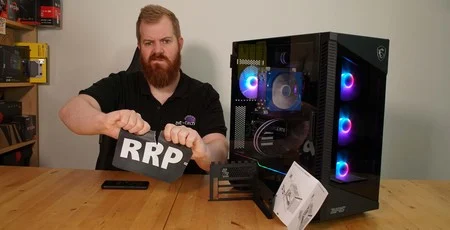
In the fiercely competitive landscape of PC chassis design, brand legacy often carries significant weight. MSI, a titan of the motherboard and graphics card industry since its inception in 1986, has spent the last few years aggressively expanding its footprint into the peripheral and enclosure markets. However, entering the highly saturated "mid-tower" segment requires more than just brand recognition; it demands precision engineering and competitive pricing.
The upcoming MSI MPG Velox 100R, alongside its sibling, the performance-focused 100P Airflow, represents MSI’s latest attempt to capture the hearts of RGB-loving enthusiasts. Yet, after rigorous testing, it appears that while MSI has mastered the aesthetics, the structural execution and value proposition leave much to be desired.
Main Facts: Aesthetic Familiarity Meets Hardware Ambition
The MSI MPG Velox 100R arrives as a standard-bearer for the "glass-and-RGB" aesthetic that has dominated the PC gaming market for the better part of a decade. Measuring 490mm x 474mm x 231mm, it sits comfortably in the mid-tower category. Its exterior is defined by tempered glass panels on the front and side, though the glass is noticeably thin at 3mm, providing less structural rigidity than premium competitors.
Out of the box, the case is well-equipped with four 120mm ARGB PWM fans and a distinct LED strip integrated into the side of the power supply unit (PSU) shroud. While the design is undeniably "safe"—reminiscent of dozens of other cases currently populating retailer shelves—it is inoffensive and fits into most modern gaming setups.
The front I/O panel is feature-rich, boasting power and reset buttons, two USB 3.0 Type-A ports, and a high-speed USB 3.2 Gen 2 Type-C (10Gbps) port. However, a significant design oversight places these ports midway down the right side of the chassis, creating potential accessibility hurdles depending on the user’s desk configuration.
Chronology: The Testing Process
To provide a comprehensive assessment, our analysis followed a structured evaluation timeline:
- 00:33 – Technical Specifications: Initial verification of dimensions, material thickness, and hardware compatibility.
- 02:36 – Thermal Benchmarks: Stress-testing the stock cooling configuration and evaluating alternative fan placements.
- 08:45 – Build Quality & Features: A deep dive into the chassis’s physical construction, storage mounting, and cable management capabilities.
- 28:35 – Final Verdict: A synthesis of the findings to determine whether the MSRP is justified.
Supporting Data: Thermal Efficiency and Build Challenges
The Cooling Conundrum
Performance out of the box is often the Achilles’ heel of pre-configured cases. The stock fan setup, which mounts the three front intake fans on the outside of the chassis rails, is statistically sub-optimal. Our testing revealed that simply shifting these fans to the inside of the mounting bracket—further away from the restrictive front glass panel—reduced CPU temperatures by 2.4°C and GPU temperatures by 1.6°C.
Even better results were achieved by reconfiguring the airflow entirely: moving two fans to the side intake and designating the third as an additional exhaust in the roof. This optimized setup reduced temperatures by 2.9°C (CPU) and 1.8°C (GPU) compared to the factory default. While the fans themselves are surprisingly quiet—registering just 34.1dB at full speed—the use of foam rather than rubber for vibration dampening is a sign of cost-cutting that will likely lead to degradation over time.
Structural Integrity and Build Hurdles
The "mid-range" feel is exacerbated by the choice of steel. With a thickness of only 0.7mm to 0.8mm, the chassis lacks the heft expected at this price point. The structural weakness is further compounded by excessive, unnecessary ventilation holes across the panels, which compromise the rigidity of the frame.
The internal storage solutions are similarly underwhelming. The 3.5-inch drive bay is constructed from paper-thin metal and lacks any vibration dampening. While it offers two potential positions, the adjustment is minimal, and it limits the user to a single drive sled.
The Vertical GPU Mount Experience
MSI includes a vertical GPU mount, which is arguably the strongest structural component of the case. However, its implementation is frustrating. The standoff placements were incompatible with standard PCI-e risers, such as the Corsair model used in our tests. Furthermore, the bracket design prevents the installation of the motherboard if the bracket is already in place, and installing the GPU itself requires maneuvering a screwdriver into spaces too tight for standard tools. The lack of provided thumbscrews for this mounting process is a glaring omission.
Cable Management
If there is a bright spot, it is the cable management layout. MSI has provided 25mm of depth and 24 tie-down points, making the routing of cables genuinely straightforward. While the rear panel uses a slightly unconventional hinging mechanism that allows for a minor bulge, it is much easier to manage than traditional sliding panels. However, the inclusion of only two Velcro straps and five cable ties is stingy, forcing users to supply their own hardware for a clean build.
Official Perspectives: The Value Proposition
MSI’s positioning of the MPG Velox 100R as a premium-tier case is the most contentious aspect of the product. With a price point of £130, the Velox 100R is competing in a market segment occupied by cases that offer significantly higher material quality and more thoughtful engineering.
When compared to offerings from brands like GameMax, Aerocool, or Deepcool—many of which provide similar tempered glass and RGB features for between £45 and £70—the Velox 100R fails to justify its nearly double-price premium. Even accounting for the inclusion of the vertical GPU mount, the case realistically sits in the £75 category. For a company like MSI, which is still establishing its reputation in the chassis market, charging a premium for a product that feels budget-oriented is a risky strategy that may alienate value-conscious enthusiasts.
Implications: Where Does the Velox 100R Fit?
The MSI MPG Velox 100R leaves the consumer in an awkward position. It is by no means a "bad" case; it is quiet, offers good cooling potential when reconfigured, and provides a modern I/O selection. However, it suffers from a lack of identity and poor material choices that clash with its high price tag.
Summary of Strengths and Weaknesses
Pros:
- Thermal Flexibility: The chassis supports multiple fan and radiator configurations, allowing users to improve airflow with some effort.
- Acoustics: The stock fans are remarkably quiet, even under load.
- Cable Management: Well-designed routing paths make it easy to keep the main chamber clean.
- Included Hardware: The vertical GPU mount is a welcome addition, provided the user is willing to deal with the installation headaches.
Cons:
- Poor Price-to-Performance Ratio: At £130, the build quality and material choices are inadequate.
- Sub-optimal Out-of-the-Box Cooling: The factory fan configuration forces the components to run hotter than necessary.
- Questionable Construction: Thin steel and cheap, non-dampened 3.5-inch drive cages detract from the "premium" marketing.
- Installation Frustrations: Poorly implemented vertical GPU mounting and restrictive hardware access make the build process unnecessarily difficult.
Final Assessment
MSI has the resources to create an industry-leading chassis, but the Velox 100R feels like an "also-ran" product. For enthusiasts building a high-end system, the build quality here is simply not up to the standard of the components it is designed to house. Unless significant price adjustments are made or subsequent revisions address the structural shortcomings, the Velox 100R will likely struggle to find its place in a market that prioritizes tangible quality over brand-name badges.
For those set on an MSI-themed build, the 100P Airflow may offer a more pragmatic approach to thermal management, but for the general consumer, there are better-engineered cases available for significantly less capital. MSI would do well to revisit their material procurement and design accessibility if they hope to be viewed as a serious contender in the enthusiast PC case market.

 Asep Darmawan
 Iffa Jayyana