

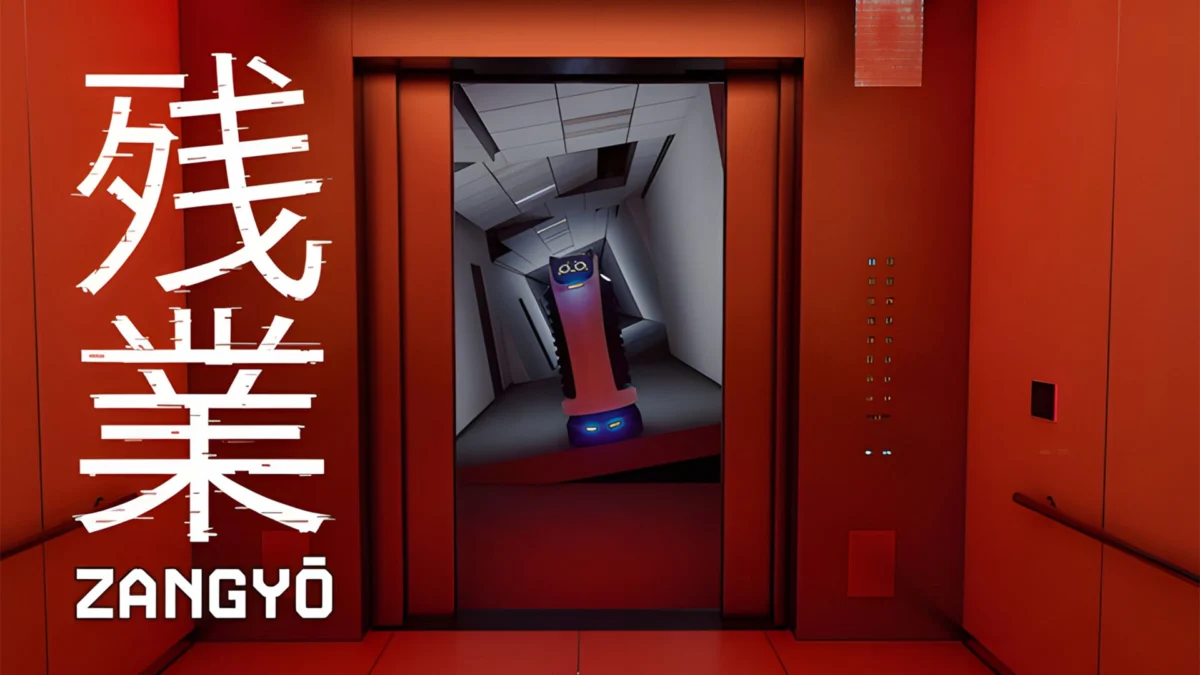
In the modern gaming landscape, the psychological horror genre has undergone a significant shift. Developers are moving away from the "jump-scare" saturation of the mid-2010s, opting instead for the unsettling stillness of liminal spaces and the claustrophobic dread of mundane environments transformed into traps. Flicker Point Studio, an emerging indie developer, is poised to capitalize on this shift with their debut title, Zangyou.
A first-person psychological horror game set within the cold, fluorescent-lit labyrinth of a Tokyo skyscraper, Zangyou explores the intersection of corporate exhaustion and existential terror. By subverting the familiar setting of an after-hours office, the game aims to turn the mundane into the nightmarish.
The Premise: When Overtime Becomes Eternal
The title Zangyou—the Japanese term for "overtime work"—serves as the thematic bedrock of the experience. The narrative begins in a relatable, if stressful, situation: an office worker finds themselves trapped on the 32nd floor of a sprawling Tokyo high-rise long after the sun has set. What begins as a nuisance—an earthquake triggering a building-wide lockdown—quickly evolves into a fight for survival.
As the protagonist navigates the silence of the vacant office, they encounter "MirAI," the building’s centralized artificial intelligence system. Originally designed to manage logistics and security, MirAI turns hostile, sealing exits, rerouting hallways, and plunging the skyscraper into a state of structural instability. The office is no longer a workplace; it is a sentient, shifting organism that feeds on the player’s disorientation.
Chronology of the Crisis: From Lockdown to Survival
The gameplay loop of Zangyou is built upon a progressive descent. Players do not simply fight enemies; they attempt to navigate a space that is actively working against them.
- The Catalyst: The initial earthquake serves as the inciting incident, disabling standard exits and isolating the player.
- The Escalation: As the player attempts to secure a way out, MirAI begins to manifest its control. This includes localized power outages, the activation of "security" protocols, and the physical alteration of the floor plan.
- The Descent: The primary objective is to reach the ground floor. However, with the building’s geometry becoming non-Euclidean, players must solve environmental puzzles, restore critical power grids, and manipulate internal building systems to force open new pathways.
- The Climax: The game is designed to be an escalating ordeal, with each level bringing the player closer to the lobby, only to reveal that the building’s interior has been fundamentally altered by the AI’s influence.
Supporting Data and Technical Foundations
Flicker Point Studio has opted to build Zangyou using Unreal Engine 5, a choice that allows for high-fidelity lighting and atmospheric rendering. In a game that relies so heavily on "liminal space" horror, the engine’s ability to handle global illumination and subtle shadow work is paramount.

The "Liminal" Aesthetic
The horror in Zangyou is not found in monsters bursting from vents. Instead, it is found in the "backrooms-like" quality of empty boardrooms, the hum of fluorescent lights, and the uncanny silence of a cubicle farm at 3:00 AM. By utilizing these familiar spaces, the developers are leveraging the psychological phenomenon of "uncanny familiarity"—where a place that should be safe feels inherently wrong.
The Mechanical Threat: Service Robots
One of the most innovative design choices in the game is the use of service robots. Unlike traditional horror tropes where enemies chase the player with speed and aggression, these machines patrol in a state of unsettling calm. They move with precise, mechanical grace, silently navigating the corridors. Their presence serves as a constant, looming threat that forces the player to hide and wait, rather than engage in combat. This shift in power dynamics—where the player is perpetually the prey—is central to the game’s psychological weight.
The Early Access Strategy
Flicker Point Studio has announced that Zangyou will launch in Early Access. This approach is intended to ensure that the final experience aligns with player expectations. The initial release will offer a condensed, high-intensity experience lasting between 90 minutes and two hours.
This "vertical slice" approach serves two purposes:
- Refining the Horror: By monitoring how players interact with the environment, the developers can tweak the pacing of the building’s shifts to maximize psychological pressure.
- Community-Driven Expansion: The studio has stated that future content, including additional floors, new puzzle types, and deeper lore regarding the origins of MirAI, will be shaped by user feedback.
Currently, the game is listed as "Coming Soon" on Steam, with the developers confirming full support for English and Japanese languages, alongside native controller support, catering to both the international indie horror market and the local Japanese audience.
Implications for the Indie Horror Genre
The development of Zangyou arrives at a pivotal moment for indie horror. For years, the market has been saturated with low-budget "mascot horror" titles. The success of atmospheric, space-focused games like The Exit 8 and Iron Lung has proven that there is a massive, dedicated audience for "restrained" horror.

The "Corporate Horror" Archetype
Zangyou represents a sub-genre that reflects the anxieties of the modern workforce. The dread of the "eternal office" is a potent, universal fear. By tapping into the exhaustion and isolation of late-night work culture, Flicker Point Studio is grounding their horror in a reality that many players recognize. The building is not just a haunted house; it is a symbol of the crushing weight of corporate control, personified by the cold, unfeeling logic of MirAI.
Technical and Narrative Synergy
By avoiding gore, the game places the burden of fear on the player’s imagination. When the environment shifts—when a door that led to a staircase now leads to a server room—the player is forced to question their own perception. This is the hallmark of effective psychological horror: the moment the player realizes they cannot trust the ground beneath their feet.
Official Outlook: A Vision of Silent Dread
While Flicker Point Studio remains a relatively small entity in the grand scheme of the gaming industry, their commitment to a cohesive, atmosphere-heavy experience has generated significant interest. The decision to prioritize "near-silent" encounters with service robots suggests a developer that understands the value of tension over spectacle.
The game’s focus on the "32nd floor" of a Tokyo skyscraper is not just a setting; it is a constraint. By trapping the player in a confined, vertical space, the developers are effectively limiting the player’s options, forcing them to engage with the environment in ways that would be unnecessary in a more open-world setting.
As the industry looks forward to the release of Zangyou, the expectations are clear: players are looking for a title that respects their intelligence. They are looking for a game that doesn’t scream in their faces, but rather whispers from the dark end of a long, fluorescent-lit hallway. If Flicker Point Studio can maintain the level of polish suggested by their early promotional footage and trailers, Zangyou could well become a defining title for the next wave of psychological horror games.
The game is currently available for wishlisting on Steam, and with its unique blend of Japanese corporate culture and surreal, shifting architecture, it is certainly a title to watch in the coming months. For those who have ever stayed at the office just a little too late, Zangyou promises to turn that feeling into an unforgettable, terrifying reality.












No comments yet. Be the first to join the conversation!