Lina Irawan
As the rapid integration of artificial intelligence into the entertainment industry accelerates, a polarizing debate has emerged between those who advocate for "strategic adaptation" and those who view the technology as an existential threat to human creativity. The discourse recently reached a boiling point at the Cannes Film Festival, where industry heavyweights and hit television series offered starkly contrasting visions of the future of storytelling.
The "Inevitable" Narrative: A Rhetorical Trap
The conflict centers on a narrative of "forced inevitability." During a high-profile appearance at the Cannes Film Festival, actress Demi Moore offered a perspective shared by several of her peers, including producer Reese Witherspoon. Addressing the tension between creative labor and technological advancement, Moore suggested that resistance is ultimately futile.
"AI is here," Moore stated. "And so to fight it is to fight something that is a battle that we will lose. So to find ways in which we can work with it, I think, is a more valuable path to take."
This rhetoric—the idea that AI is a tidal wave one must learn to surf rather than a dam one can build—has become the standard defense for tech-forward studio executives and venture capitalists. By framing the rise of generative AI as a natural evolution akin to the transition from film to digital, proponents of the technology argue that those who resist are simply "anti-progress." However, critics argue that this framing is a calculated strategy designed to bypass ethical labor discussions, painting a corporate-driven product launch as a historical mandate.
The Hacks Critique: Art vs. Algorithm
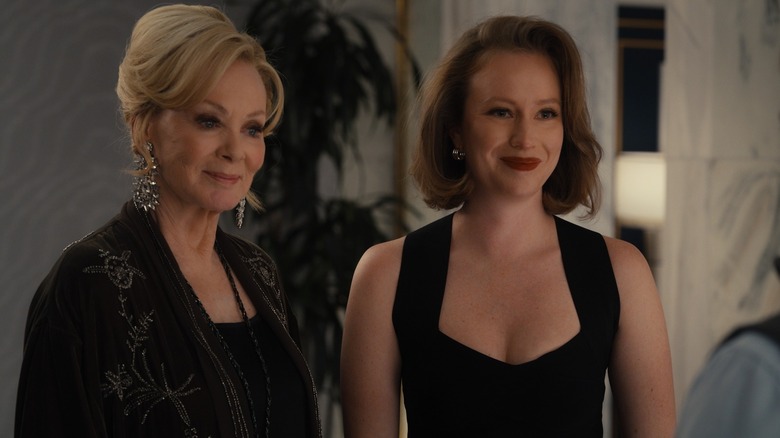
While Hollywood figures debate the "how" of AI integration, HBO’s hit series Hacks—starring Jean Smart and Hannah Einbinder—has taken a much more aggressive stance. In the sixth episode of the show’s third season, the series offers a meta-commentary that directly dismantles the "inevitability" argument.
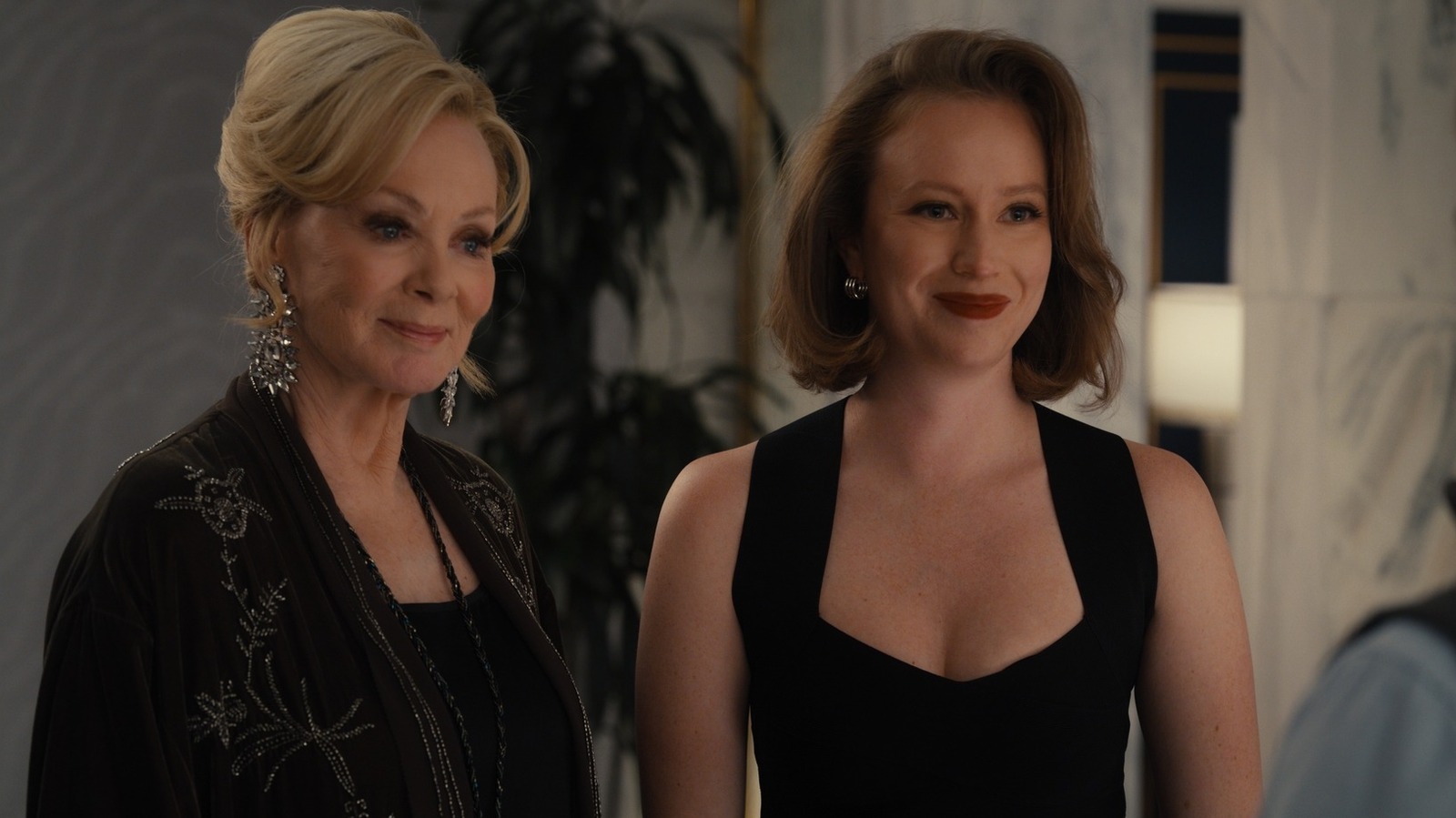
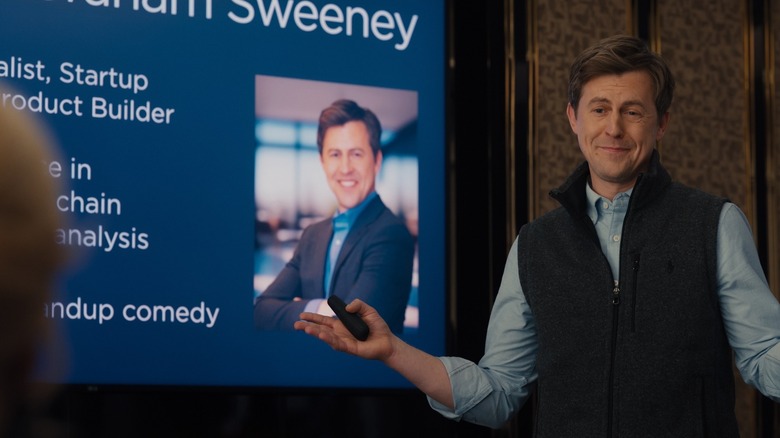
In the episode, legendary comedian Deborah Vance and her head writer, Ava Daniels, are courted by venture capitalist Graham Sweeney (played by Alex Moffatt). Sweeney presents an app called "QuickScribbl," which promises to "Photoshop" a writer’s brain, using AI to generate humor and streamline the creative process. When Ava pushes back against the dehumanization of comedy, Sweeney parrots the exact lines often heard in real-world boardroom meetings: "It’s here to stay, get on board."
The show’s writers, Carolyn Lipka and Joe Mande, use Ava’s character to deliver a blistering rebuttal that highlights the fallacy of the tech-bro narrative:
"See, that is a big part of why I hate it. This forced inevitability. People like you are always saying that it’s happening whether you like it or not, but you’re the ones making it happen… And you could easily stop it if people could say they didn’t want it, but you don’t want to give people a choice. So you just say, ‘Oh, the train’s already on the tracks,’ and you don’t let people decide for themselves."
Chronology of the Conflict: From WGA Strikes to AI Adoption
The current friction in Hollywood did not appear in a vacuum; it is the culmination of years of escalating tension regarding labor rights and technological automation.
- 2023 WGA/SAG-AFTRA Strikes: The primary catalyst for the current discourse was the dual strike by the Writers Guild of America and the Screen Actors Guild. A central demand for both unions was protection against the encroachment of AI. Writers demanded that AI not be used to write or rewrite literary material, while actors fought for protections against the unauthorized digital replication of their likenesses.
- The Post-Strike Reality: Despite contractual agreements that place guardrails on AI, the technology continues to be integrated into post-production, marketing, and script-doctoring workflows.
- May 2024: The release of the Hacks episode in question served as a cultural touchstone, occurring shortly after the industry began to settle into its "new normal" following the strike.
- May 2026 (Cannes): Demi Moore’s comments at the festival highlighted that the ideological battle is far from over, as the industry continues to weigh the economic allure of AI against the preservation of human craft.
Supporting Data: The Cost of "Content"
The push for AI in Hollywood is driven by a singular economic incentive: efficiency at the cost of quality. In recent years, critics have pointed to the rise of what is colloquially termed "Netflix-style content"—projects characterized by low-risk, repetitive storytelling that assumes a distracted viewer.
Data regarding viewer retention and engagement has led many streaming platforms to prioritize "digestible" content over high-concept artistic endeavors. AI tools are perfectly suited for this model. They are excellent at analyzing patterns in successful scripts and replicating the "beats" of popular stories, but they are notoriously incapable of producing the "soul" Moore alluded to in her comments.
The danger lies in the feedback loop: as studios rely more heavily on AI to generate "safe" content, the audience is conditioned to expect less from their entertainment. This creates a race to the bottom where the unique, messy, and human elements of storytelling are smoothed away by algorithmic optimization.
The Human Factor: Can the Soul Be Replicated?
Demi Moore’s counter-argument—that AI cannot replace the "spirit" of the artist—is a sentiment shared by many creative professionals. However, this argument ignores the pragmatic reality of the studio system. Studios are corporations, not patrons of the arts. If an AI can generate a screenplay that is "good enough" for a mass-market demographic at a fraction of the cost of a human writer, the bottom-line pressure will inevitably drive the decision-making.
When studio heads prioritize shareholder profit over artistic integrity, the "soul" of the artist becomes an expendable luxury. The fear is not that AI will create better art than humans, but that it will flood the market with adequate art, drowning out human voices and devaluing the labor of writers, actors, and directors.
Implications for the Future of Entertainment
The implications of accepting the "AI is inevitable" narrative are profound:
- Economic Devaluation: If writing and performance become commodified as tasks that can be supplemented or replaced by machines, the bargaining power of labor unions will continue to erode, regardless of the protections won in 2023.
- Cultural Homogenization: The reliance on AI algorithms ensures that the stories we see will be based on past data, limiting the capacity for genuine innovation, subversion, and the introduction of new, radical perspectives.
- The Death of the "Writer’s Room": The collaborative, friction-filled process of writing for television—the very process that makes shows like Hacks great—cannot be replicated by a machine. Replacing this with an AI-assisted workflow threatens the quality of the medium itself.
Conclusion: A Call to Resistance
The debate surrounding AI in Hollywood is not merely a technical discussion; it is a moral one. By framing AI as an unstoppable force of nature, proponents seek to absolve themselves of the responsibility for the displacement of human workers and the dilution of creative quality.
As Hacks effectively illustrates, the "train on the tracks" metaphor is a choice, not a reality. It is a choice made by executives to maximize profit at the expense of human artistry. If the audience—the consumers of this culture—does not reject the idea that AI-driven content is an acceptable substitute for human-led storytelling, the industry will continue to drift toward a sterile, machine-generated future.
The lesson from the fictional, yet piercingly accurate, world of Hacks is clear: We must stop treating the encroachment of AI as an inevitability. To preserve the arts, we must demand human agency, defend the value of human labor, and resist the narrative that tells us our creativity is replaceable by code. The future of entertainment depends on our willingness to say "no" to the machines, and "yes" to the people behind the screen.

 Siti Muinah
 Lina Hope