

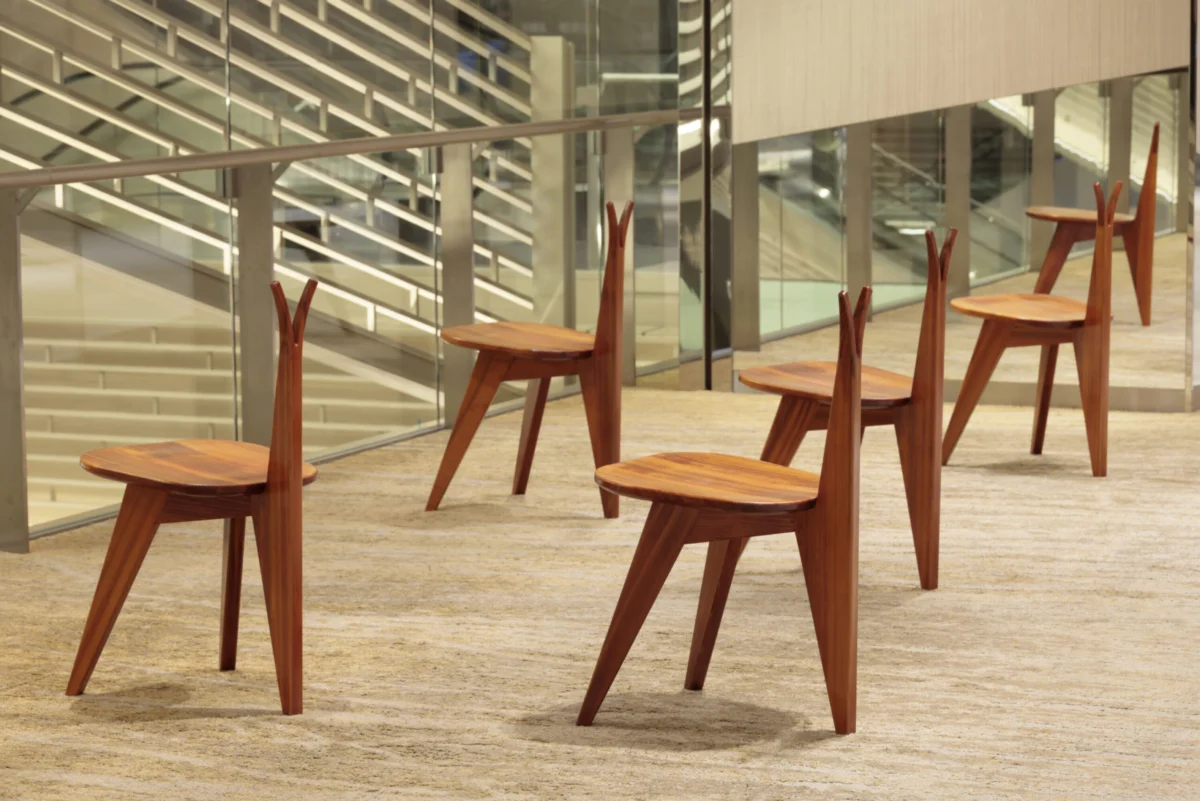
In the heart of Tokyo’s ultra-refined Ginza district, the monolithic retail complex Ginza Six has embarked on an ambitious, three-year artistic odyssey that bridges the gap between the raw, primeval silence of the forest and the high-octane pace of luxury commerce. The initiative, titled A Tree, is not merely an exhibition; it is a profound exploration of materiality, sustainability, and the lifecycle of design. As the project enters its second phase, it transforms the building’s sterile, polished atrium into a living laboratory where visitors are invited to move beyond the role of passive observers to become active participants.
The Genesis of a Material Narrative
Launched in 2025 in collaboration with the Tokyo-based design office Daikei Mills, A Tree began with a singular, humble focus: Yoshino cedar. Sourced from the historic forestry regions of Nara Prefecture—an area renowned for centuries of meticulous silviculture—the cedar serves as both the medium and the message.
Unlike traditional art installations that showcase finished, pristine products, A Tree functions as a structural diary. It traces the complete metamorphosis of timber: from the towering log in the forest, through the sawdust-filled workshops of master craftsmen, to its ultimate incarnation as functional furniture and architectural elements. By highlighting the process rather than just the final form, the project challenges the consumerist culture inherent in a high-end retail space, asking visitors to acknowledge the origins of the objects they surround themselves with.

Chronology: A Three-Year Trajectory
The project is structured into three distinct temporal phases, each designed to peel back another layer of the relationship between man and wood.
- Phase 1 (2025): The Foundation. The inaugural phase introduced minimal wooden furniture designed by Daikei Mills. These initial pieces served to establish the "raw" aesthetic, emphasizing the texture, scent, and structural integrity of the Yoshino cedar. It set the baseline for the project, proving that unfinished, natural materials could hold their own against the marble and glass of a luxury shopping destination.
- Phase 2 (October 2025 – Present): The Global Dialogue. The current phase has expanded the scope of the project significantly. Six world-renowned designers were invited to immerse themselves in the forests of Nara before returning to their respective studios to conceptualize works using the same material. These pieces are currently installed across the rest areas on floors three through five of the Ginza Six atrium.
- Phase 3 (September 2026): Integration and Expansion. The final stage of the project promises a radical shift. The individual furniture pieces will be evolved into larger, stall-like architectural structures. These permanent installations will be integrated into the fabric of the building, intended to host future events, pop-up retail experiences, and community gatherings, thereby permanently blurring the lines between art, commerce, and public space.
Six Designers, One Material: A Study in Diversity
The core of Phase 2 lies in the disparate ways six international designers have interpreted the singular character of Yoshino cedar. Each creator was required to spend time in the Yoshino forests, an experience that has manifested in wildly different sculptural languages.
Siin Siin (Tokyo) – Tou Tou
Embracing the inherent flaws of the wood, the Tokyo-based studio Siin Siin has created Tou Tou. The piece is a masterclass in honesty, utilizing traditional wood-splitting techniques alongside modern precision machinery to expose fractures, knots, and internal grain patterns. By refusing to hide the "imperfections," the designers force the viewer to confront the organic history of the timber.

Kuo Duo (Seoul) – Kiri Kabu
Inspired by the life cycle of the tree, the Korean design duo Kuo Duo presents Kiri Kabu. The series takes its visual cues from the tree stump—the final point of a tree’s vertical life. By skillfully carving the wood to highlight the stark contrast between the pale sapwood and the dense, dark heartwood, the work serves as a silent reminder of the forest’s cyclical nature.
Rio Kobayashi (London) – Edisni tuo
Kobayashi’s Edisni tuo (Inside Out) offers a playful, structural reinterpretation. By physically turning logs "inside out" and exposing previously hidden surfaces, he challenges our perception of what a log looks like. The piece incorporates subtle kinetic elements, encouraging users to touch and interact with the surface.
Fabien Cappello (Mexico) – Multi
Mexico-based designer Fabien Cappello focuses on the social dimension of wood. Multi is a communal bench that draws on the visual language of public urban furniture. It acts as a social anchor in the atrium, inviting strangers to sit together and share space, effectively turning the retail environment into a public plaza.

Max Lamb (UK) – Cedar is a Soft Wood
Max Lamb takes a reductive approach. Working with a single craftsman and a bandsaw, Lamb strips the wood down to its absolute essentials. By layering thin, curved boards, he creates a form that is both structurally sound and deceptively soft, challenging the common perception of wood as a rigid, unyielding material.
Faye Toogood (UK) – Five Spirits, One Sugi
Perhaps the most abstract of the collection, Toogood’s Five Spirits, One Sugi finds inspiration in the ecosystem of the forest. The work translates the imagined movements of forest animals into sculptural, organic forms, suggesting that the "spirit" of the tree continues long after it has been harvested.
Official Perspectives: The Philosophy of Accessibility
For the organizers, the project is a deliberate rebellion against the "do not touch" culture of the museum world. Keisuke Nakamura, CEO of Daikei Mills, emphasizes that the primary goal is tactile engagement.

"We didn’t want people to just look at the work; we wanted them to touch it, sit on it, and experience the material with their bodies," Nakamura stated during the launch. "It is incredibly rare to have works of this caliber that people can freely use in a public space. In that sense, the project is inherently democratic. Whether you are a design professional or a casual shopper, the wood offers a sensory connection that is universal."
This accessibility is a core pillar of the Ginza Six management strategy. By placing these high-concept pieces in the central atrium’s rest areas, the building management is effectively turning the retail environment into an open-access gallery. It is a bold move that prioritizes human experience over the preservation of artifacts.
Implications: A Sustainable Shift in Retail
The A Tree project carries significant implications for the future of commercial architecture and retail design. As global consumers become increasingly wary of the environmental impact of luxury goods, the use of locally sourced, sustainable materials like Yoshino cedar signals a shift in corporate branding.

However, the choice of Yoshino cedar is more than just an aesthetic or environmental statement; it is an act of cultural preservation. The material is historically prized for its slow growth and fine grain, but demand has dwindled as cheaper, synthetic, or imported materials have flooded the market. By elevating this specific timber to the level of high art, Ginza Six is helping to revitalize interest in traditional Japanese forestry.
"When you trace things back to their origin, many of them begin with a tree," says Nakamura. "If visitors can feel that—even slightly—then the project has meaning."
The success of A Tree suggests that retail spaces in the future will need to do more than sell products; they will need to provide context, narrative, and a connection to the natural world. In an era where digital shopping is the default, the physical, tactile, and communal experience offered at Ginza Six creates a compelling reason for the public to return to the brick-and-mortar environment.

Visitor Information
For those wishing to experience the installation firsthand, the works are on display throughout the central rest areas on the third, fourth, and fifth floors of Ginza Six. The project remains open to the public daily.
- Location: Ginza Six, 6-10-1 Ginza, Chuo-ku, Tokyo 104-0061
- Inquiries: 03-6891-3390 (10:30 – 20:30)
- Retail Hours: 10:30 – 20:30
- Restaurant Hours: 11:00 – 23:00
As the project approaches its third and final phase, it stands as a testament to the power of design to foster dialogue between the ancient traditions of the forest and the modern realities of the city. It is, quite literally, a place to sit with the history of the materials that build our world.












No comments yet. Be the first to join the conversation!