

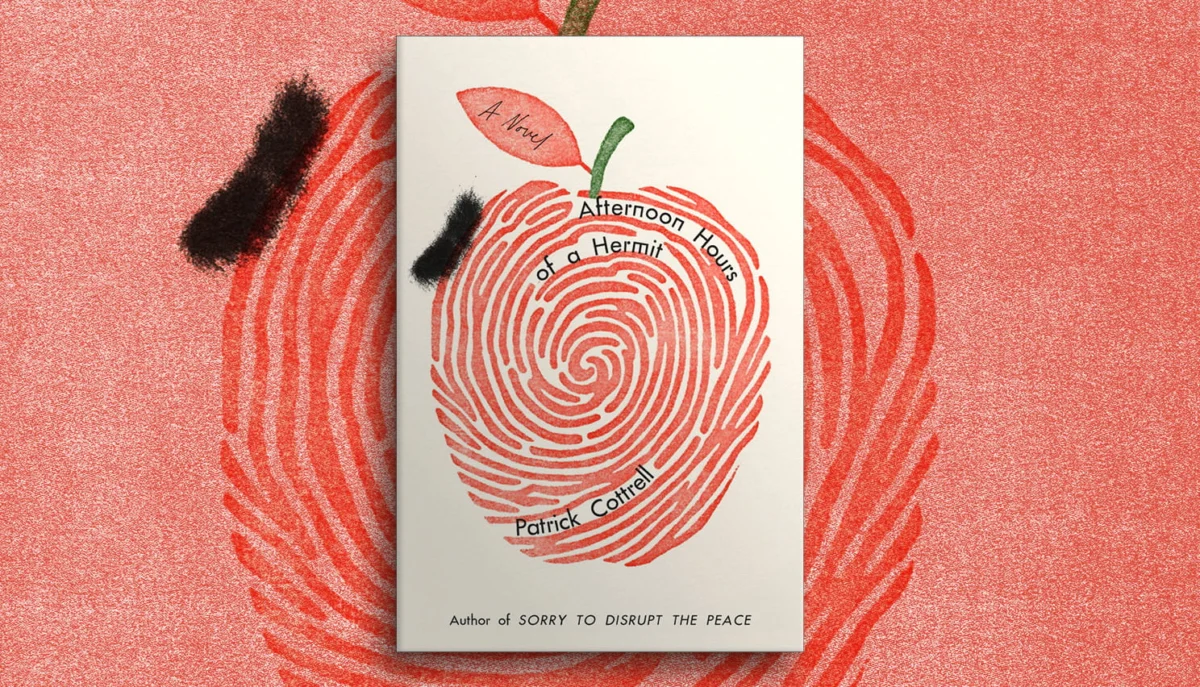
In the landscape of contemporary American literature, few voices possess the incisive, darkly comedic, and deeply introspective quality of Patrick Cottrell. Known for his keen observation of the human condition, Cottrell returns to the literary spotlight with his latest work, Afternoon Hours of a Hermit. The novel, which explores the volatile intersections of family, identity, and the performance of masculinity, serves as the primary subject of a recent, wide-ranging discussion on the Poured Over podcast, hosted by Miwa Messer.
For readers familiar with Cottrell’s debut, Sorry to Disrupt the Peace, the new novel marks a sophisticated evolution in his thematic concerns. While his earlier work interrogated the fissures of grief and social displacement, Afternoon Hours of a Hermit leans into the psychological interiority of its protagonist, offering a narrative that is as poignant as it is unsettling.
The Core Narrative: A Study of Isolation
At the heart of the podcast conversation is the thematic density of Cottrell’s latest project. Afternoon Hours of a Hermit is not merely a story about seclusion; it is an examination of what remains when the external structures of identity—career, family expectations, and societal norms—begin to fray.
Cottrell explores the "hermit" not as a romantic figure of monastic virtue, but as a person grappling with the exhaustion of modern masculinity. During his discussion with Messer, Cottrell unpacked the irony inherent in the book’s title. The "afternoon hours" represent a liminal space where time feels suspended, allowing for the kind of radical self-reflection that is often suppressed by the demands of productivity. The protagonist’s journey, according to Cottrell, is an attempt to reconcile the private self with the public persona—a task that is frequently met with both humor and profound existential dread.
A Literary Chronology: From Debut to Current Mastery
To understand the trajectory of Cottrell’s career, one must look at the progression of his bibliography, which served as a central pillar of the Poured Over episode.
- 2017: Sorry to Disrupt the Peace: Cottrell’s debut novel established him as a master of the "unreliable narrator" who is nonetheless seeking a form of objective truth. The novel, centered on a woman’s investigation into her brother’s suicide, set the stage for his preoccupation with how families tell stories about themselves to survive.
- The Intervening Years: Between his two major novels, Cottrell has maintained a rigorous schedule of teaching and critical writing. This period of academic and professional development has informed the heightened intellectual rigor found in his latest work.
- 2025: Afternoon Hours of a Hermit: The current release represents a maturation of his prose style. Where his debut was sharp and kinetic, the new novel is atmospheric and meditative, suggesting a writer who is becoming increasingly comfortable with silence and negative space on the page.
Supporting Data: The Influences Behind the Prose
A significant portion of the interview was dedicated to the "literary genealogy" of Cottrell’s writing. When asked about the authors who shaped his voice, Cottrell cited a diverse array of writers who balance the grotesque with the tender. The list of featured books discussed in the episode provides a roadmap for understanding his stylistic choices:
- The Southern Gothic and Masculine Angst: Works like Barry Hannah’s Ray and Thomas McGuane’s Ninety-two in the Shade highlight Cottrell’s interest in the volatile, often violent, nature of masculine identity. These texts are known for their raw, visceral depictions of men in crisis.
- The Architecture of Consciousness: Cottrell’s affinity for Frederick Exley’s A Fan’s Notes and Denis Johnson’s Jesus’ Son underscores his fascination with the fractured psyche. Both books, which blur the lines between fiction and autobiography, serve as clear influences on Cottrell’s own willingness to expose the uncomfortable truths of the human experience.
- Contemporary Perspectives: The conversation also bridged the gap to modern voices. By referencing Rita Bullwinkel’s Belly Up and Headshot, as well as Katie Kitamura’s Intimacies and Audition, Cottrell acknowledged the current wave of writers who are redefining the limits of character-driven fiction. These inclusions demonstrate that Cottrell is not writing in a vacuum but is actively participating in a vibrant, ongoing dialogue about how to structure a novel in the 21st century.
Official Responses and Creative Philosophy
The dialogue between Patrick Cottrell and host Miwa Messer offered rare insight into the creative philosophy of a modern novelist. Cottrell spoke at length about the challenges of balancing the act of teaching with the act of creation. He posited that the classroom serves as an essential laboratory, where the necessity of explaining literature forces a writer to clarify their own stylistic impulses.
When questioned about his use of humor, Cottrell was adamant: humor is not a relief from the tragedy of his characters’ lives, but an essential component of it. "To laugh at the absurdities of your own isolation," he remarked, "is the only way to endure the silence."
Host Miwa Messer, in her role as a bridge between the author and the reader, noted that the Poured Over audience has consistently responded to books that challenge traditional narrative structures. The collaborative atmosphere of the podcast episode—mixed by Harry Liang—allowed for a fluid exchange where the books of Jane Austen (specifically Pride and Prejudice) were treated with the same intellectual seriousness as the experimental prose of Michael Cunningham’s The Hours.
Implications: The Future of the "Quiet" Novel
The reception of Afternoon Hours of a Hermit signals a shift in reader appetite toward what some critics are calling "the quiet novel"—works that prioritize internal development over external action. The implications for the literary market are significant:
- Revaluation of Character Studies: As digital consumption trends favor fast-paced, high-concept narratives, the sustained success of authors like Cottrell suggests a resilient market for introspective, slow-burn literature.
- The Evolution of Masculinity in Fiction: By engaging with the complexities of gender performance, Cottrell’s work is contributing to a broader cultural conversation about what it means to be a man in the modern era. His characters do not seek redemption in traditional acts of heroism; instead, they seek coherence.
- Cross-Genre Influence: By citing influences ranging from 19th-century classics like Austen to contemporary masters like Castillo and Kitamura, Cottrell reinforces the idea that great writing is a synthesis of the entire literary canon.
Conclusion
As Afternoon Hours of a Hermit continues to reach readers, the conversation initiated on Poured Over serves as an essential companion piece. Patrick Cottrell has succeeded in crafting a novel that is as much a mirror as it is a story. Through his exploration of solitude, family, and the weight of personal history, he invites his readers to sit with their own "afternoon hours"—to observe, to reflect, and perhaps, to find a dark, necessary humor in the process of becoming oneself.
For those looking to dive deeper into the themes discussed, the episode is currently available on all major podcast platforms. New episodes of Poured Over are released every Tuesday and Thursday, with occasional Saturday releases, ensuring that the dialogue between authors and readers remains as active and vital as the literature itself.
Episode Credits:
- Host: Miwa Messer
- Audio Mixing: Harry Liang
- Featured Guest: Patrick Cottrell
- Primary Discussion Topic: Afternoon Hours of a Hermit (HarperCollins)












No comments yet. Be the first to join the conversation!