Lina Irawan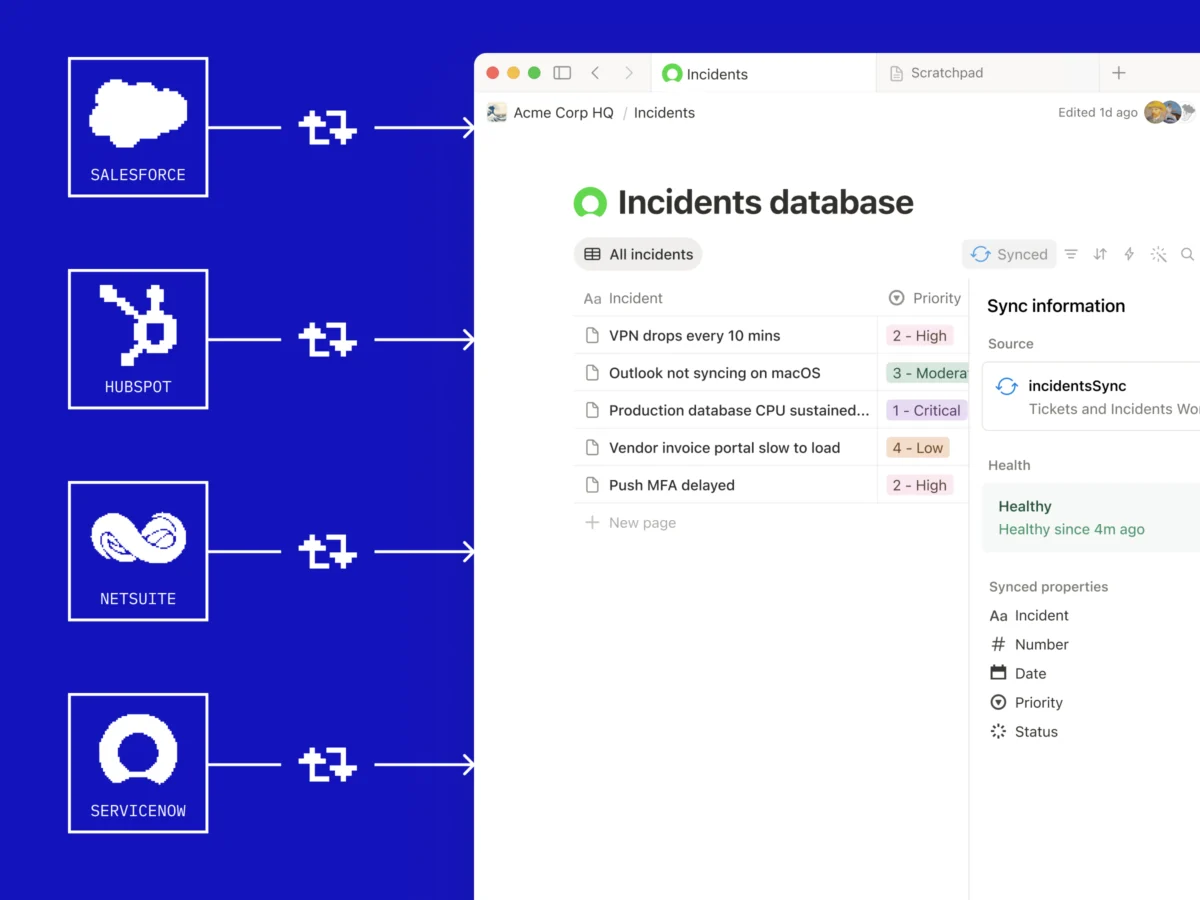
In a move that signals a seismic shift for the workplace productivity sector, Notion—the collaborative software giant beloved by startups and enterprises alike—has officially entered the "agentic era." During a live-streamed product announcement this Wednesday, the company unveiled a comprehensive Developer Platform, effectively transforming itself from a static document-and-database tool into a dynamic, programmable hub for artificial intelligence.
By introducing an orchestration layer designed to coordinate AI activity across disparate data sources and third-party tools, Notion is positioning itself as the central nervous system for modern business workflows. This evolution marks a departure from the company’s roots in simple note-taking, suggesting a future where Notion acts as the connective tissue for automated, multi-step business processes.
The Core Transformation: Moving Toward Orchestration
The core of this announcement is the introduction of a new developer-centric ecosystem that allows teams to transcend the limitations of previous AI implementations. While Notion’s “Custom Agents,” launched in February, proved successful—amassing over one million agent deployments by customers to handle tasks like FAQ management and status reporting—they were inherently siloed. These early iterations lacked the ability to tap into external data or execute complex, multi-step logic without the intervention of third-party integration platforms or custom-built middleware.
Notion’s new developer platform solves this by offering a unified orchestration layer. This system allows AI agents to interact with external databases and execute custom code in a secure, sandboxed environment. The platform essentially enables Notion to function as a command center where AI agents are not merely passive assistants but active participants in the enterprise workflow.

A Chronology of Notion’s AI Evolution
To understand the significance of this shift, one must view it as the latest milestone in a deliberate, multi-year product roadmap:
- Pre-2023: Notion established itself as a "no-code" powerhouse, allowing teams to build complex databases and internal wikis with ease.
- Early 2024: The company launched "Custom Agents," providing users with specialized AI teammates capable of automating repetitive administrative tasks.
- Mid-2024: Customers began reporting the limitations of these agents, specifically regarding data connectivity and custom logic, leading to a surge in complex, "hacky" workarounds involving external automation tools and custom scripts.
- May 2026 (The Present): Notion unveils its comprehensive Developer Platform, introducing "Workers," the External Agent API, and expanded database sync capabilities. This marks the transition from a passive information repository to an active, agent-driven infrastructure platform.
The "Workers" Environment: Custom Logic at Scale
Perhaps the most significant addition is the introduction of "Workers." This cloud-based environment allows developers to write and deploy custom code directly within Notion. By providing a secure, isolated sandbox, Notion ensures that user-defined logic can run without compromising the stability of the core application.
Crucially, this system removes the dependency on external infrastructure. Teams can now trigger workflows using webhooks—automated signals that initiate actions in response to events in other software—directly within the Notion ecosystem. Even for those without deep programming expertise, the platform is designed to be accessible; Notion explicitly encourages the use of AI coding agents (such as those integrated into the platform) to generate the necessary code, democratizing the ability to build sophisticated internal tools.
As an incentive for early adoption, Notion has announced that its Worker service will be free through August, allowing developers to experiment with the new architecture before transitioning to the standard credit-based system used by Custom Agents.

Integrating External Data and Agents
The platform’s utility is further bolstered by its ability to sync external data sources. Powered by the new Worker architecture, Notion can now pull data from any database equipped with an API. This means that information from enterprise stalwarts like Salesforce, Zendesk, or Postgres can be surfaced, updated, and manipulated within a Notion database.
This capability fulfills CEO Ivan Zhao’s vision of the Notion database as a "sheer canvas." Users are no longer restricted to manual entry or clunky imports; their Notion workspace can now serve as a living, breathing reflection of their company’s entire data stack.
Furthermore, the platform introduces a new standard for agent collaboration. Users can now chat directly with external AI agents—such as Claude Code, Cursor, Codex, and Decagon—and assign them tasks directly from within Notion. These agents are treated as "first-class citizens," with users able to monitor their progress and manage their output alongside Notion’s native agents. For companies with proprietary internal agents, the new External Agent API allows for seamless integration into the Notion workspace.
Official Responses and Strategic Implications
During the product announcement, CEO Ivan Zhao addressed the company’s historical reputation as a user-friendly, non-technical platform. "It’s true that, historically, Notion hasn’t been the most developer-focused platform," Zhao admitted. "But things are changing."

This pivot is not merely a feature update; it is a fundamental shift in business model. By providing the tools to build, run, and host AI agents and custom code, Notion is encroaching on the territory of traditional workflow automation platforms like Zapier or enterprise application platforms like Salesforce.
The implications for the industry are profound:
- Consolidation of the Tech Stack: Businesses are increasingly looking to reduce "tool sprawl." By allowing AI to live where the data lives, Notion is making a strong case for becoming the central hub for knowledge work.
- The Rise of "Agentic Infrastructure": The trend toward agentic workflows—where software acts rather than just displays—is now moving from the experimental phase to the enterprise-grade phase.
- Programmability as a Feature: By lowering the barrier to entry for custom development, Notion is empowering non-technical teams to build powerful automation tools, potentially shifting the power dynamic within IT departments.
Conclusion: "Any Data, Any Tool, Any Agent"
As companies struggle to manage the mounting complexity of AI adoption, the need for a central orchestration layer has become undeniable. Notion’s transition from a note-taking application to a programmable platform is a direct response to this need.
As Ivan Zhao stated, the "big picture" for the Notion Developer Platform is simple: "Any data, any tool, any agent." Whether this strategy will successfully fend off competitors in the crowded automation space remains to be seen. However, by transforming its interface into a canvas for custom logic and external intelligence, Notion has undoubtedly moved beyond the page and into the realm of core enterprise infrastructure. For the millions of teams already relying on Notion to organize their work, this update promises that the future of their productivity will be significantly more autonomous and deeply connected than ever before.


 Reynand Wu
 Nana
Nana