

Warning: This article contains major spoilers for "The Boys" Season 5, Episode 7.
In the hyper-saturated landscape of modern television, few shows have mastered the art of biting media criticism quite like Amazon Prime Video’s The Boys. Known for its acerbic wit and unflinching take on corporatized superheroism, the series has consistently used its platform to reflect the absurdity of the current entertainment industry. In its fifth and final season, showrunner Eric Kripke has turned his sights on one of the most polarizing figures in modern television: Taylor Sheridan. Through a sharp, AI-centric subplot in Episode 7, the series manages to dissect not just the quality of modern content, but the very methodology—and ego—behind it.
The Context: Vought Studios and the AI-Generated Neo-Western
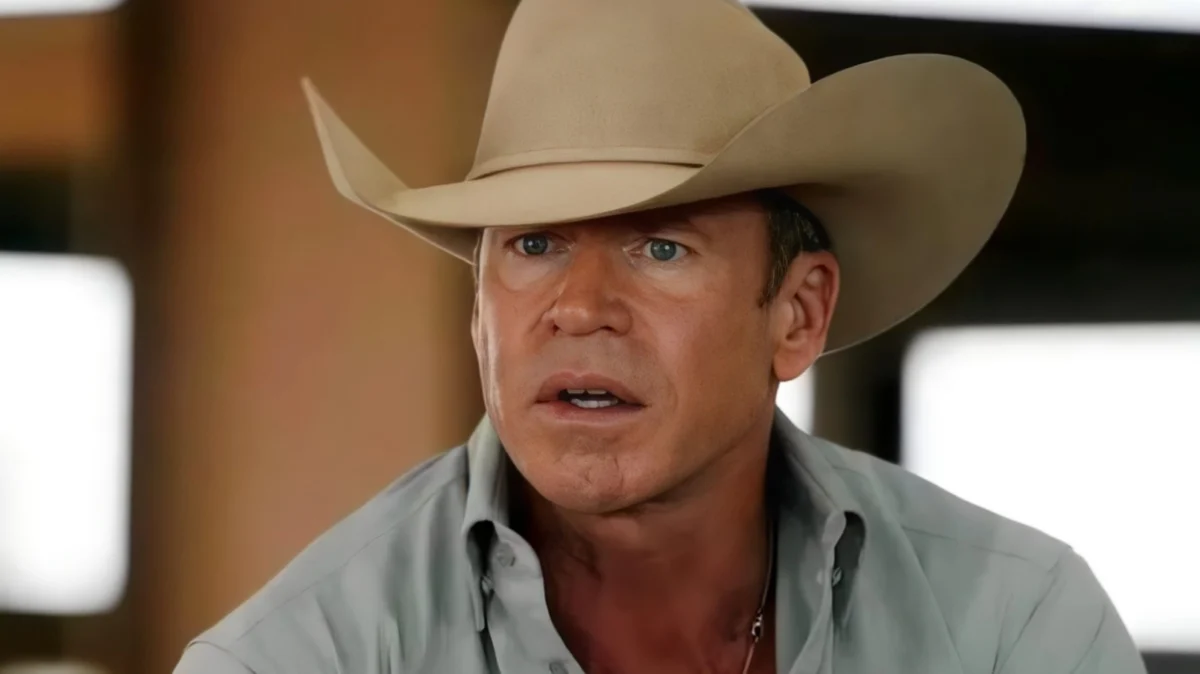
The seventh episode of The Boys takes a meta-textual turn when our protagonists infiltrate the inner sanctum of Vought Studios. In this sequence, the audience is introduced to a proprietary AI writing program tasked with churning out content for Vought’s massive multimedia empire. The AI is seen laboring over a "propagandist neo-Western," a clear caricature of the gritty, sprawling universe created by Taylor Sheridan for Paramount.
The humor is layered: the AI tool is depicted as temperamental, refusing to accept notes from human executives or creative overseers. It is a direct, stinging parody of Sheridan’s well-documented reputation for operating as an auteur who marches to the beat of his own drum, often eschewing the traditional collaborative process that defines Hollywood television. The show goes as far as to label this fictitious project a "dog pile of red state bumper stickers," a critique that mirrors long-standing criticisms levied against the Yellowstone franchise by cultural commentators who view its storytelling as cynical or overly reliant on tropes.
A History of Independence: The Sheridan Methodology
To understand the weight of The Boys’ jab, one must look at the unique production history of Taylor Sheridan’s output. Unlike the typical showrunner, who manages a "writers’ room"—a collaborative cohort of scribes who break stories, develop character arcs, and refine dialogue—Sheridan famously built his empire on a solitary foundation.
During the meteoric rise of Yellowstone and its subsequent spin-offs like 1883 and 1923, it became common knowledge that Sheridan was writing the vast majority of the scripts himself. He famously rejected the standard industry model, arguing that external writers often diluted his vision. For years, this led to a "one-man-band" approach that produced an unprecedented volume of television.
While the industry marveled at his output, others in the creative community viewed it with suspicion. The "Sheridan Model" created a tension between the traditional labor practices of the Writers Guild and the high-speed, high-demand world of modern streaming services that crave content at an unsustainable pace. By integrating this conflict into The Boys, Kripke is not merely making a passing joke; he is commenting on the sustainability and the creative integrity of an industry currently obsessed with replacing human collaboration with algorithmic efficiency.
The Ideological Divide: Kripke vs. Sheridan
The animosity—or perhaps the professional rivalry—between Eric Kripke and Taylor Sheridan is not a new development. Kripke has been vocal in the past regarding the importance of the writers’ room, viewing it as the soul of television production.
In a 2023 interview with Deadline, conducted during the height of the WGA strike, Kripke laid out his philosophy: "Whatever Mr. Yellowstone and all this stuff about like, ‘I don’t want to have a room’ or ‘I don’t need a room.’ My feeling is, you’re missing out on the best part of this job. All of it is a grinding s*** show. Except you get to hang out with the smartest people you’ve ever met at a cocktail party that never ends."
For Kripke, the writers’ room is not just about productivity; it is about community and the refinement of ideas through diverse viewpoints. By mocking the "Sheridan approach" in The Boys, Kripke is effectively arguing that when you remove the room, you remove the soul of the story, leaving behind only the "red state bumper stickers" that the show so ruthlessly targets.
Supporting Data: The Cost of the Auteur Myth
The critique in The Boys touches upon a broader economic and creative reality in Hollywood. Over the last five years, the "Taylor Sheridan effect" has forced studios to reconsider how they staff shows. However, the data suggests that the "solo showrunner" model is fraught with peril.
- Production Volume vs. Quality: Studies on "mega-output" showrunners show that while volume is high, the "critical fatigue" index—the measure of how audiences and critics perceive the decline of narrative nuance—increases significantly after a showrunner takes total control.
- The AI Connection: Kripke’s choice to link the Sheridan parody to AI is the most profound part of the joke. It suggests that when a single human tries to do the work of a room, they eventually begin to function like a machine: inputting tropes and outputting content without the necessary human friction that leads to genuine art.
- Cultural Criticism: While Sheridan has pushed back against claims that his work is purely conservative, stating that Yellowstone is actually a critique of corporate overreach and the erasure of Native American history, the caricature in The Boys suggests that the public perception has firmly settled on a different conclusion.
Official Responses and Industry Reaction
As of this writing, Taylor Sheridan has not issued a formal response to the lampooning in The Boys. Historically, Sheridan has preferred to let his ratings speak for him, maintaining a somewhat stoic, distant relationship with the industry press.
However, the creative community has responded with a mixture of amusement and validation. Within the Guilds, the parody has been cited as a "shot across the bow" regarding the current state of labor. As streaming platforms continue to lean into AI and lean out of human-heavy writers’ rooms, Kripke’s satire serves as a warning: the more we treat television as a manufacturing process, the more our stories begin to resemble the hollowed-out, AI-generated propaganda depicted in Vought Studios.
Implications for the Future of TV
The implications of this crossover between The Boys and the Yellowstone universe extend beyond a simple celebrity jab. It marks a shift in how television creators view their peers. We are seeing a new era of "commentary television," where creators use their shows to participate in the ongoing debates about the future of their own profession.
- The Death of the Solo Auteur: The industry is moving toward a consensus that the "Sheridan model" is an anomaly that cannot be sustained without sacrificing the health of the creator and the depth of the work.
- AI as the New Villain: By making the AI the "writer" of the Sheridan-esque show, The Boys is positioning technology as the ultimate antagonist of the creative spirit. It suggests that the danger is not just bad writing, but the dehumanization of writing.
- The "Meta" Trend: Viewers are increasingly drawn to shows that acknowledge the world they live in. The Boys has thrived because it breaks the fourth wall of the industry, and by targeting icons like Sheridan, it ensures its relevance in a crowded market.
Conclusion
In its final season, The Boys has proven that it is not afraid to burn bridges to make a point. By juxtaposing the intense, individualistic style of Taylor Sheridan with the dystopian, AI-driven environment of Vought, Eric Kripke has provided a scathing critique of modern television’s trajectory.
Whether one views Sheridan as a visionary or a polarizing figurehead of a flawed system, the joke in Episode 7 serves as a vital reminder: television is at its best when it is a conversation, not a monologue. As the credits roll on both The Boys and the current era of Peak TV, the industry is left to wonder if the future of storytelling lies in the genius of the individual, or in the collective, messy, and irreplaceable magic of the writers’ room. Kripke has made his stance clear—and he has the final word.









No comments yet. Be the first to join the conversation!