Pevita Pearce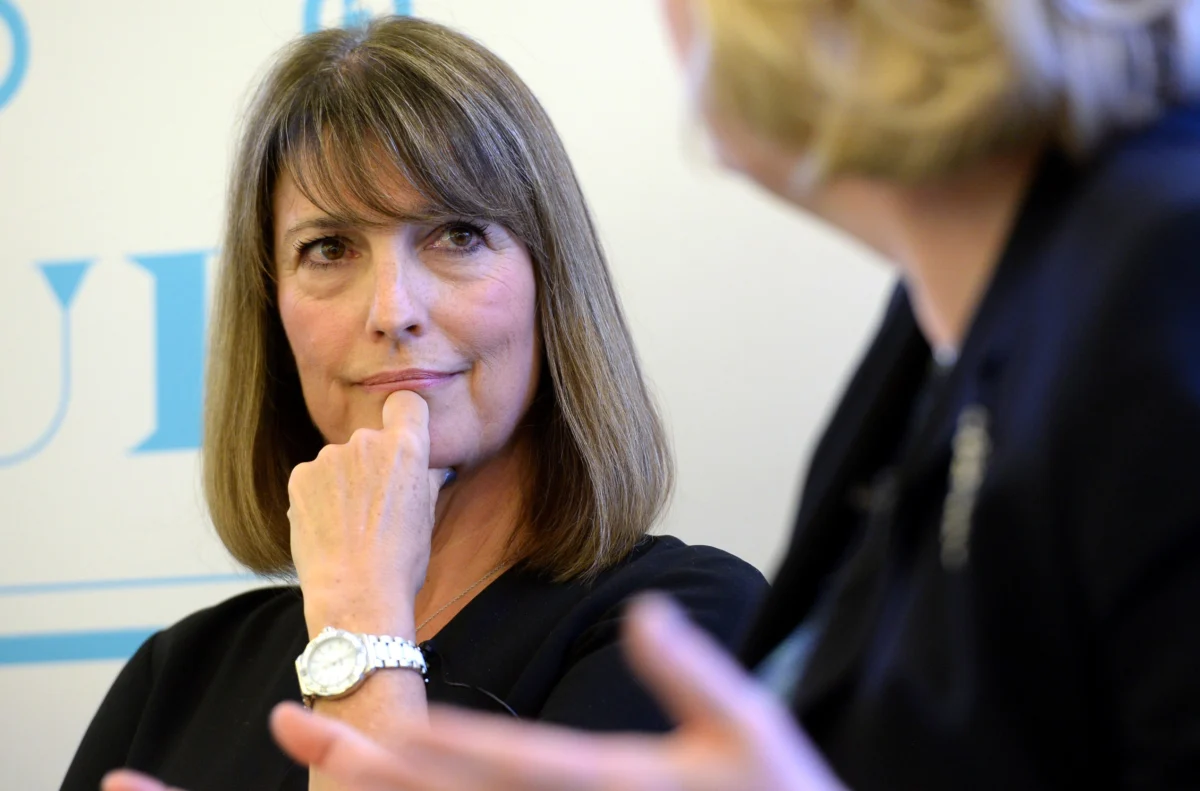
In a pivotal moment for the British broadcasting landscape, U.K. media giant ITV has reaffirmed its commitment to a transformative corporate restructuring while simultaneously navigating a complex macroeconomic environment. As the company unveiled its first-quarter 2026 trading update, the headline was dominated not just by the ebb and flow of advertising revenue, but by the confirmation that negotiations with Sky regarding the potential sale of its Media & Entertainment (M&E) division remain firmly on the table.
Under the leadership of CEO Carolyn McCall, ITV is attempting a delicate balancing act: positioning its prolific production arm, ITV Studios, as a global powerhouse while decoupling its legacy broadcast operations. This strategy, aimed at unlocking shareholder value and streamlining the company’s focus, comes at a time when the media sector is grappling with the volatility of digital transformation and the shifting demands of global streaming giants.
The Potential Divestiture: A New Chapter for ITV and Sky
The narrative surrounding the potential sale of ITV’s M&E division—which encompasses the company’s commercial free-to-air channels and the ITVX streaming platform—began in earnest in November 2025. This week, the company provided a necessary update to stakeholders, confirming that the high-stakes dialogue with Sky has not stalled.
"Following our announcement in November 2025, we remain in active discussions with Sky regarding a possible sale of the media & entertainment (M&E) business," the company stated in its official disclosure. "We will update the market in due course."
For industry analysts, this potential transaction represents more than just an asset transfer; it signifies a structural shift in the U.K. media ecosystem. Should the deal proceed, ITV Studios—the production engine behind global hits—would emerge as a standalone entity, unburdened by the capital-intensive nature of maintaining a broadcast network and a competitive streaming platform.
Chronology of the Strategic Pivot
- November 2025: ITV officially confirms that it is in preliminary discussions with Sky regarding the potential divestment of its M&E unit.
- Early 2026: ITV issues full-year guidance, emphasizing the decoupling of its two main business pillars and projecting growth in both sectors despite economic headwinds.
- Q1 2026 Trading Update (April 2026): ITV reports a mixed bag of results, with production growth outpacing broadcast decline, and reaffirms the continuity of the Sky talks.
Financial Performance: The Tale of Two Divisions
The first quarter of 2026 has provided a clear view of the divergence between ITV’s content creation business and its traditional broadcasting business. The results illustrate why leadership is keen to emphasize the "Studios" aspect of the business as the primary driver of long-term value.
ITV Studios: A Global Content Powerhouse
ITV Studios reported a 4 percent revenue increase during the first quarter. This growth was largely attributed to a robust performance in the external market, where revenue surged by 8 percent. This success is a testament to ITV’s pivot toward becoming a primary supplier for global streamers rather than relying solely on its domestic broadcast network.
The specific drivers of this growth were highlighted as key deliveries to international platforms, including:
- Netflix: The high-profile production Skyscraper Live.
- Disney+: The second season of the critically acclaimed Rivals.
- Peacock: The second season of Love Island U.S.: Beyond the Villa.
While external revenue climbed, internal revenue—content produced specifically for ITV’s own channels—declined by 7 percent. This, however, was a planned strategic outcome. ITV has deliberately reduced its volume of daily soap operas and daytime content as part of a wider production efficiency program, aiming to focus resources on higher-margin, premium content that has greater global appeal.
Media & Entertainment (M&E): The Broadcast Challenge
In contrast to the growth in Studios, the M&E division faced a more challenging quarter, with revenue dipping 2 percent. Total advertising revenue (TAR) also saw a contraction of 1.5 percent. This segment, which relies heavily on the cyclical nature of linear television advertising, remains sensitive to broader economic fluctuations and the evolving habits of viewers who are increasingly migrating toward digital-first consumption.
Supporting Data and Market Outlook
Despite the slight decline in Q1, ITV’s management remains optimistic, particularly regarding the outlook for the second quarter and the remainder of the year. The company is projecting a significant turnaround in advertising revenue, forecasting a 10 percent increase for Q2.
The Soccer Catalyst
A major component of this projected growth is the upcoming men’s soccer World Cup. ITV has historically leveraged high-viewership sporting events to command premium advertising rates. The company anticipates a "strong July," driven by the intense demand from brands eager to capitalize on the massive audience engagement that accompanies international football tournaments.
However, the company is not operating with blind optimism. ITV’s leadership acknowledged the "ongoing difficult geopolitical environment" that continues to impact consumer confidence and corporate marketing budgets. By focusing on variables within their control—such as the production phasing of scripted content and the timing of high-margin licensing deals—the firm maintains that it is firmly on track to hit its full-year guidance.
The guidance for 2026 remains predicated on two main pillars:
- ITV Studios: Continued "good growth" in total revenue, driven by external global demand.
- M&E: "Strong profitable digital revenue growth," leveraging the ongoing maturity of the ITVX platform.
Official Responses and Strategic Vision
CEO Carolyn McCall, who has spearheaded ITV’s modernization efforts, remains the face of this transition. In her comments accompanying the Q1 report, she emphasized that the company’s current path is not merely a reaction to market pressure, but a proactive strategic evolution.
"Our strategic priorities of expanding ITV Studios and supercharging our digital Media & Entertainment business continue to deliver clear and positive results," McCall stated.
Her vision is clear: by transforming ITV from a traditional U.K. broadcaster into a dual-threat entity—a top-tier global producer and a digitally focused media platform—she aims to insulate the company from the decline of linear television. Whether that transformation is completed through a sale of the M&E arm remains the defining question for the company’s future.
Implications for the Industry
The potential sale of ITV’s M&E business to Sky would be a landmark deal, marking one of the most significant consolidations in the history of British media. Several key implications arise from this possibility:
1. The Consolidation of British Media
If Sky, a dominant player in the satellite and pay-TV market, were to acquire ITV’s commercial channels and streaming platform, the move would create a singular entity with unprecedented reach in the U.K. media landscape. This would likely trigger intense regulatory scrutiny from the Competition and Markets Authority (CMA), which would evaluate the impact on advertising market dominance and media plurality.
2. The Global vs. Local Production Paradox
For ITV Studios, the shift toward a standalone model is a calculated move to align with the global content market. By removing the domestic broadcast constraints, the studio could more easily negotiate deals with any platform—Netflix, Amazon, Disney+, or Apple TV+—without the perception of a conflict of interest with its own internal network. This "independent producer" model is increasingly the gold standard for global production companies.
3. The Future of Linear Advertising
The projected 10 percent jump in advertising revenue for Q2 highlights the persistent, if narrowing, power of linear television during major live events. Even as viewers shift to on-demand platforms, the ability of sports and major cultural events to draw a massive, simultaneous audience remains the "last stand" for traditional TV advertising. ITV’s reliance on this model suggests that even in a digital-first future, the broadcast model still holds significant, albeit seasonal, financial weight.
Conclusion: A Company in Transition
As ITV moves through the second quarter of 2026, the company finds itself at a crossroads. The growth of ITV Studios proves that the company’s content remains highly desirable on the global stage. Simultaneously, the struggle of the M&E division highlights the structural difficulties of maintaining a traditional broadcast business in an era of fragmented digital attention.
The ongoing discussions with Sky represent the culmination of years of strategic evaluation. For investors, the next few months will be critical as they wait to see whether ITV will successfully spin off its broadcast legacy to fully unlock the potential of its production engine. For the broader industry, the outcome of these negotiations will set the tone for how legacy media companies adapt to a future where content is global, but the business of broadcasting remains intensely, and often difficultly, local.
ITV’s ability to remain "on track" amidst these seismic shifts is a testament to the resilience of its business model. However, as the geopolitical landscape remains volatile and competition for content budgets intensifies, the company’s success will depend on its ability to execute its dual-pronged strategy: delivering prestige content to the world, while finding the right home for its foundational U.K. broadcast assets.

 Nana
Nana