

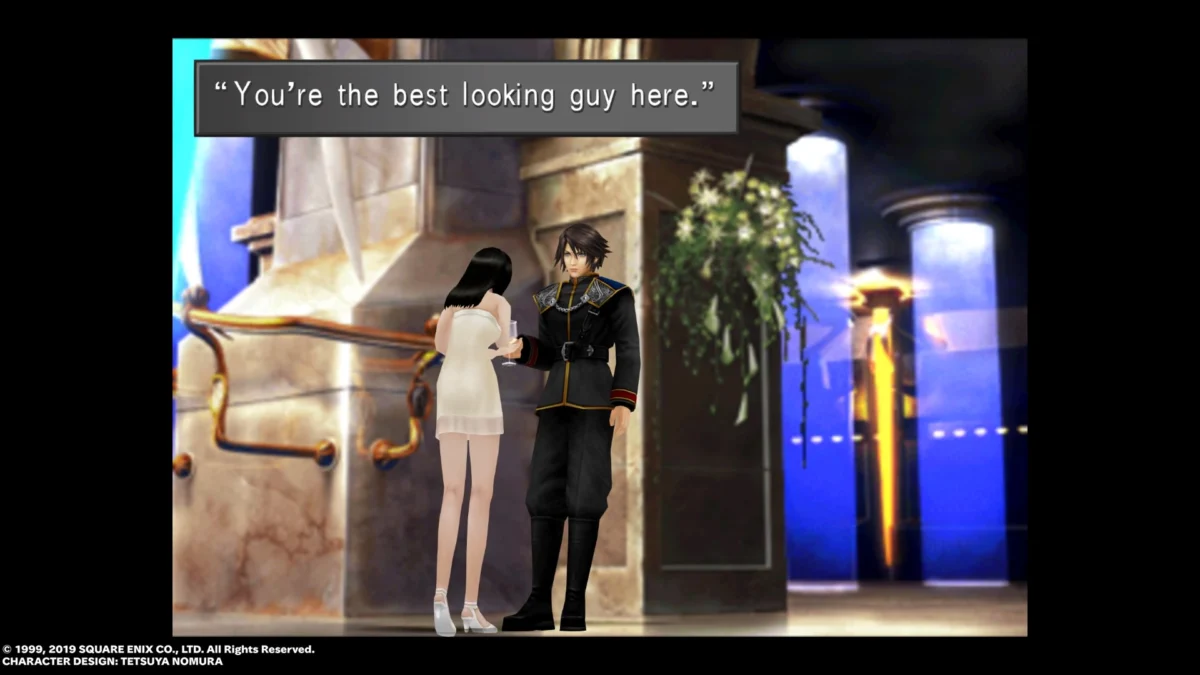
For over two decades, the Final Fantasy series has been defined as much by its auditory landscape as by its crystalline storytelling. Among the storied entries in Square Enix’s flagship franchise, Final Fantasy VIII stands as a singular, polarizing, yet undeniably brilliant achievement. While the game is often debated for its junction system and surreal narrative shifts, one pillar remains unassailable: Nobuo Uematsu’s masterful score. This retrospective examines why the Final Fantasy VIII Original Soundtrack (OST) is not merely a collection of background music, but a foundational evolution in video game composition that continues to resonate more than 25 years after its debut.
The Architecture of Sound: Main Facts and Significance
Nobuo Uematsu, often referred to as the "Beethoven of video games," reached a creative zenith with Final Fantasy VIII. Departing from the fantasy-heavy, MIDI-restricted roots of the 8-bit and 16-bit eras, Uematsu utilized the PlayStation’s hardware to experiment with richer, more orchestral textures.
The OST is a sprawling, four-disc epic that serves as the emotional bedrock for the game’s themes of militarism, destiny, and romance. Unlike its predecessors, which leaned heavily into high-fantasy motifs, Final Fantasy VIII required a score that could bridge the gap between gritty realism and the ethereal nature of "Sorceresses" and time manipulation. Uematsu delivered a soundscape that prioritized atmospheric depth, shifting from the martial discipline of military academies to the intimate, quiet moments of human connection.
A Chronological Journey Through the Score
Opening Acts: "Liberi Fatali" and the Shift to Cinematic Scoring
The soundtrack opens with "Liberi Fatali," a track that redefined what a game’s introduction could achieve. Featuring a choral arrangement set to pseudo-Latin lyrics, the piece is a masterclass in tension. It signaled a permanent shift in the franchise’s identity, moving away from the purely melodic to a more cinematic, operatic structure. The track’s darkness and urgency perfectly mirror the game’s opening cinematic, establishing a tone rooted in history and conflict rather than whimsical adventure.
The Mundane and the Melodic: Mid-Game Ambience
As the player settles into the life of a SeeD mercenary, the soundtrack transitions into the deceptively simple "Balamb Garden." This piece, meditative and calm, captures the essence of a modern military institution. Its "elevator music" quality is a deliberate choice, providing a sense of domestic security that stands in stark contrast to the chaos of the battlefield.
This capacity for restraint is a defining trait of the OST. Tracks like "Blue Fields" (the world map theme) and "Breezy" (Balamb Town) showcase Uematsu’s ability to create immersive, atmospheric environments with minimal percussion. These pieces are not designed to demand attention; they are designed to inhabit the space, allowing the player to exist within the world of the game.
The Pulse of Conflict: Battle Themes
The Final Fantasy VIII battle themes are arguably the most iconic in the entire series. "Don’t Be Afraid" sets a standard for high-octane engagement, utilizing a driving rhythm that creates a sense of immediate, tangible danger. Its influence can be felt in the modern evolution of the series, with many subsequent titles—including the recent Final Fantasy XVI—drawing clear structural inspiration from its aggressive, rhythmic urgency.
Furthermore, "The Man With The Machine Gun," the battle theme for the character Laguna Loire, remains a fan-favorite. By blending catchy, upbeat electronic elements with a driving rock beat, Uematsu captures the chaotic, charismatic energy of Laguna, proving that battle music can be both adrenaline-inducing and rhythmically experimental.
Supporting Data: Complexity and Arrangement
While the soundtrack excels in simplicity, it is equally impressive in its complexity. "Fisherman’s Horizon," for instance, is a testament to the growth of game music arrangement in the late 90s. Its layered instrumentation and evocative melody have cemented it as a cornerstone of the soundtrack.

Conversely, "Find Your Way" demonstrates Uematsu’s ability to weave mystery into a dungeon setting. It acts as a spiritual successor to the "Chaos Shrine" theme from the original Final Fantasy, yet it brings a modern, haunting depth that aligns with the game’s psychological exploration.
However, a critical review must acknowledge the limitations. The OST is not a monolith of perfection. Tracks such as "Fear" fail to capture the visceral intensity their titles suggest, occasionally veering into monotony. "Cactus Jack" stands out as a polarizing inclusion, with a shrill, repetitive quality that, while perhaps intended to evoke the chaotic nature of the creature, often falls flat for the listener. Despite these minor missteps, the density of the four-disc collection ensures that these rare lulls do not diminish the overall impact.
Love as a Musical Motif
Perhaps the most defining characteristic of the Final Fantasy VIII soundtrack is its commitment to the theme of love. The score is punctuated by some of the most romantic compositions in the franchise. "Julia" provides a piano-led moment of fragile beauty, while "Love Grows" serves as the melodic embodiment of the bond between the protagonist, Squall, and his love interest, Rinoa.
The crowning achievement of this romantic arc is "Eyes On Me." The vocal track is more than just a pop ballad; it is a narrative device that ties the disparate timelines of Squall and Laguna together. With its swelling strings and raw emotional delivery, "Eyes On Me" set the industry standard for vocal tracks in RPGs, demonstrating that video game music could compete with mainstream radio production in terms of emotional resonance.
The "Shuffle or Boogie" Phenomenon: Cultural Impact
No discussion of the Final Fantasy VIII OST would be complete without mentioning "Shuffle or Boogie." The theme for the in-game Triple Triad card game became an inadvertent earworm for millions of players. Its infectious, rhythmic quality turned what could have been a mundane side activity into a highlight of the gameplay loop. The fact that the track remains beloved—despite being heard hundreds of times by the average player—is a testament to the strength of the melody. It represents the "hidden" brilliance of the soundtrack: the ability to make repetitive tasks feel engaging through music.
Implications: A Legacy Defined
The implications of the Final Fantasy VIII soundtrack on the medium of gaming are profound. At the time of its release, the industry was struggling to define the role of audio in 3D, narrative-heavy games. Uematsu’s work served as a blueprint, proving that:
- Orchestration matters: The move toward more complex arrangements allowed for a more mature, cinematic storytelling experience.
- Atmosphere is an instrument: The use of minimalist, ambient tracks for exploration proved that silence or subtle music can be as powerful as a bombastic theme.
- Vocal integration is viable: "Eyes On Me" proved that narrative-driven vocal tracks could elevate the emotional stakes of a digital story.
Looking back, the Final Fantasy VIII OST is a watershed moment. It took the inspiration of the 8-bit and 16-bit eras and expanded them into a symphonic, mature, and deeply human experience. It remains a "turning point" in the series’ history—a bridge between the experimental roots of early Japanese RPGs and the sprawling, high-production spectacles of the modern era.
In conclusion, while musical tastes may evolve and subsequent Final Fantasy entries may offer more technically advanced soundscapes, the Final Fantasy VIII OST remains an essential piece of gaming history. It is a work of passion, precision, and profound beauty that captures the fleeting, often surreal nature of its source material. For those who have walked the halls of Balamb Garden or stared out at the horizon of Fisherman’s Horizon, this soundtrack is not just a collection of files—it is a memory, etched in melody, that refuses to fade.












No comments yet. Be the first to join the conversation!