

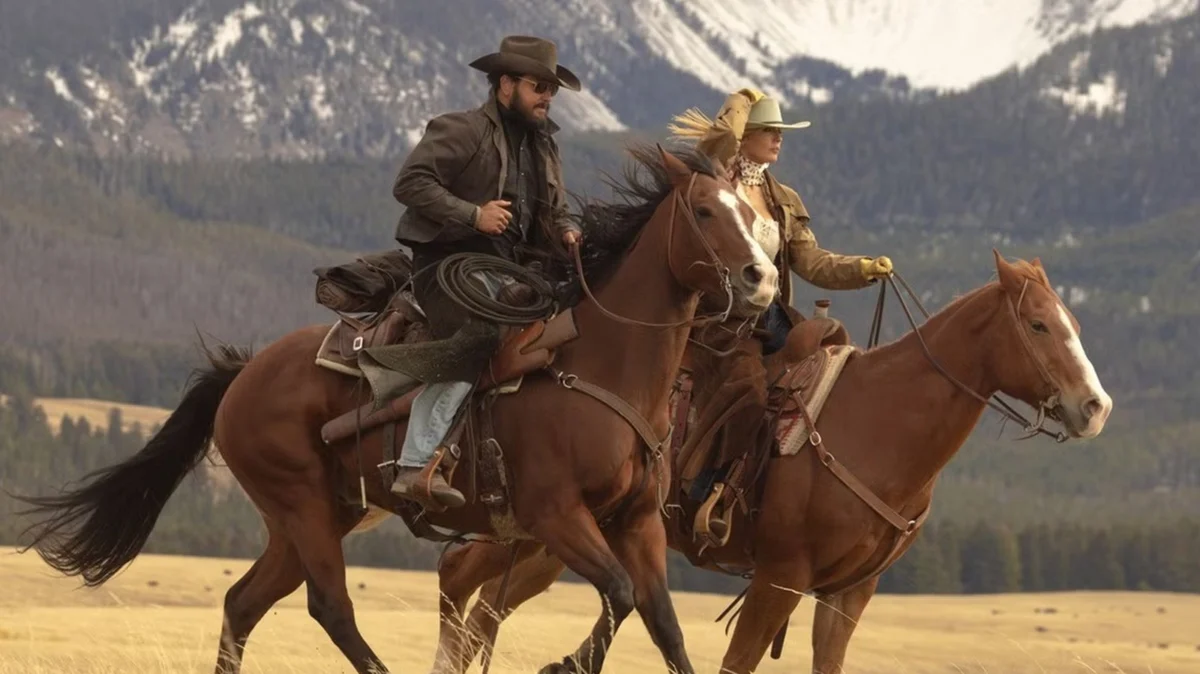
The Yellowstone universe, masterminded by Taylor Sheridan, has never been a place where happy endings are guaranteed. For five seasons, viewers watched as the Dutton family navigated a treacherous landscape of land wars, corporate greed, and deep-seated familial trauma. Among the chaos, the volatile yet enduring romance between Beth Dutton (Kelly Reilly) and Rip Wheeler (Cole Hauser) stood as the series’ emotional anchor.
Now, with the advent of the latest chapter in the saga, Dutton Ranch, the narrative landscape is shifting. Director Christina Alexander Voros recently offered an exclusive look at why the creative team felt it was necessary to move beyond the "fairytale" conclusion the couple received in the original series, suggesting that while their journey was once defined by survival, it is now being defined by evolution.
The Weight of the Yellowstone Legacy
To understand why Dutton Ranch is such a significant departure, one must first look at the trajectory of Beth and Rip within the original Yellowstone timeline. For years, the pair existed in the shadow of John Dutton (Kevin Costner). Their lives were dictated by his obsession with preserving the ranch, a goal that demanded unwavering loyalty and constant violence.
Beth’s life was perpetually consumed by her vitriolic feud with her brother, Jamie (Wes Bentley), a conflict that acted as a vacuum for her energy and potential for happiness. Rip, meanwhile, served as the ranch’s unwavering protector, his identity inextricably linked to the survival of the Dutton name. Their "happy ending"—the prospect of a life away from the blood-soaked soil of the original ranch—was a rare moment of respite in a show defined by perpetual motion and tragedy.
However, as the production shifts toward the new Dutton Ranch narrative, the creative team has signaled that these characters are not static. Their previous peace was a conclusion to a war, but Dutton Ranch represents the start of a life.
A Chronology of Conflict: From Survival to Sovereignty
The journey of Beth and Rip can be categorized into three distinct phases:
- The Shadow Era (Seasons 1-3): During this period, Beth and Rip were defined by their service. Their romantic milestones were punctuated by assassination attempts, ranch politics, and the constant threat of losing the legacy they were sworn to protect.
- The Fracture Era (Seasons 4-5): As the conflict with Jamie reached a boiling point and the external threats to the Dutton land escalated, Beth and Rip found themselves forced to prioritize their bond over the family’s needs. The "happy ending" provided at the conclusion of the flagship series served as a bridge, allowing them to extract themselves from the poisonous atmosphere of the Dutton estate.
- The Sovereign Era (Dutton Ranch): This is the current phase. For the first time, Beth and Rip are not responding to the needs of a patriarch or a dying legacy. They are architects of their own future.
The Philosophy of the "Dutton Ranch" Creative Team
Director Christina Alexander Voros, in an exclusive interview with SlashFilm, articulated a perspective that sheds light on why the production was unafraid to dismantle the perceived safety of the couple’s previous ending.
![Why Dutton Ranch's Director Wasn't Afraid To Change Beth And Rip's Happy Yellowstone Ending [Exclusive]](https://www.slashfilm.com/img/gallery/why-dutton-ranchs-director-wasnt-afraid-to-change-beth-and-rips-happy-yellowstone-ending-exclusive/l-intro-1778697733.jpg)
"Drama seems to find them, and peace seems to elude them," Voros explained. "They are one of the great love stories on television in the last decade, and what I think makes them so exciting to watch is all these things that the world throws at them, they always find a way through it. And they always find a way through it stronger together."
This statement serves as a thesis for the new series. The creative team recognizes that for a character study to remain compelling, the characters must be stripped of their familiar defenses. By moving them to a new environment, the writers are testing the durability of Beth and Rip’s bond in a setting where they are no longer just soldiers in someone else’s war, but masters of their own territory.
Supporting Data: Why Fans Fear the "Sheridan Curse"
The anxiety surrounding the future of Beth and Rip is not unfounded. Taylor Sheridan’s writing style is famously unforgiving. Shows like 1883 and 1923 have conditioned the audience to expect that no one—regardless of their popularity or narrative necessity—is safe from a tragic end.
The speculation that one of these characters might meet their demise in Dutton Ranch is a direct response to the "Sheridan pattern." Historically, the stakes in a Western drama are measured in blood. However, Voros suggests that the upcoming episodes will pivot away from the expectation of tragedy and toward the complexity of a new beginning.
"It’s very important that the characters be allowed to continue evolving," Voros added. "It’s a new chapter for them. Yellowstone was very much about holding on to a legacy. Dutton Ranch is about building a new one. And when you’re building anything new, you sort of start from the ground up."
Implications: A New Chapter or a Final Stand?
The shift from "holding on" to "building" is the most significant thematic pivot in the franchise’s history. When Beth and Rip were on the Yellowstone property, every action they took was a reaction to external pressures. They were, in essence, trapped by their own devotion.
Now that they are untethered, the implications are two-fold:
![Why Dutton Ranch's Director Wasn't Afraid To Change Beth And Rip's Happy Yellowstone Ending [Exclusive]](https://www.slashfilm.com/img/gallery/why-dutton-ranchs-director-wasnt-afraid-to-change-beth-and-rips-happy-yellowstone-ending-exclusive/intro-1778697733.jpg)
1. The Test of Autonomy
Without the external distractions of Jamie Dutton’s betrayals or John Dutton’s political maneuvering, Beth and Rip are forced to face themselves. If they are no longer defined by their hatred of an enemy or their loyalty to a father, who are they? This psychological deep dive is what promises to make Dutton Ranch a more intimate character study than its predecessor.
2. The Nature of Modern Drama
The drama in Dutton Ranch is internal and structural rather than purely violent. The first episode, as noted by observers, introduces a fresh set of challenges that are not tied to the previous series’ baggage. This is a bold move; it forces the audience to stop viewing Beth and Rip as victims of a larger narrative and start viewing them as protagonists who are capable of creating their own crises.
Official Responses and Production Outlook
The decision to bring back Kelly Reilly and Cole Hauser was a cornerstone of the Dutton Ranch strategy. The studio understands that these two actors carry the weight of the Yellowstone brand. By keeping them in the fold, the production maintains continuity while simultaneously granting itself permission to evolve.
Voros’s commentary emphasizes that the "chaotic" elements of their past were necessary for their development, but that they had become a limitation. By leaving the "battles of other people" behind, the series is effectively rebooting the potential for their relationship to grow.
Conclusion: The Future of the Frontier
As we look toward the unfolding episodes of Dutton Ranch, the central question remains: can Beth and Rip survive their own freedom?
The transition from the oppressive weight of the Yellowstone legacy to the blank slate of a new ranch is a narrative gamble. It risks alienating fans who want the comfort of the status quo, but it rewards those who are interested in the evolution of characters who have already survived the impossible.
Christina Alexander Voros’s vision is clear: the goal is not to preserve a static image of a couple in love, but to witness how two people, forged in fire, navigate the complexities of life when they finally have the autonomy to choose their own path. Whether that path leads to a lasting peace or a new, unforeseen tragedy remains to be seen. But one thing is certain—the Dutton story is no longer about preserving the past. It is about the uncomfortable, necessary, and potentially beautiful act of building something entirely new.









No comments yet. Be the first to join the conversation!