By Staff Reporter
In the quiet, suburban landscape of Ichikawa, Chiba Prefecture—a city that serves as a gateway to the sprawling Tokyo metropolis—a long-standing tradition has become the epicenter of a heated national discourse. The decision by municipal authorities to bar a local mosque from conducting its customary outdoor prayer session in a public park has ignited a fierce debate over the limits of religious expression, the influence of digital public opinion, and the true meaning of "multicultural coexistence" in an increasingly diverse Japan.
The controversy, which reached a boiling point this past May, has left community leaders, city officials, and academic experts grappling with a fundamental question: When a tradition clashes with the comfort levels of the majority, how should a local government respond?
The Spark: Tradition Meets Digital Backlash
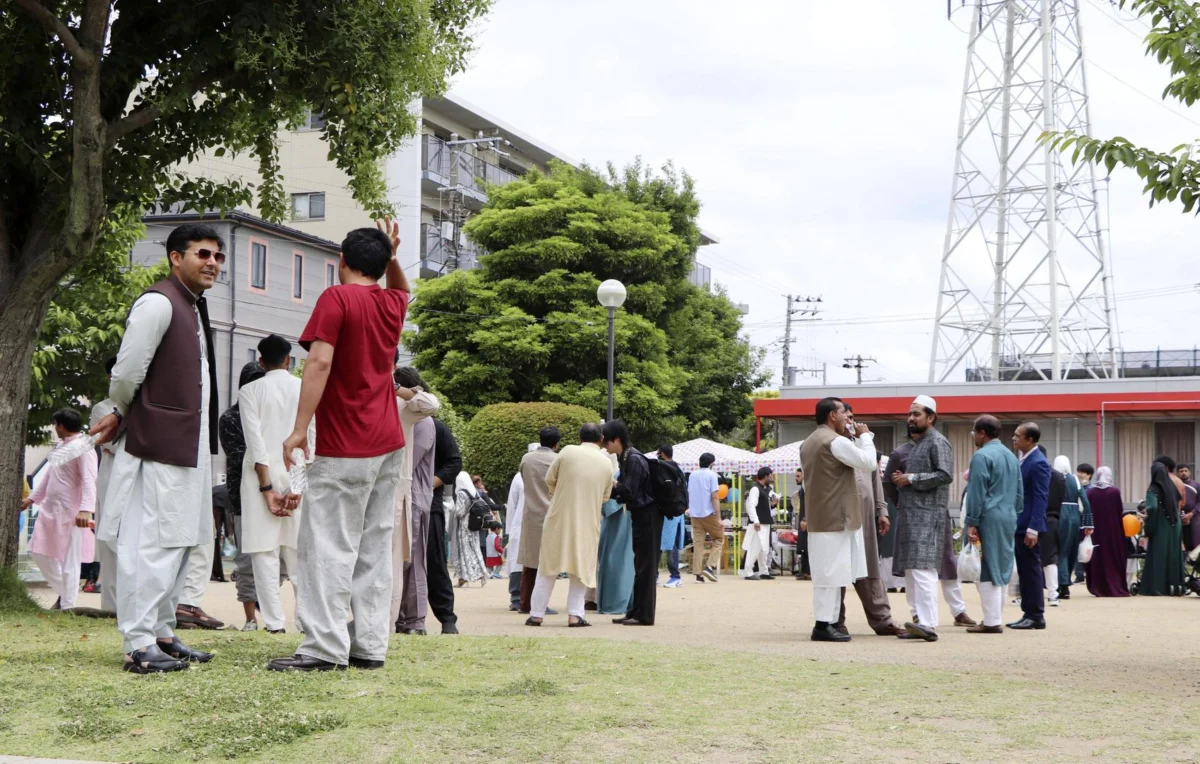
For approximately three decades, the mosque in Ichikawa has held biannual festivals in a neighborhood park, complete with communal prayer, traditional attire, and shared meals. According to Abdullah Miyazawa, a 56-year-old representative of the mosque who originally hails from Pakistan, these gatherings were not merely religious obligations but vital community-building exercises. For thirty years, the events proceeded with city approval, existing as a quiet, accepted fixture of the local social fabric.
The atmosphere shifted abruptly following the autumn festival last year. Clips of the prayer session—a peaceful, disciplined gathering of worshippers—were uploaded to social media platforms. The footage, stripped of its community context, became a catalyst for intense scrutiny. Negative commentary proliferated online, with critics questioning the propriety of holding religious services in a public space.
This digital pressure soon transitioned into tangible municipal action. Confronted by a surge of inquiries—some supportive, others deeply hostile—Ichikawa City Hall opted to intervene. The city initially floated the idea of canceling the festival entirely. After high-stakes negotiations, a compromise was struck: the festival could proceed, but only as a social gathering. The outdoor prayer component, the very core of the event, was strictly prohibited.
A Chronology of the Dispute
To understand the gravity of the situation, one must look at the timeline of events that led to this impasse:
- 1990s–2023: The mosque holds biannual festivals in the local park for roughly 30 years, consistently maintaining a record of peaceful coexistence and cooperation with neighborhood associations.
- Autumn 2023: A prayer session is recorded and shared on social media, sparking a wave of online criticism regarding the use of public space for religious activities.
- March 2024: Approximately 200 people gather in the park for prayer, a testament to the growing size of the community.
- May 2024: Faced with mounting pressure from social media and internal city council discussions, Mayor Ko Tanaka and city officials deny the mosque’s application for a prayer permit, citing "safety concerns" and potential public interference.
- May 2024 (Post-Compromise): The festival proceeds as a social event. Lacking an outdoor space for communal worship, worshippers are forced to rotate through the mosque’s limited indoor facilities in multiple sessions.
The Official Stance: Defining "Multicultural Coexistence"
Mayor Ko Tanaka, addressing the press in the wake of the decision, was candid about the factors that influenced his administration. He acknowledged that the choice to effectively ban the outdoor prayer was his own, driven by the feedback loop of social media vitriol and the concerns raised by the city council.
"For local residents, group prayer can cause unease because it is unfamiliar," Mayor Tanaka stated during a regular press conference. "I believe the way the park was being used had moved away from what multicultural coexistence should look like."
The city’s official line, articulated by various spokespeople, centered on the objective of "public utility." They argued that the occupation of a public park by a religious group—particularly one as large as 200 people—could interfere with the rights of the general public to use the space. By framing the decision as a matter of "fair usage," the city attempted to depoliticize a move that many critics viewed as discriminatory.
The Human Cost: A Community Caught in the Middle
For Abdullah Miyazawa, the fallout has been deeply personal. While he maintains a conciliatory tone, emphasizing his desire to avoid conflict, the pain of being "othered" is palpable.
"We have always sought to observe proper etiquette and maintain good relations," Miyazawa explained. "We don’t want trouble for the neighborhood. But many of our worshippers feel that, as members of this community, we should be treated as such."
The psychological impact on the mosque’s congregants, particularly the children, has been significant. Reports of families expressing concern for their children’s safety in the face of growing anti-Muslim sentiment across Japan have underscored the fragility of the current situation. For a community that has spent thirty years trying to integrate into the Ichikawa landscape, the sudden rejection by the city government serves as a painful reminder of their perceived status as "outsiders."
Academic Perspectives: A Dangerous Precedent?
The intervention of Ichikawa city officials has drawn sharp criticism from scholars of social policy and multiculturalism. Masami Wakayama, a political scientist at the University of Shizuoka, suggests that the city’s actions reveal a fundamental misunderstanding of what it means to be a diverse, modern society.
"Prayer is a normal, daily part of life for Muslims," Wakayama noted. "If the city’s decision was dictated by anonymous criticism on social media, then they have arguably overstepped their discretionary authority. They have prioritized the ‘unease’ of the majority over the rights of a minority group without conducting any rigorous, evidence-based investigation."
Wakayama argues that the city failed in its duty to govern objectively. A more responsible approach, he suggests, would have involved formal surveys of local residents to gauge the actual impact of the prayer sessions, rather than reacting to the loudest voices on the internet. Instead, by capitulating to social media pressure, the city may have inadvertently validated the prejudices of those who oppose multiculturalism.
The Voices of the Neighborhood
Interestingly, the ground-level reality in Ichikawa appears more nuanced than the digital discourse suggests. Kazumi Kurosu, the head of the local neighborhood association, provides a perspective that contrasts with the mayor’s rhetoric.
"There were issues in the past, but there are no major problems now," Kurosu said. He noted that the mosque has been proactive in its efforts to communicate with the neighborhood and maintain cleanliness and order. To the people living directly adjacent to the park, the "unease" cited by the mayor seems largely absent.
However, the fear is not entirely absent. A local resident in her 70s remarked that the sight of a large group gathering in prayer felt "frightening," highlighting the lingering cultural gap. It is this gap that scholars like Wakayama argue should be addressed through dialogue and interaction, rather than through exclusion.
Implications for Japan’s Future
The Ichikawa incident is a microcosm of a larger challenge facing Japan. As the country grapples with a shrinking population and an increasing reliance on foreign labor and international communities, the definition of "Japanese-ness" is being tested.
When local governments allow their policies to be shaped by the reactionary impulses of social media, they risk eroding the very social cohesion they claim to protect. The case of the Ichikawa mosque serves as a warning: if "multicultural coexistence" is defined solely by the comfort of the status quo, it is destined to remain a superficial goal.
Moving forward, the city of Ichikawa faces a difficult road. Can it repair the relationship with its Muslim community? Can it foster a genuine dialogue that moves beyond fear? Or will this case become a blueprint for other municipalities to suppress religious and cultural diversity in the name of social "harmony"?
For now, the congregants of the Ichikawa mosque continue their prayers within the confines of their building. Outside, the park remains open to the public, but the open, communal spirit that once defined the festival has been significantly dampened. The silence in the park is perhaps the loudest statement of all—a reflection of a community that has been told, quite clearly, that they do not quite belong in the public eye.