


In the ever-evolving landscape of global streaming, few platforms have mastered the art of the breakout international hit quite like Netflix. From the high-stakes survivalist tension of Squid Game to the gritty, espionage-laden thrills of The Night Agent, the streaming giant has turned non-English language content into a cornerstone of its global dominance. However, its latest sensation, the 10-part action-thriller Teach You a Lesson, represents a unique case study in media consumption—a project that managed to ascend to the top of the global charts for four consecutive weeks despite a cloud of controversy surrounding its source material.
The Premise: Vigilante Justice in the Classroom
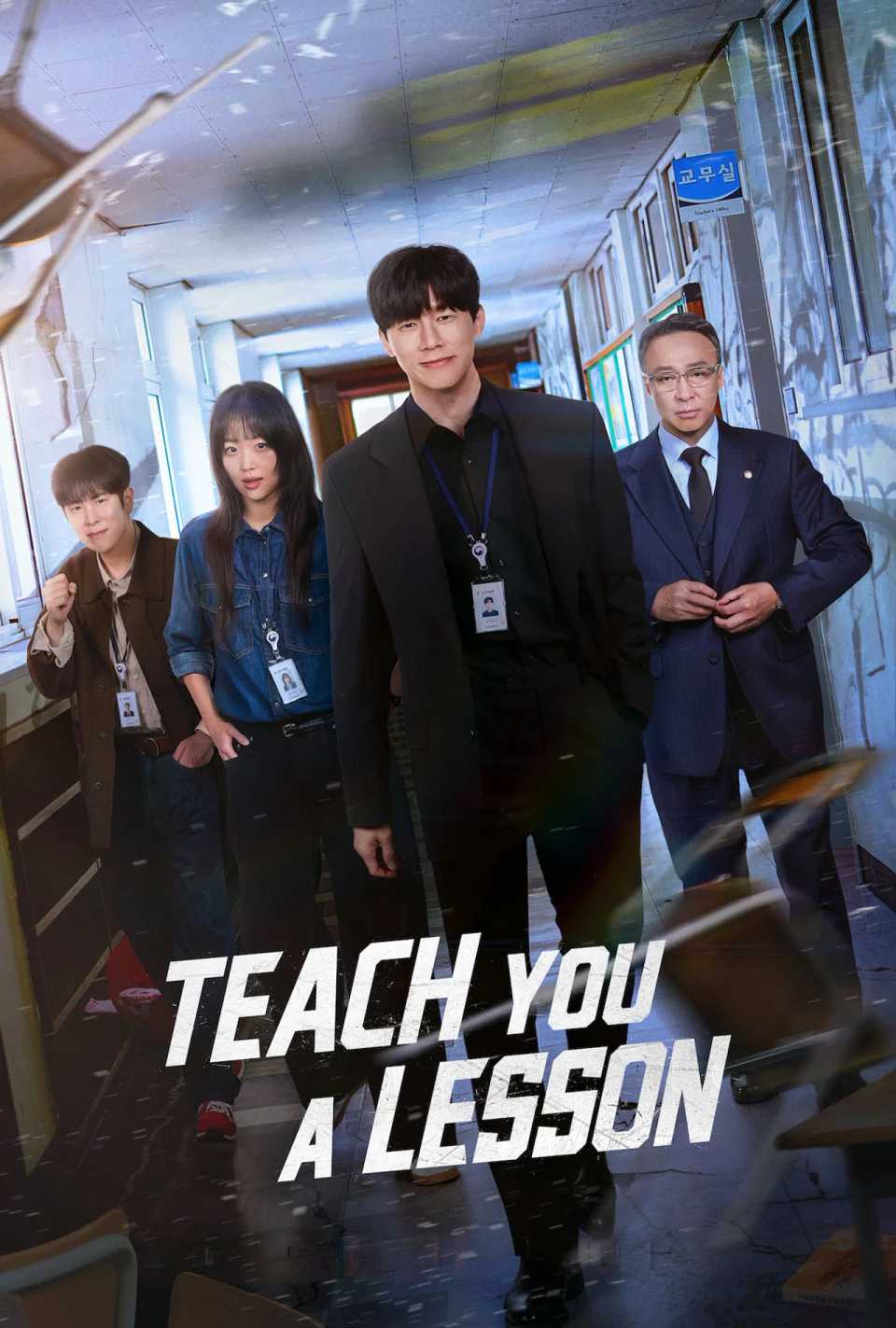
Teach You a Lesson is a high-octane K-drama that dives into the darkest corners of South Korea’s educational system. The series follows the Educational Rights Protection Bureau (ERPB), a specialized task force sanctioned by the Minister of Education to combat the systemic violence and corruption plaguing school campuses.
At the helm is Na Hwa-jin, played with brooding intensity by Kim Mu-yeol. A former Special Forces captain, Na is a man of action who operates with the cold efficiency of a soldier. The show’s hook is simple but undeniably addictive: when legal channels fail to protect vulnerable students and teachers from bullies and corrupt administrators, the ERPB steps in. Operating with a mandate that ignores traditional bureaucratic barriers, the team utilizes tactical expertise to "fix" the problem—a narrative device that provides the series with its signature high-octane action sequences.
Beyond the choreography and suspense, the show probes deeper, exploring the toxic impact of unchecked bullying and institutional negligence. It positions education as a battleground, arguing that when schools fail to protect their students, the consequences ripple out into society at large.
A Chronology of Success: The Four-Week Streak
The trajectory of Teach You a Lesson is nothing short of historic. Since its release in early June 2026, the series has demonstrated a level of viewer retention rarely seen in the era of "binge-and-forget" content.
- Week 1: The series debuted with strong numbers, immediately entering the Top 10 lists across Asia. Word of mouth regarding its intense action sequences helped propel it to the number one spot in South Korea, Japan, and Taiwan within its first seventy-two hours.
- Week 2: The "Netflix Effect" took hold. By the second week, the show expanded its reach, finding an audience in Southeast Asia and parts of the Middle East, maintaining a steady hold on the global non-English language Top 10 list.
- Week 3: Despite initial media scrutiny regarding its origins, the show’s popularity surged in the West. It began appearing in the Top 10 lists of various European and Latin American markets, signaling a shift from a regional hit to a global phenomenon.
- Week 4: As of the reporting period ending June 28, 2026, the series has officially clocked its fourth consecutive week at the number one position globally. With presence in 75 countries, it has become the most-watched non-English series on the platform for the month.
Data Analysis: The Global Reach of the ERPB
The metrics provided by Netflix’s Tudum site highlight a fascinating distribution of viewership. While the show dominates the APAC region—specifically Japan, Hong Kong, Indonesia, Singapore, and Vietnam—the data suggests that the show’s appeal transcends language barriers.
The "action-thriller" genre is arguably the most universal language in television. By stripping away the more complex cultural nuances of the school system and focusing on the archetypal "hero fighting for justice" narrative, the show effectively lowered the barrier to entry for international viewers. The data shows that the average completion rate for the 10-episode series is significantly higher than other shows in the same genre, indicating that once viewers start the show, they are highly likely to finish it.
The Shadow of Controversy: From Webtoon to Screen
The path to Teach You a Lesson becoming a global juggernaut was far from smooth. The series is an adaptation of the popular, yet highly contentious, webtoon Get Schooled by Chae Yong-taek and Han Ga-ram.

Prior to the adaptation, the original webtoon faced intense public backlash in South Korea due to the inclusion of racially insensitive content and harmful stereotypes in specific chapters. Critics argued that the source material trivialized social issues and utilized bigoted tropes, leading to a heated debate regarding whether the intellectual property should even be adapted for a wider audience.
In South Korea, the announcement of the Netflix adaptation was met with skepticism, with many activists calling for the project to be shelved. The situation forced a public reckoning for the production team. Netflix senior director Bae Jong-byung eventually addressed the outcry, confirming that the production team had "rigorously vetted" the script to remove problematic elements from the original webtoon. He noted that the team was committed to shifting the narrative focus toward systemic reform and empathy, rather than the exclusionary rhetoric found in the source material.
This transparency appears to have been the key to the show’s eventual acceptance. By acknowledging the flaws in the source material and pivoting toward a more socially conscious narrative, the creators managed to neutralize the potential for a boycott.
Critical Reception and the "Teacher" Verdict
The success of Teach You a Lesson is not merely measured in streaming hours; it has also garnered impressive critical acclaim. With an 86% approval rating from critics and a staggering 94% audience score on Rotten Tomatoes, the show has defied the typical "critics vs. audience" divide.

Perhaps most surprisingly, the show has been embraced by the very demographic it depicts: educators. In South Korea, teachers’ unions and educational advocates have provided positive feedback, noting that the show—while dramatized—effectively highlights the real-world exhaustion, lack of administrative support, and physical danger that many teachers face.
This sense of realism, even within the confines of a stylized action show, has proven to be the "secret sauce." Even viewers who are unfamiliar with the specific intricacies of the South Korean educational system find the themes of "protecting the future" and "holding the powerful accountable" to be universally relatable.
The Future of the Franchise: Implications for Netflix
As the dust settles on this four-week streak, the industry is left wondering what comes next. Teach You a Lesson was marketed as a limited series, which typically suggests that the story has a definitive beginning, middle, and end. However, in the world of high-performing streaming content, "limited" has often been a flexible term.
The implications for Netflix are significant. First, the success of the show proves that international audiences are hungry for high-stakes, issue-driven action dramas. It reinforces the strategy of investing in K-dramas that bridge the gap between social commentary and pure, adrenaline-fueled entertainment.
Second, the controversy management strategy employed by the production team serves as a new blueprint for future adaptations of potentially problematic IP. By transparently distancing the screen version from the controversial aspects of the source material, studios can mitigate risk while maintaining the brand recognition of a pre-existing property.
Finally, the sheer reach of the show suggests that the market for non-English language content is nowhere near its saturation point. As long as the themes remain universal—justice, retribution, and the protection of the innocent—audiences in 75+ countries are more than willing to read subtitles for a high-quality production.
Conclusion: A Lesson Learned
Teach You a Lesson has proven that quality content, even when born from a troubled genesis, can overcome its past through careful execution and a resonance with the global zeitgeist. It stands as a testament to the power of the "vigilante" sub-genre, elevated by the strong performance of its lead, Kim Mu-yeol, and the sharp, tactical direction of Hong Jong-chan.
While it is unclear if we will see a second season or a spin-off, the impact of the ERPB’s mission will likely be felt for months to come. For Netflix, the series is a crown jewel in their 2026 slate, reminding the industry that when you provide viewers with a story that touches on the fundamental desire for fairness in an unfair world, the borders of language and culture quickly dissolve. As the show’s popularity continues to linger, one thing is certain: the lesson in how to create a global hit has been learned well.










