In the saturated landscape of medieval fantasy role-playing games, the debut title from Rebel Wolves, The Blood of Dawnwalker, arrives with a heavy burden of expectation. Published by Bandai Namco and built upon the formidable foundations of Unreal Engine 5, the game presents itself as a sprawling, ambitious attempt to redefine the genre by introducing a unique day-night dual-nature mechanic and a rigid, high-stakes time constraint. However, our comprehensive review reveals a title that oscillates between brilliant, avant-garde storytelling and the frustratingly familiar tropes of the modern open-world RPG.
The Core Concept: A Tale of Two Natures
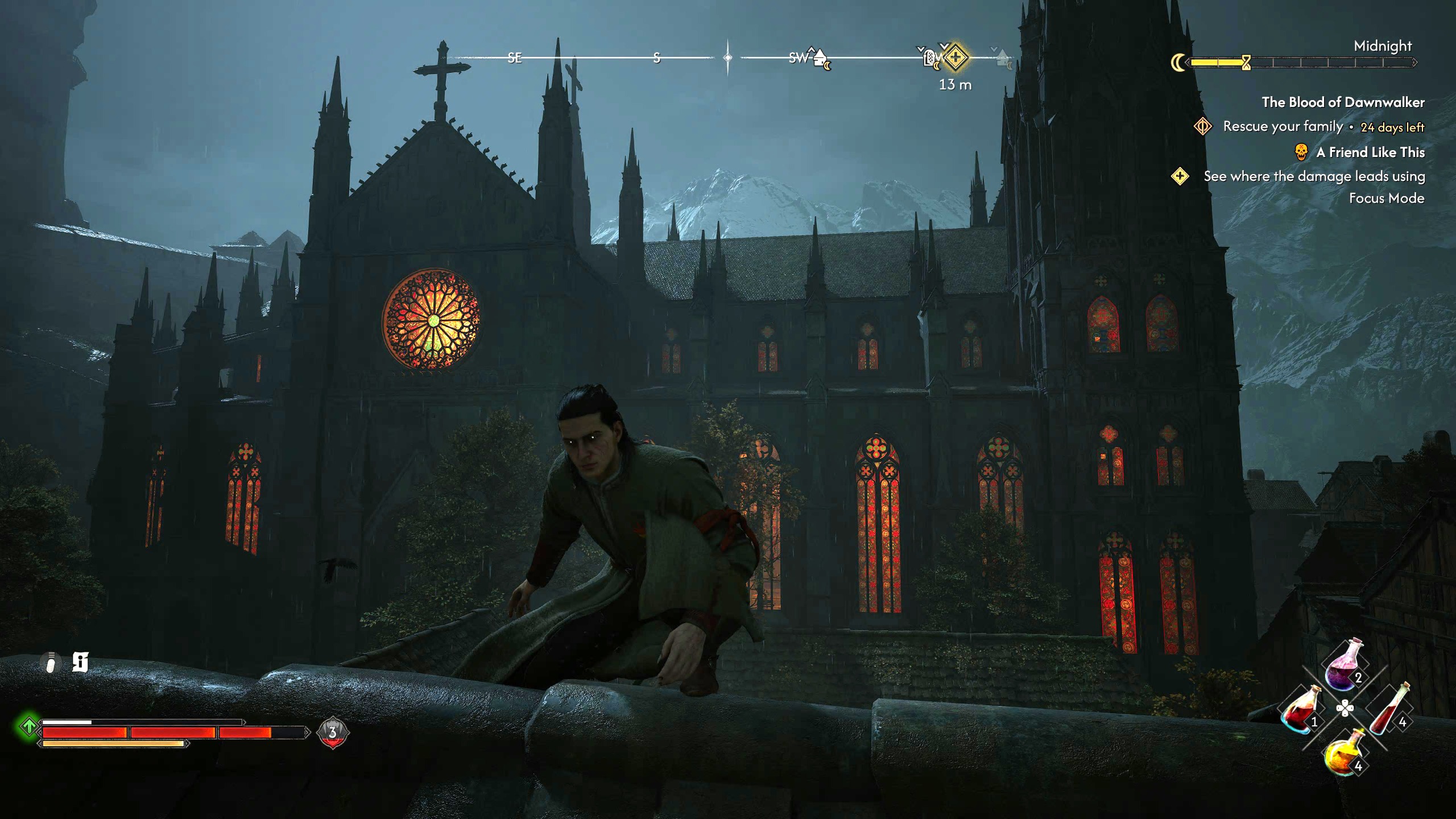
Set in the grim, plague-ridden Carpathian region of Vale Sangora, the game casts the player as Coen—a protagonist caught in a supernatural tug-of-war. By day, Coen is a human marked by witchcraft; by night, he transforms into a creature of the shadows. The central narrative hook is refreshingly tight: the player has exactly 30 days and nights to navigate a decaying 14th-century world to save their family from the clutches of the vampire lord, Brencis.
This time-sensitive structure is the game’s boldest mechanical assertion. Unlike the traditional open-world design—which often encourages aimless wandering and the exhaustive clearing of map icons—The Blood of Dawnwalker forces the player to curate their experience. You cannot do everything. You must choose which leads to follow and which villagers to aid, knowing that every action carries a temporal cost.
Chronology of the Experience
The game begins with a promise of tactical depth. Upon awakening in the shadow of Brencis’s regime, the player is introduced to the "30-day clock." This is not a standard "game over" timer that resets your progress; rather, it is a persistent pressure system that ensures the narrative moves forward regardless of your level of completion.

- Early Game: Players are introduced to the basics of investigation. Utilizing a "Focus" ability, Coen must act as a medieval detective, piecing together crime scenes and unraveling the origins of the vampiric curse. These moments, which emphasize deduction over combat, represent the game at its strongest.
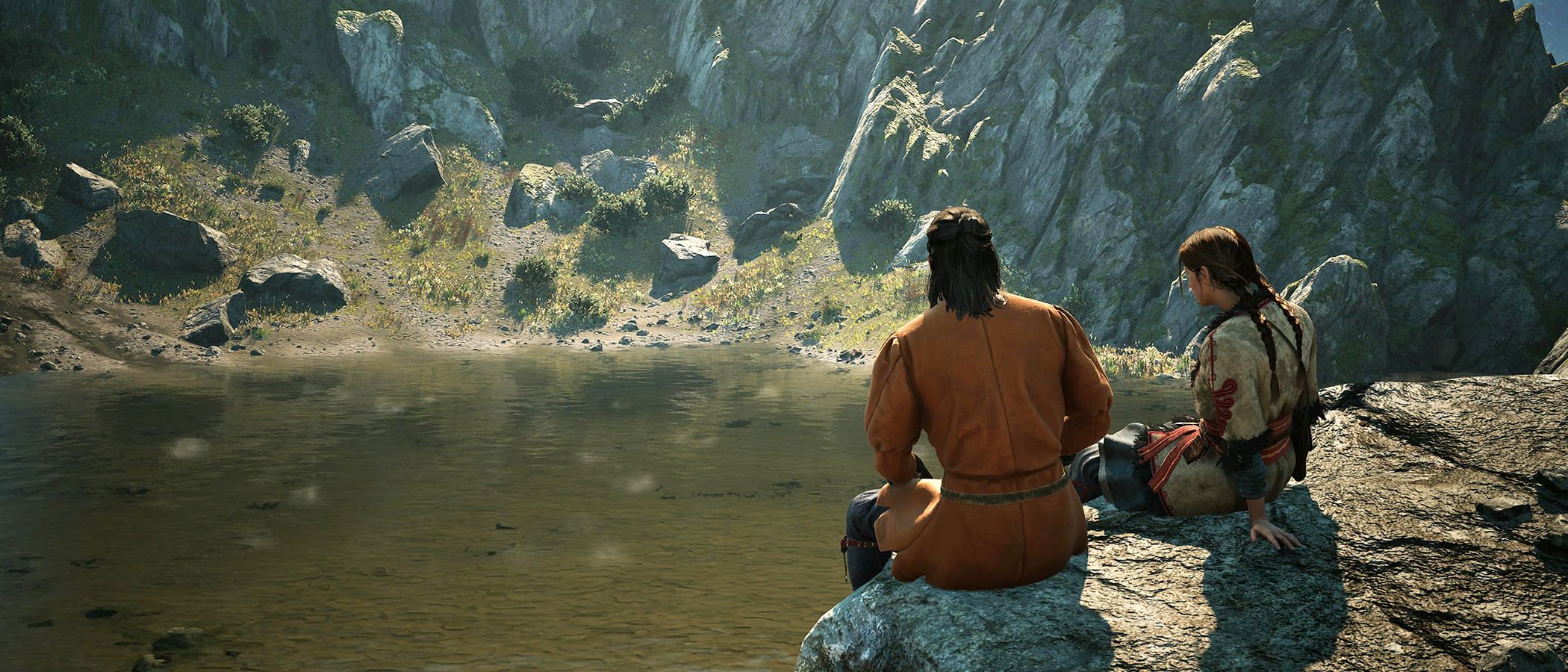
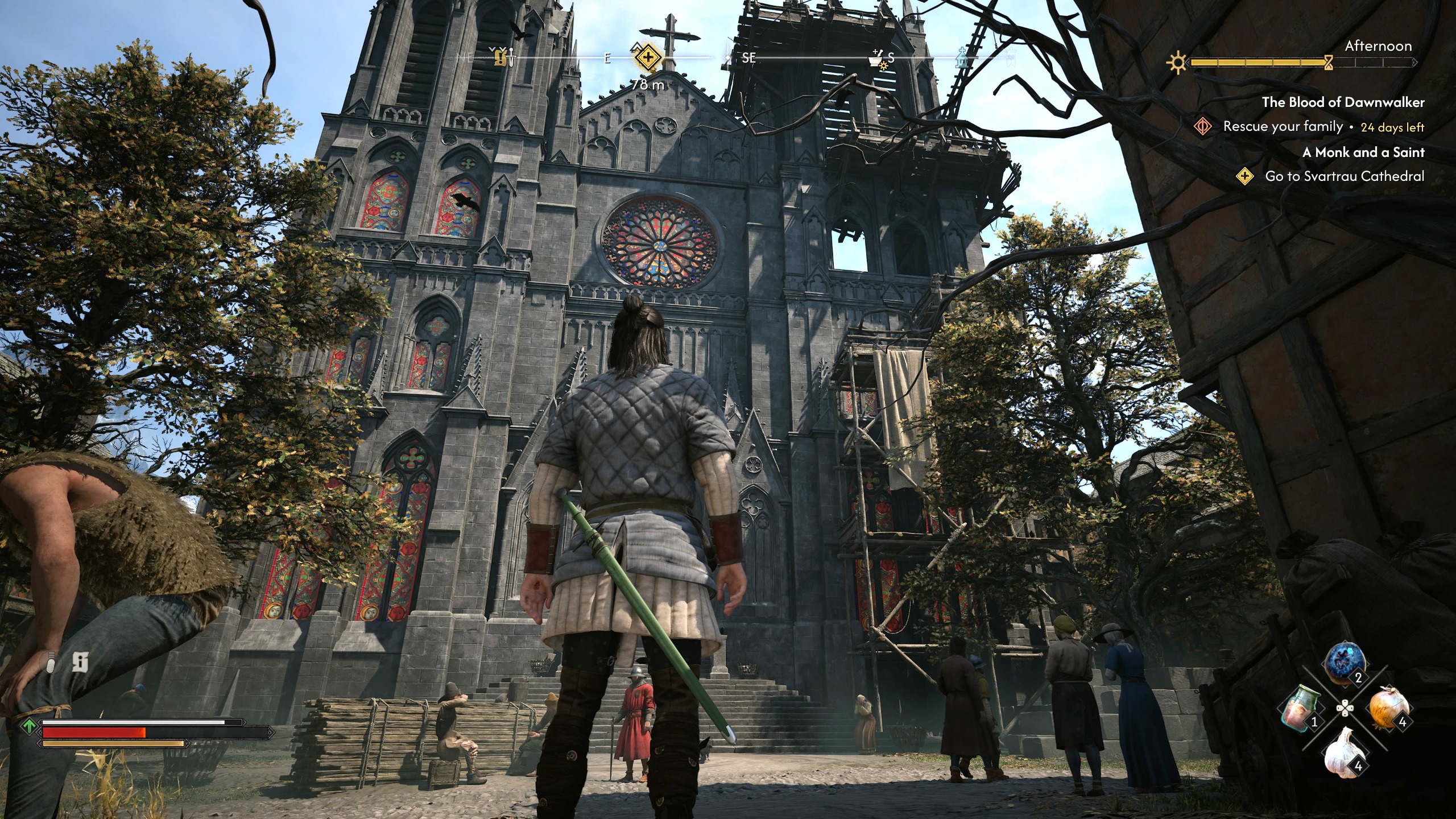
- Mid-Game: As the player explores the wider Vale Sangora, the "Witcher-like" influences become increasingly apparent. The environments are visually stunning, utilizing Unreal Engine 5 to craft dense forests, snowy mountain passes, and crumbling castles. However, this is also where the "open-world fatigue" sets in. The transition from high-stakes detective work to mundane tasks—clearing bandit camps and gathering loot—often feels like a jarring regression.
- Late Game: The narrative reaches its crescendo as the 30-day limit approaches. It is here that the game’s "reactive" storytelling truly shines, as the choices made in the opening hours begin to ripple outward, altering the state of the valley and the fate of key NPCs.
Supporting Data: Strengths and Shortcomings
To understand The Blood of Dawnwalker, one must look at the data points of its design. While the game boasts a high-fidelity visual presentation, its systems often fail to keep pace with its aesthetic ambition.
The Mechanics of Combat
The combat system utilizes a directional input method, where players block and attack from four distinct points. While functional, it rarely reaches the visceral intensity required of a title centered on a vampire protagonist.
- The Vampire Disconnect: Mechanically, the distinction between "human" and "vampire" combat is underwhelming. While the game offers specific abilities like Shadowstep and blood-boiling magic, they often feel like minor variations on a singular, static combat loop.
- Skill Specialization: The skill tree is vast, yet it suffers from "bloat." Players will find themselves accumulating so many points that specialization becomes largely irrelevant, removing the need for strategic character building.
The World Design
The world of Vale Sangora is, without doubt, a triumph of technical artistry. The utilization of Unreal Engine 5 provides a sense of place that is both oppressive and beautiful. Yet, the design of the side-quests often relies on "tick-sheet" activities—destroying leech farms or retrieving items—that undermine the game’s sense of urgency.
Official Perspectives and Development Context
Rebel Wolves, the studio behind the title, has been vocal about their desire to break away from the "shopping list" style of open-world design. In interviews, the developers have emphasized that they wanted to create a world that "reacts" to the player.
The inclusion of a "procedural crime-solving" element is a direct response to player feedback regarding the lack of agency in modern RPGs. The studio’s intent was to create a game where curiosity, rather than a map marker, acts as the primary driver for exploration. While this succeeds in the game’s detective sequences, the studio’s reliance on familiar open-world structures—such as tower-climb map reveals—suggests a hesitation to fully commit to their most radical ideas.
The Implications: A Missed Opportunity?
The fundamental issue at the heart of The Blood of Dawnwalker is a lack of trust in its own novelty. When the game ventures into the surreal—such as in sequences involving ancient Egyptian-inspired temples hidden within the Carpathian mountains or dream-like, blood-soaked environments—it is a masterpiece of dark fantasy. These moments of "theatrical design" prove that Rebel Wolves has the capability to innovate.
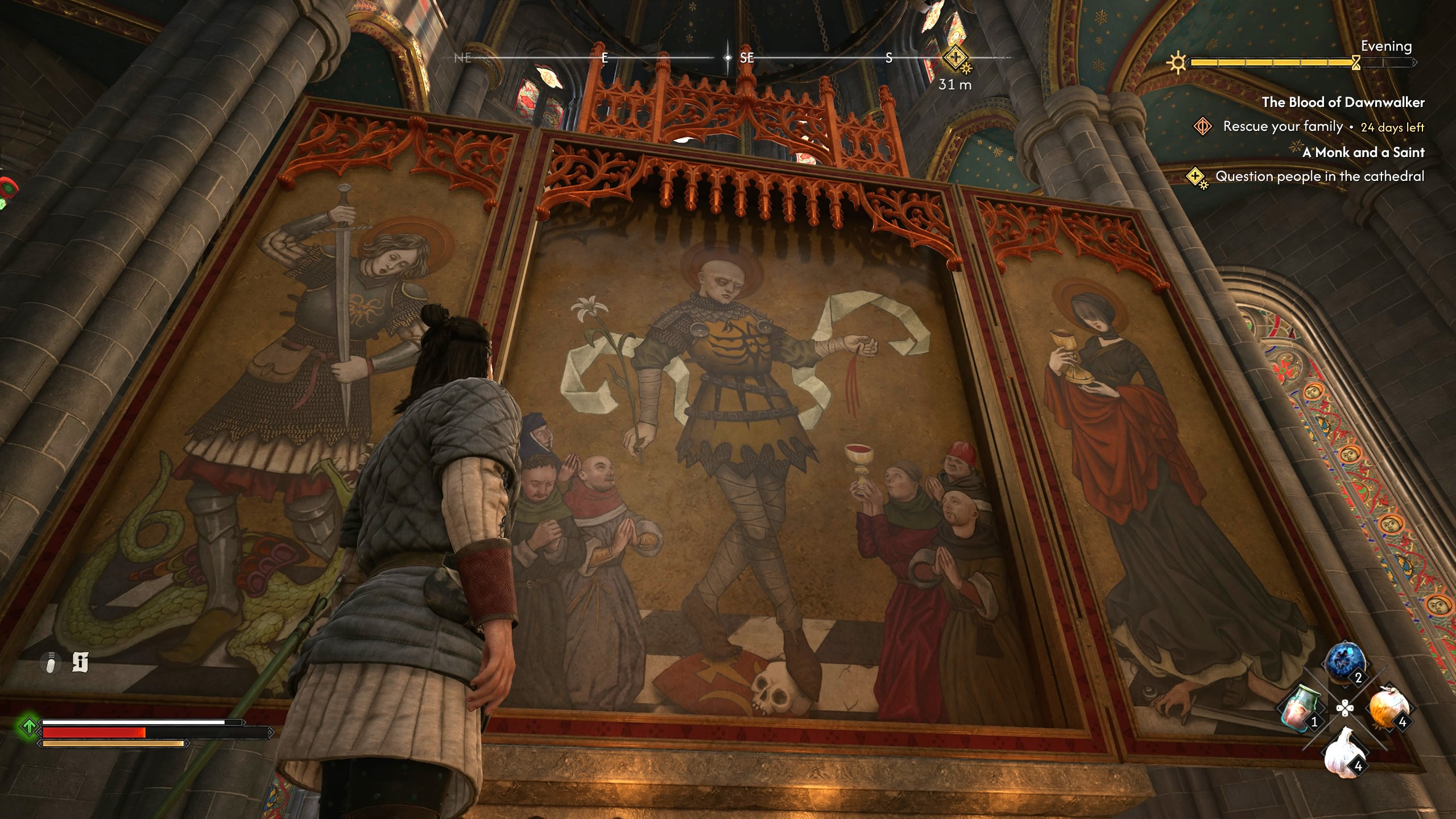
However, for every moment of brilliance, there is an equal measure of "safe" design. The inventory, for instance, is cluttered with the kind of mundane survivalist junk—wooden spoons, rags, and generic crafting materials—that has become a trope of the genre. This "undercooked" feeling permeates the experience, leading to a game that is constantly apologizing for its own brilliance.
Verdict: A Foundation for a Stronger Future
The Blood of Dawnwalker is not a bad game; rather, it is a game that constantly threatens to be great, only to pull back at the last second.

For:
- Reactive Narrative: A truly impressive system where small decisions have significant, long-term consequences.
- Atmospheric World-Building: Utilizes Unreal Engine 5 to create a visually striking and historically immersive environment.
- Innovative Mechanics: The 30-day time limit is a brilliant, anxiety-inducing addition that forces meaningful player choice.
- Strong Detective Elements: The investigation sequences offer a refreshing break from the traditional combat-heavy loop.
Against:
- Mechanically Shallow: The difference between human and vampire gameplay is often cosmetic rather than structural.
- Repetitive Open World: Despite the beauty of the setting, the side-content feels like a collection of generic tasks.
- Underwhelming Combat: Combat lacks the challenge and dynamism required to keep the player engaged over a long campaign.
- Inventory Clutter: Excessive focus on "realistic" loot systems detracts from the urgency of the central narrative.
In conclusion, The Blood of Dawnwalker is a compelling case study in the struggle between creative ambition and industry convention. It succeeds in creating a world that feels alive and reactive, yet it fails to fully shed the skin of the games that came before it. It is a title that deserves to be played by fans of the genre, but one that leaves the player longing for a version of the game that dared to be even weirder, even darker, and even more uncompromising in its vision. Rebel Wolves has laid the foundation for a potential masterpiece; now, they must simply find the courage to build it.