
 Pevita Pearce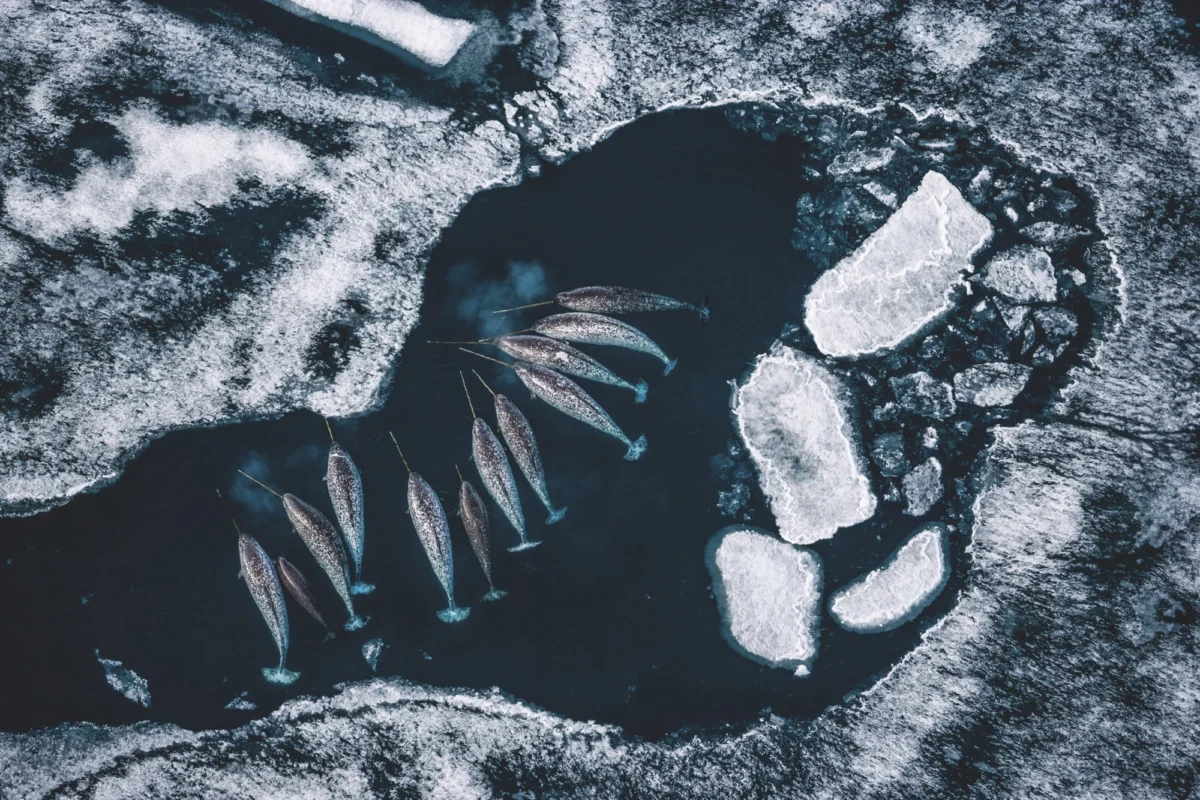
For more than three decades, Paul Nicklen has stood at the thin, freezing edge of the world, camera in hand, acting as a visual witness to the most profound shifts in our planet’s ecological narrative. A renowned wildlife photographer, marine biologist, and co-founder of the non-profit organization SeaLegacy, Nicklen has dedicated his life to bridging the gap between scientific data and human empathy. Now, he is set to distill this monumental career into his most ambitious project to date: a retrospective book titled Reverence.
Published by Hemeria, Reverence is more than a coffee-table collection; it is a visual manifesto. Comprising 160 meticulously curated photographs, the volume weaves together decades of field experience, ranging from the crystalline, hostile beauty of the Arctic to the vibrant, interconnected ecosystems of the tropics. By balancing his most iconic, career-defining images with previously unseen work, Nicklen invites the viewer to move beyond passive observation and into a state of profound engagement with the natural world.

The Architecture of a Career: Chronology of a Visionary
To understand the weight of Reverence, one must look back at the trajectory of Nicklen’s career, which has been characterized by a relentless pursuit of the "unseen."
The Formative Years (1990s)
Raised in the remote Inuit community of Kimmirut, Nunavut, Nicklen’s early life was defined by the rhythms of the Arctic. His transition from a marine biologist into a professional photographer was not a pivot but an evolution. In the 1990s, he began using his camera as a tool for advocacy, realizing that scientific reports alone were insufficient to move the needle on public policy or environmental consciousness.

The Rise of Advocacy (2000s–2010s)
As his work gained international acclaim, notably through his long-standing partnership with National Geographic, Nicklen began to document the rapid disintegration of polar ice caps. It was during this period that his photography became inextricably linked with activism. His imagery—often captured under perilous conditions—began to feature heavily in the global conversation regarding climate change, showing the world that the loss of ice was not just a geological event, but a humanitarian and ecological catastrophe.
The Era of SeaLegacy (2014–Present)
In 2014, Nicklen co-founded SeaLegacy alongside fellow photographer and conservationist Cristina Mittermeier. This marked a turning point in his career, as he moved from documenting the "tragedy of the commons" to actively crafting visual campaigns for ocean protection. The launch of Reverence in 2026 serves as the apex of this era, serving as a permanent record of the biodiversity he has fought to protect.

The Aesthetic of ‘Reverence’: A Deeper Look
Reverence is structured to evoke an emotional response. The title itself is a deliberate choice. In a statement regarding the publication, Nicklen articulated the philosophy behind the work: “Reverence is what we feel in the silent presence of a whale beneath the ice, in the fierce gaze of a polar bear, in the timeless dance of ocean and light. It is what the natural world evokes when we stop long enough to truly see it.”
The book’s imagery is breathtaking in its diversity. Readers are guided from the intricate, root-like water channels of the Colorado River delta to the haunting, otherworldly sight of narwhals feeding on cod in the depths of Arctic Bay. Each photograph is a testament to the resilience of nature, yet they are underscored by a subtle, sobering awareness of the vulnerabilities these species face.

Supporting Data: The Science Behind the Shutter
While the aesthetic beauty of Nicklen’s work is immediate, the scientific rigor behind it is what gives his images their power. His work has consistently highlighted several critical indicators of climate change:
- Glacial Recession: Many of the landscapes captured in the early years of his career have been fundamentally altered. The data indicates that since the 1990s, the Arctic has warmed nearly four times faster than the global average.
- Biodiversity Loss: Through his work with marine mammals—specifically polar bears and narwhals—Nicklen has documented the stress caused by the thinning of sea ice. The loss of hunting platforms has forced these species into new, often hazardous, territories.
- The "Blue Carbon" Factor: As a champion of ocean health, Nicklen’s work emphasizes the role of the ocean as a primary carbon sink. His photos of kelp forests and seagrass meadows are not merely artistic; they represent the frontline of climate mitigation.
Official Perspectives and Industry Response
The announcement of Reverence has been met with significant enthusiasm from the scientific and conservation communities. Dr. Sylvia Earle, the legendary marine biologist, has long championed Nicklen’s work for its "ability to translate the complex language of science into the universal language of emotion."

Hemeria, the publisher, has noted that the production of the book was designed to match the high standards of the photography itself, utilizing high-grade paper and printing techniques to ensure that the texture of a polar bear’s fur or the translucence of glacial ice is rendered with clinical accuracy.
"We are not just printing a book," a representative from Hemeria noted. "We are archiving a disappearing world. Every image is a piece of evidence."

Implications: Why This Book Matters Now
The timing of the release—slated for July 28, World Conservation Day—is intentional. By aligning the launch with a day dedicated to global environmental awareness, Nicklen is making a final appeal for action.
The Call to Action
The primary implication of Reverence is that conservation must be proactive. For decades, nature photography focused on the "pristine," effectively ignoring the encroaching human footprint. Nicklen’s work is different; it is an act of defiance. He forces the viewer to confront the majesty of the animal kingdom while simultaneously reminding them that this majesty is under constant threat.

Bridging the Knowledge Gap
The book serves as a vital educational tool. By curating 30 years of documentation into a single volume, it allows researchers and laypeople alike to visualize the timeline of environmental degradation. It provides a historical baseline that is essential for measuring future progress—or decline.
An Invitation to Witness
Ultimately, the implication of Reverence is that the viewer is no longer a bystander. By documenting the "fierce gaze of a polar bear" or the "silent presence of a whale," Nicklen suggests that we have entered into a silent contract with the creatures of this earth. If we see them, we are responsible for them.

Conclusion
As we approach the release of Reverence, the significance of Paul Nicklen’s body of work cannot be overstated. He has spent three decades navigating the most inhospitable environments on the planet to bring back stories of beauty, survival, and necessity.
Reverence does not offer easy solutions to the climate crisis, nor does it provide a roadmap for policy change. Instead, it provides the most potent weapon in any conservationist’s arsenal: perspective. It asks the reader to pause, to look, and to feel the weight of what is at stake. In an age of digital noise and rapid-fire content, Nicklen’s work demands the one thing we are most reluctant to give: our undivided attention.

For those who wish to own this collection, pre-orders are currently available via the Hemeria website. As July 28 approaches, Reverence stands poised to become a definitive document of the early 21st century—a time when we were forced to decide whether we would be the architects of our planet’s destruction or the guardians of its survival.


 Dwi Wanna
 Lina Irawan




