Neng Nana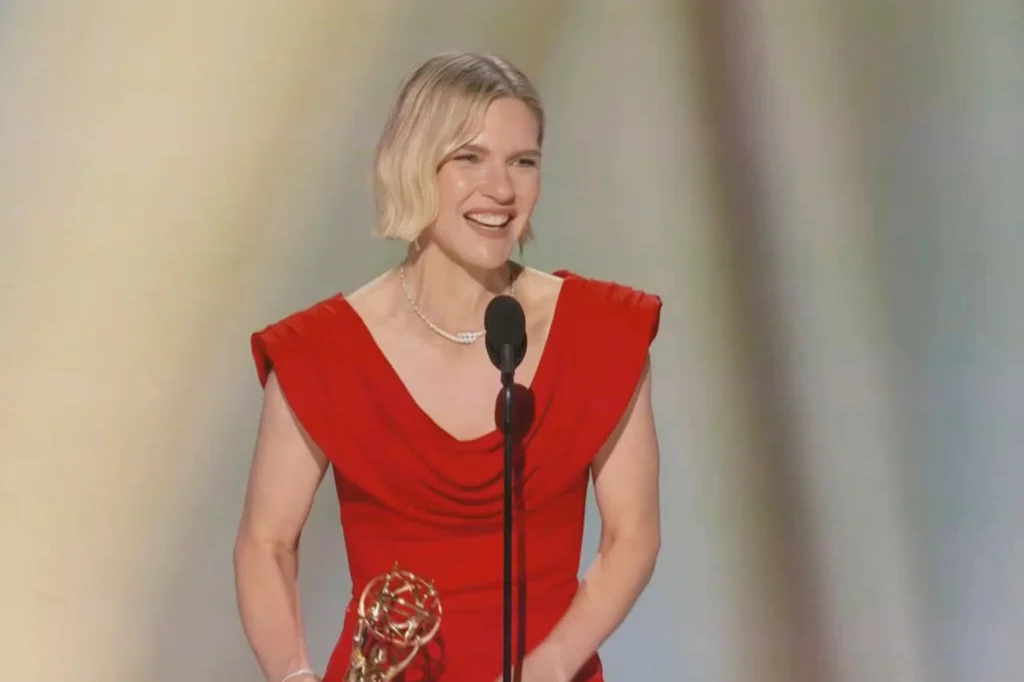
“Hi Carol. We are so happy to see you win an Emmy. We just want you to be happy.”
The sentiment echoed across the industry, a bittersweet yet triumphant refrain that encapsulated the collective feeling of both critics and audiences alike. On Monday night at the 78th Primetime Emmy Awards, held at the Peacock Theater in downtown Los Angeles, the “Pluribus” hivemind—the fervent, dedicated fanbase of the Apple TV+ sci-fi hit—erupted in celebration. Rhea Seehorn, the actress whose subtle, transformative performances have long been the gold standard for television drama, finally claimed the trophy for Outstanding Lead Actress in a Drama Series.
Her win, earned for her portrayal of the novelist Carol Sturka—one of the last independent-thinking humans in a dystopian landscape—marks a historic moment for both the actress and the medium. It serves as a resounding validation for a performer who has spent years being hailed as the "greatest actor to never win," effectively closing the book on one of the most glaring omissions in television history.
The Weight of the Win: A Chronology of Persistence
To understand the magnitude of Seehorn’s victory, one must look at the long, winding road that led her to the Peacock Theater stage. Her journey to Emmy gold has been marked by a staggering string of near-misses that became a point of contention within the television community.
Seehorn’s initial brushes with the Television Academy came via her transformative, career-defining work as Kim Wexler on AMC’s Better Call Saul. Despite the show’s status as a critical darling and a cultural phenomenon, Seehorn was inexplicably bypassed during the early years of the series. Her first nominations finally arrived in 2022 and 2023, both in the Outstanding Supporting Actress category. Additionally, in 2022, she received a nod for Outstanding Actress in a Short-Form Comedy or Drama Series for her work on Cooper’s Bar.
Yet, as the final season of Better Call Saul concluded, the lack of a win for Seehorn—or for the show itself—solidified the series’ status as the most decorated “loser” in Emmy history, holding the unfortunate record of 53 nominations without a single victory.
The pivot to Pluribus, a series created by her Better Call Saul collaborator Vince Gilligan, offered a clean slate. The transition from the gritty realism of Albuquerque to the high-concept, existential stakes of Pluribus provided Seehorn with a canvas to demonstrate a different facet of her range. The industry took notice immediately. Prior to her Emmy win on Monday, Seehorn had already secured a Best Drama Actress win at the Golden Globe Awards and the Critics Choice Awards, as well as an individual achievement award at the TCA Awards. Her nomination at this year’s SAG-AFTRA Actor Awards further cemented her status as the frontrunner for the night’s most prestigious acting honor.
The Competition: A Category of Titans
The category of Outstanding Lead Actress in a Drama Series was, by all accounts, one of the most competitive in recent memory. Seehorn faced off against a cohort of performers whose work defined the current television landscape:
- Carrie Coon (The Gilded Age): A master of period drama, Coon’s performance was hailed for its precision and icy authority.
- Chase Infiniti (The Testaments): The breakout star whose performance anchored the intense, harrowing world of Hulu’s adaptation.
- Keri Russell (The Diplomat): Russell’s turn as a high-stakes political operative provided a masterclass in tension and character-driven drama.
- Zendaya (Euphoria): A previous winner whose cultural impact and raw, emotive performance continue to set the bar for the younger generation of actors.
That Seehorn emerged victorious among such a formidable group speaks not only to the strength of her performance as Carol Sturka but to a broader industry acknowledgment that her time had finally come.
Supporting Data: The ‘Pluribus’ Phenomenon
While the spotlight shone brightest on Seehorn, the broader success of Pluribus cannot be ignored. The series has, in many ways, surpassed the legacy of Better Call Saul in the eyes of the Academy. Entering Monday’s telecast, the show had already secured four awards:
- Outstanding Sound Mixing for a Comedy or Drama Series (One Hour)
- Original Main Title Theme Music
- Picture Editing for a Drama Series
- Production Design for a Narrative Contemporary Program (One Hour)
With 18 nominations overall, Pluribus represents a significant investment for Apple TV+. The streamer, which headed into the final ceremony with 19 total wins—the most of any outlet this year—has utilized the success of Pluribus to anchor its prestige drama offerings.
In contrast, the irony of Better Call Saul’s shut-out remains a point of intense discussion among industry analysts. Despite widespread acclaim and a reputation as one of the finest character studies ever produced, the series’ inability to secure a single win is now widely considered one of the most puzzling snubs in the history of the medium. The fact that Seehorn’s victory arrived on the back of a Gilligan-led project provides a sense of narrative closure—a "righting of the ship" for a creative partnership that has consistently pushed the boundaries of television storytelling.
Official Responses and Industry Reception
The atmosphere inside the Peacock Theater was electric, with a palpable sense of relief among attendees. When Seehorn’s name was called, the ovation was one of the longest of the evening.
Vince Gilligan, speaking briefly after the ceremony, remarked on the evolution of his collaboration with Seehorn. "There is no actor I have worked with who brings more depth, more intelligence, or more humanity to a role," Gilligan noted. "With Carol Sturka, Rhea took a character that could have been a cypher and turned her into the heart of a dying world. This win isn’t just about this role; it’s about the consistency of excellence she has brought to every screen she’s graced for the last decade."
Social media platforms, particularly those frequented by the "Pluribus" fan community, were flooded with tributes. The sentiment, “We just want you to be happy,” became a viral hashtag, representing the audience’s protective and deeply appreciative relationship with the actress.
Implications: What This Win Means for the Future
The implications of Rhea Seehorn’s Emmy win extend far beyond a singular trophy.
1. The Validation of "Quiet" Acting
For years, the Emmy awards have trended toward high-octane, "loud" performances—characters who scream, cry, or engage in dramatic, visible transformations. Seehorn’s work, conversely, is defined by the "quiet"—the subtle twitch of an eye, the micro-expressions of hesitation, and the deliberate pacing of dialogue. Her win suggests a shift in the Academy’s voting body toward appreciating nuance and interiority over mere spectacle.
2. A Turning Point for Genre Television
Pluribus is, at its core, a high-concept sci-fi drama. Historically, such shows have struggled to gain traction in the lead acting categories, often being relegated to technical awards. By honoring Seehorn for a genre performance, the Television Academy has signaled a growing willingness to recognize that great acting transcends the boundaries of speculative fiction.
3. Apple TV+’s Dominance
The 78th Emmys have served as a coronation for Apple TV+. With Widow’s Bay leading the total wins count with eight and the network sweeping major categories, the streaming service has firmly established itself as the new titan of prestige television. This shift in the landscape—away from the traditional broadcast and long-standing cable giants like HBO—suggests that the power dynamics of the industry are shifting decisively toward platforms that prioritize auteur-driven, high-budget narrative series.
4. The "Snub" Narrative Concludes
The most profound implication, perhaps, is the end of the "Rhea Seehorn Snub" narrative. For years, every Emmy season was accompanied by articles and op-eds lamenting her exclusion. With this win, that cycle has been broken. The narrative has shifted from one of injustice to one of historical recognition.
Conclusion
As the lights dimmed at the Peacock Theater and the 78th Emmy Awards concluded, the industry left with a sense of order restored. The ceremony, produced by Jesse Collins Entertainment and hosted with grace by Mariska Hargitay, was a celebration of the breadth of television’s current golden age. From the massive 25-nomination haul of The Pitt to the record-breaking comedy success of Hacks, the night provided a snapshot of a medium in flux.
However, the image that will likely remain in the collective memory of television fans is that of Rhea Seehorn holding her first Primetime Emmy. It was a win that belonged as much to the audience—who felt the pain of her previous snubs—as it did to the actress herself. In a world where the lines between reality and fiction are increasingly blurred by the very technology discussed in shows like Pluribus, Seehorn’s performance served as a vital anchor to human experience.
She played a character struggling to remain an independent thinker, and in doing so, she reminded us all why we watch: to see, reflected in the eyes of an artist, the complexity of our own existence. Carol Sturka may be one of the last independent-thinking humans on Earth, but thanks to Rhea Seehorn, we were all reminded that the art of the human performance is alive and well.


 Rifan Muazin
 Ali Ikhwan