

Introduction: A New Voice in Greek Cinema
As the global film community turns its eyes toward the inaugural SXSW London, one project has emerged as a focal point for critics and cinephiles alike: The Boy With the Light-Blue Eyes. The feature film debut of Greek writer-director Thanasis Neofotistos, the movie is scheduled for its world premiere on Thursday, June 4, as a centerpiece of the festival’s Screen section.
A genre-bending narrative that defies easy categorization, the film serves as both an evocative queer coming-of-age story and a profound cinematic allegory for the universal human struggle against exclusion. While its setting remains deliberately ambiguous, existing in a nebulous space outside of a specific calendar date, the film is anchored by a tactile, nostalgic aesthetic that invites audiences into a world that feels both hauntingly familiar and entirely alien.
The Narrative Core: Stigma and Survival
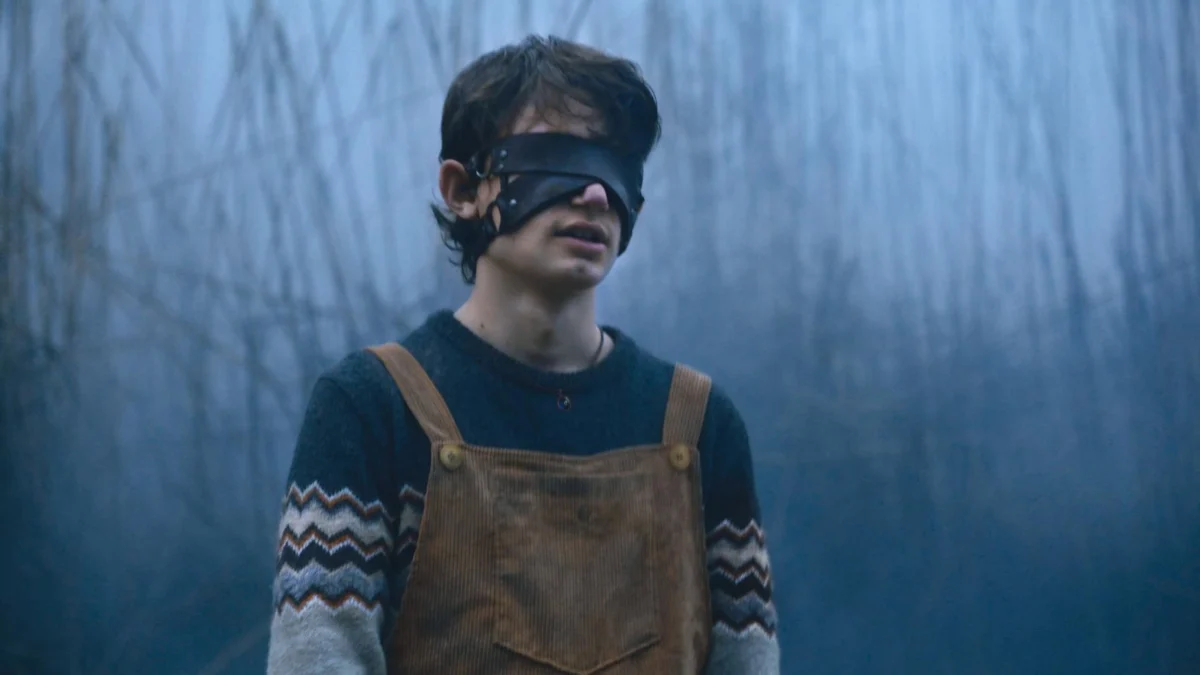
At the heart of The Boy With the Light-Blue Eyes is Petros, portrayed with haunting vulnerability by actor Giorgos Karydis. Petros lives in a remote, insular mountain village where the local social fabric is woven with threads of deep-seated superstition and fear.
The source of this tension is singular: Petros possesses striking blue eyes. In his community, this physical trait is viewed as a harbinger of ill fortune, an anomaly that necessitates constant containment. Forced into a life of shadows, Petros is compelled by his strict grandmother and the local mayor to hide his face behind a mask, effectively erasing his identity to maintain the village’s fragile order.
Neofotistos, working from a screenplay co-written with Grigoris Skarakis, utilizes this premise to explore the crushing weight of societal expectation. The mask is more than a plot device; it is a powerful symbol of the internal and external battles faced by those who exist outside the normative boundaries of their culture. By framing the story as a fable of exclusion, the director elevates the narrative into a universal inquiry into the human desire for freedom and the transformative power of self-acceptance.
The Craft of the Analog: An Ode to Old-School Cinema
Beyond its thematic depth, The Boy With the Light-Blue Eyes is a testament to the virtues of practical filmmaking. In an era increasingly dominated by the sheen of Artificial Intelligence and high-octane digital compositing, Neofotistos has made a conscious choice to ground his directorial debut in the tangible.
"My biggest role model, my inspiration, is what I call ‘good old-school cinema,’" Neofotistos shared in an exclusive interview with The Hollywood Reporter ahead of the London premiere. For the filmmaker, the primary touchstone for this philosophy is Steven Spielberg’s 1993 magnum opus, Jurassic Park.
"That was the first film I ever saw in the cinema," he recalled. "I got fascinated with dinosaurs because of it. I felt that dinosaurs really existed in real life when I was less than 10 years old. This was my main inspiration to be a filmmaker."
This fascination goes beyond mere nostalgia; it is a profound appreciation for the process of creation. Neofotistos was struck by the ingenuity of Spielberg’s work—the reliance on animatronics and physical craftsmanship to create an immersive, believable world. "He used materials that they handmade, handcrafted," Neofotistos explained. "It was not VFX, or AI now. It felt so real. The story felt so unique, and I got into this universe. That’s why I wanted to be a storyteller."
This ethos is baked into the DNA of his own film. Under the lens of cinematographer Djordje Arambasic and with the precise pacing of editor Panagiotis Angelopoulos, the team rejected the easy path of post-production digital augmentation. "I really love to create universes," Neofotistos noted. "My goal here was to create something unique and very handcrafted. We didn’t use any AI. We used minimal VFX. Everything was made in the shooting process."
A Genealogy of Influence: From Angelopoulos to Lanthimos
While the specter of Spielberg looms large over the film’s philosophy, Neofotistos is deeply rooted in the soil of his own cinematic heritage. He acknowledges a complex lineage of Greek masters who have paved the way for his bold visual language.

He cites the legendary Theo Angelopoulos—specifically his 1970 debut, The Reconstruction—as a primary influence. "It was made close to my hometown and gives a great representation of societies," Neofotistos remarked. The grit and sociopolitical weight of the New Greek Cinema movement are clearly echoed in how Neofotistos approaches the claustrophobia of Petros’ village.
Furthermore, he acknowledges the seismic impact of Yorgos Lanthimos, the director who brought the "Greek Weird Wave" to the global stage. Neofotistos identifies with the "magical realism" that has become a hallmark of Lanthimos’ filmography, suggesting that he, too, is interested in using the surreal to expose the uncomfortable truths of the real world.
The Dinosaur Motif: A Hidden Easter Egg
For those wondering how the director’s childhood obsession with Jurassic Park translates into a story about a masked boy in a remote village, the answer lies in the details. Neofotistos encourages eagle-eyed viewers to pay close attention to the set design of Petros’ private sanctuary.
"There are some dinosaurs in Petros’ room, because of my inspiration from Jurassic Park," he revealed. These extinct reptiles, once the kings of the Earth, serve as a poignant reflection of Petros himself—a creature considered monstrous or alien by his peers, yet possessing a majesty that only those willing to look closely can truly appreciate. It is a subtle nod, a wink from the director to his own formative memories, that bridges the gap between the blockbuster spectacle of his childhood and the intimate, art-house tragedy of his adult career.
Implications for the Future of Greek Cinema
The arrival of The Boy With the Light-Blue Eyes at SXSW London comes at a pivotal time for the Greek film industry. With sales representation by the prestigious agency Gersh, the film is positioned to bridge the gap between regional storytelling and international distribution.
The success of filmmakers like Lanthimos and Athina Rachel Tsangari has created a pathway for Greek directors to experiment with genre, allegory, and unconventional narratives while maintaining an audience that spans continents. By eschewing the "AI-first" trend in contemporary filmmaking, Neofotistos is making a political statement about the value of the human hand in art.
His film suggests that, in a world that is becoming increasingly digitized and sterile, there is a renewed hunger for the "handcrafted." By creating a universe that feels textured, lived-in, and physically grounded, Neofotistos is not just telling a story about a boy behind a mask; he is inviting the audience to remove their own digital blinkers and re-engage with the sensory reality of the silver screen.
Conclusion: A Premiere of Significance
As the world premiere on June 4 approaches, the industry expectation is high. The Boy With the Light-Blue Eyes stands as a testament to the idea that a filmmaker’s personal obsessions—whether they be the dinosaurs of the Cretaceous period or the isolation of a mountain village—can be synthesized into a work of profound emotional resonance.
For Thanasis Neofotistos, this film is the realization of a lifelong dream, a culmination of the "good old-school cinema" he has studied since childhood. Whether the audience is captivated by the queer coming-of-age allegory or the subtle, prehistoric tributes hidden within the mise-en-scène, the film promises to be one of the most talked-about entries at SXSW London 2026.
In the final assessment, the film reminds us that while we may feel forced to wear masks, the truth of our identities remains, waiting to be seen by those who are willing to look. Through his meticulous direction and unwavering commitment to the craft, Neofotistos has ensured that the world will be looking at Petros—and his light-blue eyes—for a long time to come.











No comments yet. Be the first to join the conversation!