

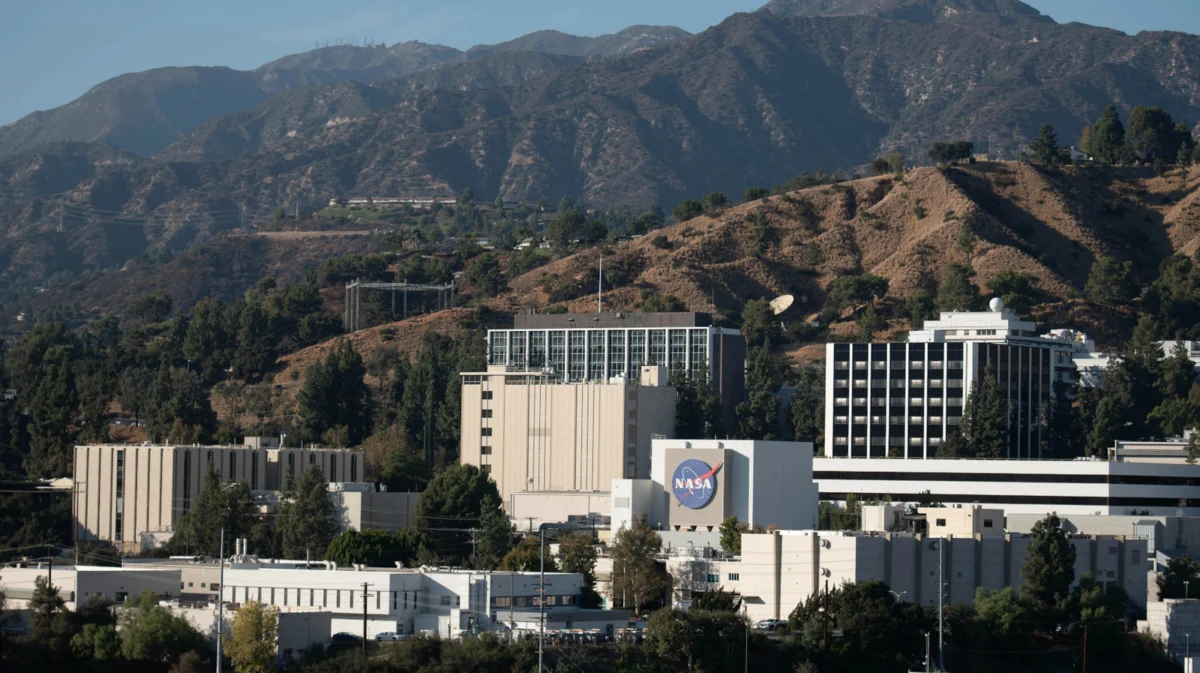
In a move that signals a seismic shift in the landscape of American aerospace research, NASA has officially announced that it will open the management contract for the Jet Propulsion Laboratory (JPL) to competitive bidding. The decision, which marks the first time in nearly a century that the future of the laboratory’s stewardship is being formally reconsidered, ends a long-standing tenure for the California Institute of Technology (Caltech). As the current agreement nears its 2028 expiration, the space agency is positioning the move as a strategic effort to adapt to the rapidly evolving commercial space economy.
The Foundation of an Aerospace Titan: A Brief Chronology
To understand the weight of this decision, one must look at the history of the JPL. Its origins trace back to 1936, predating the formation of NASA itself by more than two decades.
- 1936: The foundations are laid by a group of Caltech students and faculty, including the legendary Theodore von Kármán, who began experimenting with rocket propulsion in the canyons near Pasadena.
- 1944: The laboratory is officially designated as the Jet Propulsion Laboratory.
- 1958: Following the launch of Sputnik, the U.S. government formalizes NASA, and JPL is transitioned from its military roots to become a core research facility for the new space agency.
- 1958–2028: For seven decades, Caltech has maintained a continuous management partnership with NASA, overseeing historic milestones ranging from the Explorer 1 satellite to the sophisticated Mars Rover missions and the Voyager probes.
The fact that this relationship is now subject to review marks a definitive turning point. For generations, the "Caltech-JPL" brand has been synonymous with the pinnacle of robotic space exploration. By opening the contract to competition, NASA is essentially suggesting that the traditional university-led model may need to be stress-tested against the efficiency demands of the modern era.
The Rationale: Why Now?
NASA’s official solicitation notice suggests that the agency is motivated by a changing economic reality. "The rapid growth of the US space economy indicates there may now be a viable competitive market," the agency stated. By inviting new bids, NASA aims to assess whether alternative management structures—potentially involving private-sector efficiencies or consortium-based approaches—could provide superior outcomes.
The agency’s stated goals include:
- Enhanced Mission Performance: Leveraging modern management techniques to streamline complex aerospace projects.
- Innovation: Identifying partners who can integrate cutting-edge technological advancements more rapidly.
- Operational Efficiency: Reducing the bureaucratic overhead associated with long-term, legacy government contracts.
This effort is part of a broader, government-wide mandate to find cost-saving efficiencies. Amidst a federal climate characterized by intense fiscal scrutiny, NASA is being pressured to demonstrate that its flagship research centers are operating with the highest possible return on taxpayer investment.
Fiscal Headwinds and Political Realities
The timing of this announcement coincides with significant political and financial pressures. The current administration has signaled a desire to reduce NASA’s budget by approximately 23 percent. This budgetary squeeze has cast a long shadow over the future of large-scale federal research centers.
Currently, the budget of NASA represents roughly 0.35 percent of the $7 trillion federal budget. While this is a small fraction of total federal spending, the fiscal environment in 2026 is one where "every penny counts." The potential $30 billion value of the JPL contract makes it a prize for any major contractor, and as the federal government looks for ways to trim expenditures, the prospect of shifting from a non-profit academic model to a high-efficiency corporate management model is becoming increasingly attractive to policymakers.
The Field of Potential Bidders
While Caltech is not being "shut out"—the university is eligible to re-compete for the contract—they now face a new reality. The field of potential competitors is vast and includes:
- Academic Institutions: Major research universities with established aerospace departments (such as MIT, Georgia Tech, or the University of Michigan) could form coalitions to challenge Caltech’s incumbent status.
- Aerospace Giants: Industry leaders like Lockheed Martin, Boeing, and Northrop Grumman possess the logistical infrastructure to manage large-scale federal projects. Their experience in managing complex supply chains could be viewed as an advantage by an agency focused on cost-efficiency.
- Private-Public Partnerships: We may see the emergence of hybrid bids, where a university provides the academic oversight while a private firm handles the operational, logistical, and administrative burdens.
The project is currently classified as a Federally Funded Research and Development Center (FFRDC). Traditionally, these are managed by non-profits or academic institutions to ensure that the primary motivation remains scientific discovery rather than shareholder profit. However, as the lines between "government research" and "commercial space" blur, the definition of what constitutes a suitable FFRDC manager is clearly in flux.
Implications for Future Operations
Perhaps the most important message for the public and the scientific community is the assurance of continuity. NASA has been explicit: the search for a new partner, or the renewal of the current one, is being launched two years in advance to ensure that laboratory operations remain unaffected.
Institutional Stability
The core of the JPL is its human capital—thousands of scientists, engineers, and support staff whose expertise is the true engine of the laboratory. Regardless of the entity that holds the contract, the mission-critical work involving deep-space navigation, orbital mechanics, and planetary exploration must continue unabated. The transition is aimed at the management level, not the scientific personnel level.
The Shift Toward Commercialization
This transition reflects a global trend where space agencies are becoming "customers" of service providers rather than sole proprietors of entire research ecosystems. If a commercial contractor is awarded the JPL contract, it would represent the most significant privatization of American space research in history. This could lead to a more aggressive adoption of "NewSpace" practices—such as faster prototyping and leaner testing cycles—that have characterized firms like SpaceX and Blue Origin.
Risks and Challenges
Critics of the move argue that disrupting a 90-year-old successful model could introduce unnecessary risk. Caltech’s culture is deeply embedded in the academic freedom and rigorous peer review that define the JPL’s scientific output. There is a legitimate concern that a transition to a more corporate-focused management structure could prioritize speed and cost over the long-term, high-risk exploration that has defined NASA’s success for decades.
Looking Toward 2028 and Beyond
As the bidding process unfolds, the aerospace industry will be watching closely. This is more than a simple contract renewal; it is a referendum on how the United States will conduct space science in the latter half of the 21st century.
NASA’s search for a partner is a signal that the status quo is no longer sufficient. Whether this leads to a revitalized, more efficient JPL under new management, or a modernized, streamlined Caltech partnership, the outcome will set the trajectory for American exploration for decades to come.
For now, the laboratories in Pasadena continue their work. The Mars Rovers remain on duty, the Voyager probes continue to beam data from interstellar space, and the complex engineering required for the next generation of deep-space telescopes proceeds on schedule. The mission, as always, remains the priority—even as the hand on the tiller prepares to change.












No comments yet. Be the first to join the conversation!