Neng Nana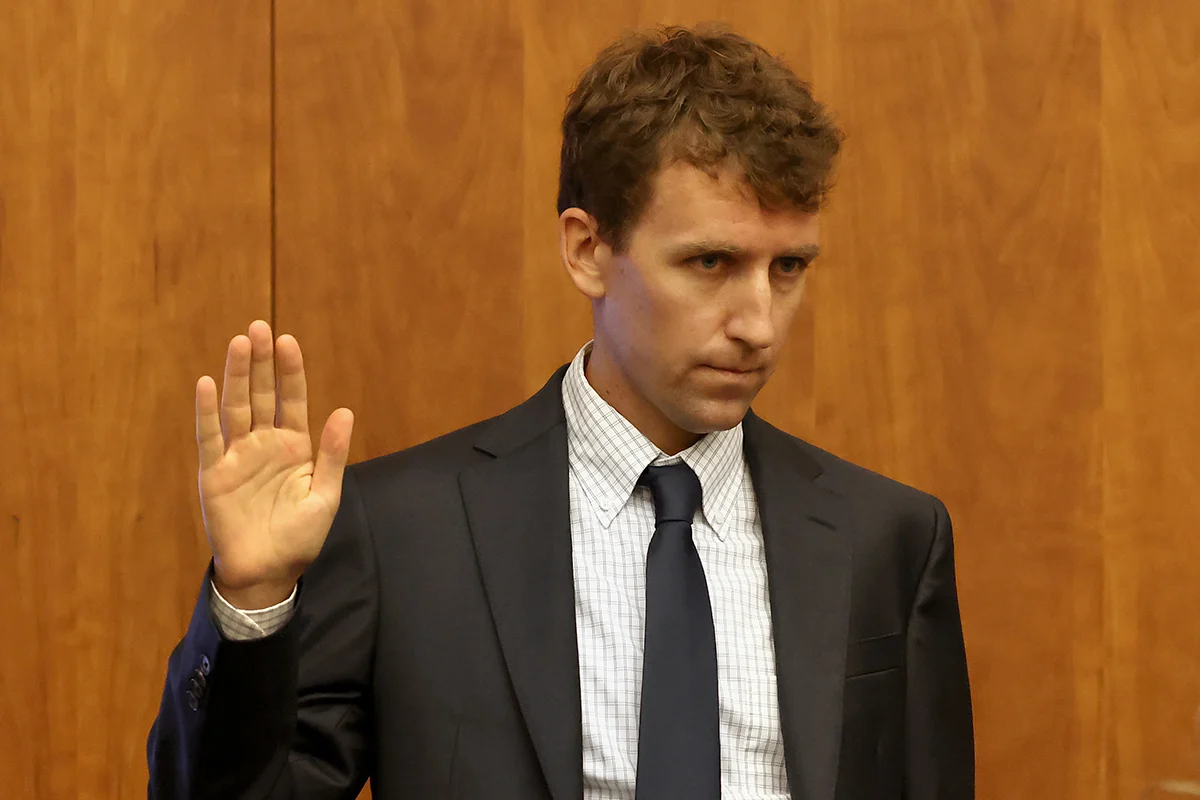
In the high-stakes world of broadcast journalism, few stages are as storied or as scrutinized as 60 Minutes. For decades, the program has served as the gold standard for long-form investigative reporting and high-profile profiles. Recently, the newsmagazine marked a significant shift in its editorial DNA, welcoming New York Times columnist and conservative commentator Ross Douthat as a newly minted correspondent. His inaugural assignment—a deeply sensitive, emotional, and long-awaited interview with Patrick Clancy—has become a flashpoint for discussions regarding the intersection of digital-age speculation, the ethics of true-crime obsession, and the evolving mandate of traditional network news.
The Tragedy: A Foundation of Grief
To understand the weight of this interview, one must return to the events of January 2023 in Duxbury, Massachusetts. The story of Lindsay Clancy, who admitted to killing her three young children while suffering from severe postpartum psychosis, shocked the nation. The subsequent criminal trial, which concluded earlier this year, provided a harrowing window into the fragility of mental health and the devastating potential of maternal psychiatric illness.
However, in the vacuum left by the judicial process, a darker phenomenon emerged. Online, particularly within the ecosystem of TikTok, a cottage industry of "citizen investigators" began to construct elaborate, baseless conspiracy theories. For months, Patrick Clancy, the grieving father, became the primary target of these digital tribunals. Despite the clear findings of the court and the testimony regarding Lindsay’s medical state, a vocal segment of the internet insisted on casting Patrick as a villain. It was against this backdrop of digital vitriol that 60 Minutes stepped in to offer a platform for the reality of human grief, unfiltered by the noise of the algorithm.
Chronology of a Public Ordeal
The timeline of this ordeal serves as a sobering case study in the dangers of modern, decentralized media consumption.
- January 2023: The tragic deaths of the three Clancy children occur in Duxbury, Massachusetts.
- Early 2023–2024: As Lindsay Clancy’s legal case progresses, public interest shifts into a perverse fascination. Social media platforms become hotbeds for unfounded speculation regarding Patrick Clancy’s involvement.
- Mid-2024: The criminal trial concludes, with Lindsay Clancy testifying to her actions under the influence of severe postpartum psychosis.
- Late 2024: 60 Minutes secures the exclusive sit-down interview with Patrick Clancy, marking Ross Douthat’s debut as a correspondent.
- Present: The broadcast of the interview forces a recalibration of the public narrative, pushing back against the "TikTok commentariat" that had dominated the discourse.
Supporting Data: The Impact of Digital Misinformation
The scrutiny placed upon Patrick Clancy is symptomatic of a broader societal trend: the "gamification" of true crime. Data from social media sentiment analysis suggests that tragedies involving complex mental health issues are increasingly being repurposed as "whodunnit" puzzles by amateur online sleuths. This shift creates a hostile environment for victims’ families, who are often forced to choose between total silence or engaging with a public that has already decided their guilt.
In the case of the Clancy interview, the decision to engage with 60 Minutes was not merely an act of mourning; it was a necessary intervention. By allowing the camera to capture the raw, unpolished nature of his bereavement, the production effectively dismantled the caricature built by social media. The broadcast serves as a testament to the fact that, while digital discourse moves at the speed of a viral post, the truth—and the process of healing—operates on a much slower, more agonizing timeline.
Professional Analysis: The Douthat Approach
Ross Douthat’s entry into the 60 Minutes fold has been viewed with both curiosity and skepticism. As a long-standing voice of conservative intellectualism at The New York Times, Douthat is not a traditional broadcast "personality." He lacks the polished, performative edge of the classic TV anchor—the sort of "hard-hitting" persona that would likely have leaned into the sensationalism of the Clancy tragedy.
Yet, it is precisely this lack of "TV polish" that proved to be the interview’s greatest asset. In the hands of a more aggressive, career-driven broadcaster, the interview might have descended into a grueling examination of the night’s most gruesome details. Instead, Douthat adopted a posture of humility and restraint. He allowed for silence. He permitted the interviewee to define the boundaries of the conversation.
This is a notable departure from the "Diane Sawyer era" of journalism, where the goal was often to extract a confession or a tearful revelation through persistent, sometimes invasive, questioning. Douthat’s approach was that of a listener, not an interrogator, and in this instance, that choice felt profoundly empathetic.
Official Responses and Editorial Implications
The interview arrives at a volatile time for CBS News. Under the leadership of former opinion journalist Bari Weiss, the network has been attempting to navigate a landscape where "establishment" media is increasingly viewed with suspicion by large swaths of the American public.
Critics have pointed to recent editorial decisions—such as the tone of the CBS Evening News during geopolitical crises and the perceived deference of other high-profile interviews—as evidence that the network is tilting toward an institutional bias that struggles to connect with a disillusioned audience. In this context, the Douthat-Clancy segment stands out as a rare, successful bridge. It provided the "prestige" of a 60 Minutes get while eschewing the polished, pro-establishment narrative that has recently plagued other segments of the network’s programming.
However, the interview also left some stones unturned. For instance, Douthat’s discussion of Patrick’s forgiveness of his ex-wife—a complex, deeply personal decision—remained largely on the surface. A more seasoned broadcast veteran might have probed the mechanics of such forgiveness: the frequency of their communication, the role of their extended families, and the ongoing nature of their shared loss. That these questions were left unanswered suggests that while the interview was a moral success, there remains a learning curve for Douthat as he translates his written-word expertise into the medium of broadcast journalism.
The Road Ahead for ’60 Minutes’
The question now facing 60 Minutes is one of sustainability. Can the program maintain its cultural relevance while navigating the tension between its storied heritage and the demands of a modern media environment that prioritizes speed and opinion over nuance?
The "Clancy interview" proves that there is still a massive, hungry audience for long-form, thoughtful journalism. People are tired of the frantic, often cruel adjudications that take place in the comment sections of social media. They are looking for, and will reward, journalism that respects the complexity of the human experience.
If CBS News continues to lean into this model—prioritizing depth over speed, and empathy over the "gotcha" moment—it may find a way to navigate the "derangement" of the current media era. The success of the Clancy segment suggests that the audience is not as indifferent to quality as the cynical landscape of modern TV might suggest. For Ross Douthat, this was a strong start. For 60 Minutes, it was a necessary reminder of why the program remains a vital part of the journalistic ecosystem. As the network looks toward the future, the challenge will be to balance this newfound momentum with a rigorous, investigative spirit that can hold power to account, even when that power is not a person, but a trend, an algorithm, or a public misconception.


 Jia Lissa
 Reynand Wu