Muslim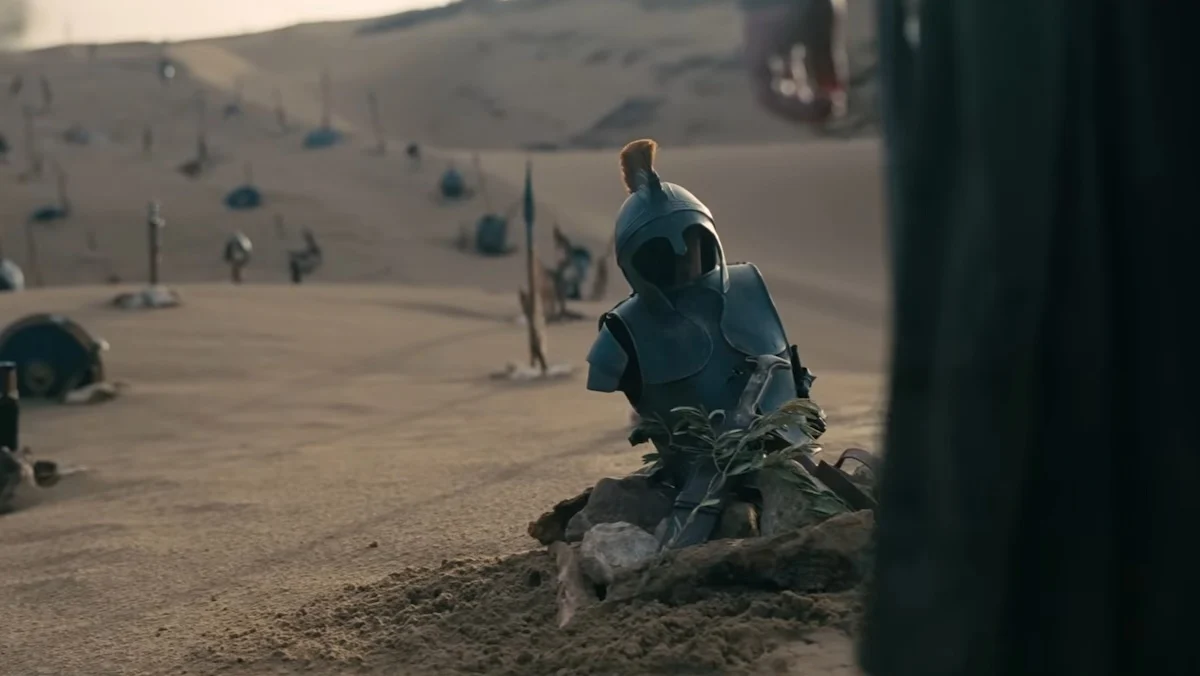
When Christopher Nolan’s production of The Odyssey was first announced, cinephiles and classicists alike scrambled to decipher which figures from Homer’s epic poem the A-list cast would portray. It was an exercise in literary speculation, yet, as it turns out, even the most astute scholars of the Iliad and The Odyssey were destined to miss the mark.
The primary reason for this failure of prediction was simple: the script features a character who is entirely absent from Homer’s verses. Elliot Page portrays Sinon, a figure traditionally relegated to Virgil’s The Aeneid. However, in a stroke of narrative subversion, Nolan has stripped away the mythological reputation of the "infamous liar" and replaced it with a heartbreaking, honorable, and deeply tragic figure whose presence serves as the moral compass of the film.
The Mythological Context: Reclaiming Sinon from the Shadows
In classical mythology, Sinon is synonymous with betrayal. He is the Greek soldier left behind on the shores of Troy, tasked with the ultimate con: convincing the Trojans to drag the massive wooden horse into their city walls under the guise that it was an offering to Athena. His name, derived from roots implying deception, has echoed through millennia as a symbol of the "cunning liar."
Christopher Nolan’s adaptation, however, abandons this caricature. In The Odyssey, Page’s Sinon is not an agent of malice, but a victim of circumstance. He remains ignorant of the true, destructive purpose of the Trojan Horse, believing it to be a genuine holy relic left by a retreating army. This shift in motivation fundamentally alters the audience’s perception of the fall of Troy, transforming it from a story of strategic brilliance into one of exploited innocence.

A Chronology of a Forgotten Soldier
To understand the weight of Elliot Page’s performance, one must look at the structural changes Nolan implemented regarding the character’s origins. In the original myths, Sinon is often linked to the god Hermes, the trickster. In the film, he is the son of a humble servant working for the household of Antinous, the arrogant suitor played by Robert Pattinson.
The Recruitment and the Betrayal
The film’s early acts establish the disparity between the classes in Ithaca. When King Agamemnon arrives to conscript soldiers for the Trojan War, the recruitment is handled by lot. While the wealthy Antinous pulls a "black peg"—signifying his obligation to serve—he is paralyzed by cowardice. He makes a clandestine offer to the young, desperate Sinon: if Sinon takes his place, his family will be provided for.
Odysseus, aware of the deception but desperate to maintain social cohesion, allows the swap while shielding Antinous’s father from the truth of his son’s cowardice. It is a moment of political pragmatism that sets the stage for the tragedy to come. The promised payment never arrives; Sinon’s father dies in squalor while his son fights a war for a cause he does not fully understand, on behalf of a man who discarded him as a disposable asset.
The Final Stand at Troy
Sinon’s role in the film reaches its emotional zenith on the beaches of Troy. As the Greek fleet pretends to depart, Sinon volunteers to remain behind. When asked by Odysseus why he would choose such a dangerous duty, Sinon asks only for his father’s honor to be restored. He dies at the hands of the Trojans, a casualty of the very deception he helped facilitate, unaware that his family has already been erased by the greed of the nobility.

The Underworld and the Confrontation with the Past
Perhaps the most striking divergence from Homeric tradition is the inclusion of a meeting between Odysseus and the ghost of Sinon in the Land of the Dead. While Homer utilized the character of Elpenor to serve as the "unburied soul" in the Underworld, Nolan replaces him with Sinon.
When the spirit of the soldier emerges from the mud of the underworld, the confrontation is visceral. Sinon, now aware of the lie he died for, forces Odysseus to reckon with his own failures. This sequence functions as a profound indictment of the "heroic" narrative; the King of Ithaca is forced to listen to the grievances of a man who died for a lie that the King himself sanctioned.
Bridging the Gap: The Return to Ithaca
The repercussions of this encounter follow Odysseus home. In the film’s climax, the name "Sinon" becomes a weapon. Disguised as a beggar, Odysseus uses the wooden lot from the recruitment as a tool of psychological warfare against Antinous. The final confrontation—where Odysseus forces the lot into the mouth of the man who sold his honor—is a chilling, cathartic conclusion that links the trenches of Troy to the halls of Ithaca.
Supporting Data: Thematic Implications of the Rewrite
The decision to pivot Sinon from a mythological trickster to a tragic hero is more than just a creative flourish; it is a thematic cornerstone. By giving the "liar" a moral core, Nolan highlights the disparity between the "Great Men" of history and the foot soldiers who populate their tales.

- The Ethics of Utility: Throughout the film, characters are treated as tools. By giving Sinon a voice in the afterlife, the script challenges the audience to consider the cost of "necessary" lies.
- The Reliability of Memory: Just as Homer’s original poem deals with the subjectivity of truth, the film presents Sinon’s version of events as a correction to the official record.
- Class Struggle in Antiquity: The interaction between Page’s Sinon and Pattinson’s Antinous serves as a microcosm of the societal rot that threatens to consume Odysseus’s kingdom.
Official Responses and Production Insights
While Nolan has remained characteristically tight-lipped regarding the specific departures from the text, industry insiders suggest that the casting of Elliot Page was pivotal to the character’s development. Page brings a vulnerability that makes Sinon’s death feel like an unnecessary loss rather than a tactical necessity.
"The goal was to humanize the collateral damage of the Trojan War," says one production source. "In the classical texts, we rarely see the internal life of the soldier who holds the line. By making Sinon a proxy for every forgotten man, we force the audience to look at Odysseus not just as a hero, but as a man who has made choices that are impossible to forgive."
Implications for Modern Adaptations of Classics
Nolan’s The Odyssey demonstrates that the most effective way to adapt ancient epics is not by slavishly adhering to every stanza of Homer or Virgil, but by identifying the emotional gaps in their narratives. By inserting a character from The Aeneid into The Odyssey, Nolan has created a dialogue between two epics, using the character of Sinon to bridge the gap between the fall of Troy and the return to Ithaca.
The film serves as a reminder that the "truth" of a myth is often found in the characters who were left on the cutting room floor of history. Elliot Page’s portrayal of Sinon is not just a standout performance—it is the lens through which the entire film’s morality is viewed. By honoring the memory of a man who was betrayed by his king, the film transforms a story of homecoming into a haunting reflection on justice, accountability, and the long, cold shadow of war.

In the final analysis, Nolan’s The Odyssey succeeds because it refuses to let the dead remain silent. Through Sinon, the film asks the viewer: when the dust of the battlefield settles, who is left to tell the truth, and will the world ever listen?

 Siti Muinah
 Azzam Bilal Chamdy