Lina Hope
In a feat of orbital engineering that pushes the boundaries of modern space maintenance, NASA is preparing for a high-stakes rescue mission. Later this month, the agency will launch the "Swift Boost" mission—an ambitious attempt to extend the operational life of the Neil Gehrels Swift Observatory, a venerable space telescope currently succumbing to the relentless pull of Earth’s gravity.
Scheduled for liftoff on June 27, the mission represents a pivot in how NASA approaches aging assets in low-Earth orbit. Rather than allowing a critical scientific instrument to burn up in the atmosphere, the agency is leveraging commercial innovation to perform a "mid-life" intervention that could keep the telescope scanning the cosmos for years to come.
The Core Objective: Saving a Cosmic Dispatcher
Launched in 2004, the Neil Gehrels Swift Observatory was originally designed to study gamma-ray bursts—the most powerful explosions in the universe. Over the past two decades, its mission profile has evolved significantly. Today, it functions as a multi-wavelength "dispatcher" for the global astronomical community.
When a transient event occurs in the universe—such as a supernova, a neutron star collision, or a massive flare—Swift is often the first to detect it. Its rapid-response capabilities allow it to alert other major observatories, including the James Webb Space Telescope (JWST), to pivot their view toward the phenomenon.
However, the telescope’s proximity to Earth has become its greatest liability. Due to a recent surge in solar activity, the upper reaches of Earth’s atmosphere have expanded, creating significantly more "drag" on the satellite. This increased resistance has caused the observatory’s orbit to decay at an alarming, accelerated rate. Without the Swift Boost mission, the telescope faces an inevitable and premature descent into the atmosphere.
Chronology of the Rescue: From Concept to Runway
The road to the June 27 launch has been a testament to rapid-response engineering. The timeline of this mission reflects the urgency of the situation:
- 2025 (Strategic Partnership): Recognizing the accelerated orbital decay, NASA entered into a partnership with Arizona-based startup Katalyst Space. The objective was to utilize "LINK," a robotic docking spacecraft specifically engineered to attach to satellites and adjust their trajectory.
- June 9, 2026: Engineering teams at NASA’s Wallops Flight Facility in Virginia successfully integrated the LINK spacecraft with a Northrop Grumman Pegasus XL rocket. This integration was a critical milestone, ensuring that the robotic "tugboat" was ready for its deployment vehicle.
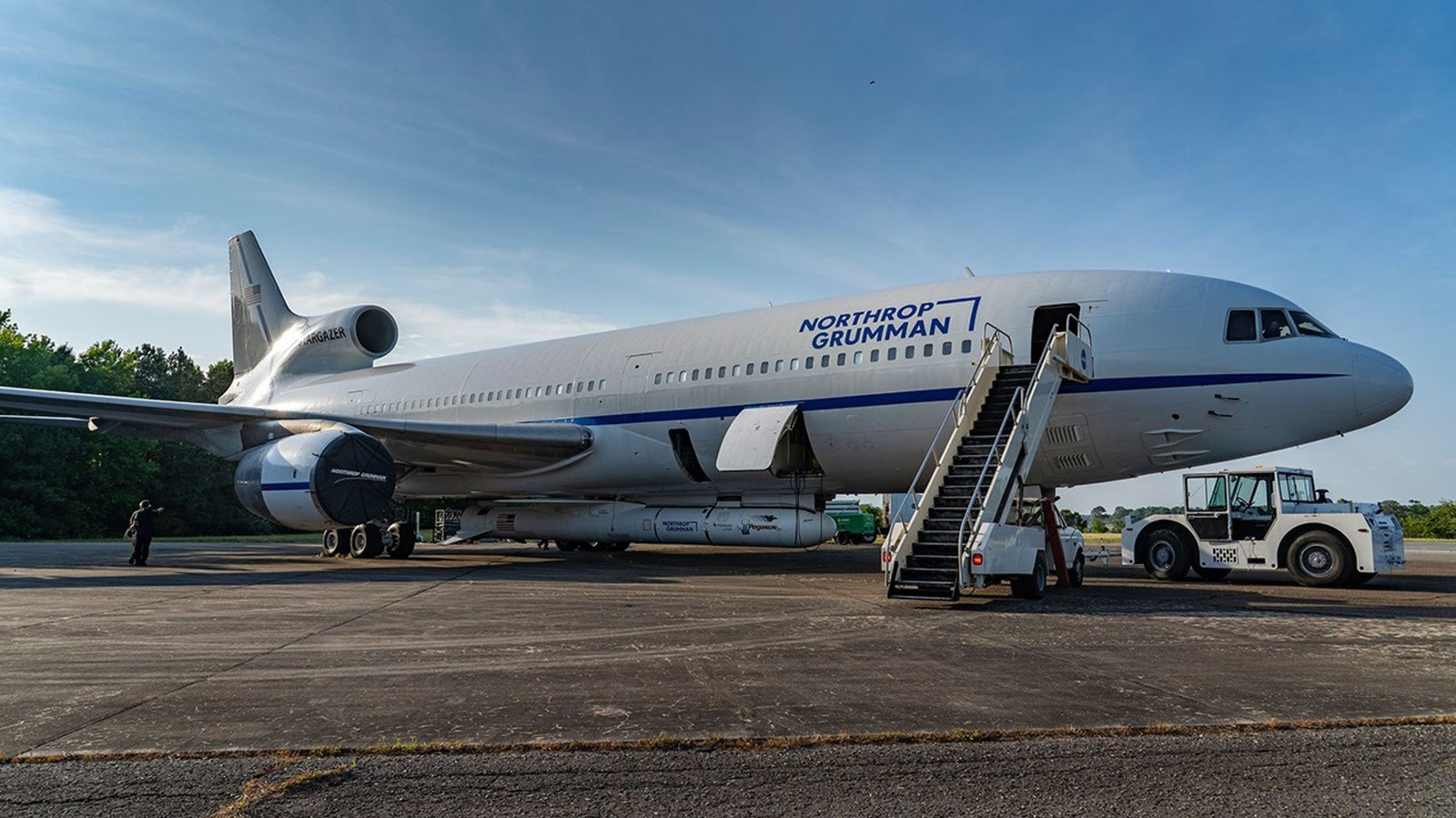
- June 12, 2026: The Pegasus XL rocket was mated to the underbelly of Stargazer, a specially modified Northrop Grumman L-1011 carrier aircraft.
- June 18, 2026: Stargazer departed from Wallops, transiting to the Kwajalein Atoll in the South Pacific. This remote location serves as the launch staging ground, providing the necessary orbital inclination for the rendezvous.
- June 27, 2026 (Projected): The final phase of the mission begins. Stargazer will climb to an altitude of 40,000 feet, releasing the Pegasus XL. Following a brief free-fall, the rocket’s motors will ignite, propelling the LINK spacecraft into orbit to intercept the Swift Observatory.
Technical Challenges and Commercial Synergy
The mission is notable not just for its scientific value, but for its reliance on "air-launch" technology. Unlike a traditional vertical launch from a massive pad, the air-launch method allows for greater flexibility in timing and location.
Once the Pegasus XL separates from the aircraft, it will perform a sequence of maneuvers to reach the precise orbital coordinates of the Swift Observatory. The LINK module, equipped with sophisticated docking interfaces, must then successfully latch onto the aging telescope. This is a non-trivial task; Swift was not designed to be "serviced" in orbit, meaning the LINK spacecraft must navigate the docking process with extreme precision to avoid damaging the telescope’s sensitive instrumentation.
"Given how quickly Swift’s orbit is decaying, we are in a race against the clock," said Shawn Domagal-Goldman, a lead scientist at NASA. "But by leveraging commercial technologies that are already in development, we are meeting this challenge head-on."
Supporting Data: Why Swift Remains Indispensable
The necessity of this mission is grounded in the telescope’s unique contribution to modern astrophysics. While newer, more powerful telescopes like JWST capture high-resolution images of the deep past, they often require "cues" to know where to look. Swift provides that data.
For instance, in recent years, Swift detected the X-ray signature of a 13-billion-year-old supernova. By identifying the location of the event in real-time, Swift allowed astronomers to point the James Webb telescope at the exact spot, revealing secrets about the early universe that would have remained hidden had Swift not been active.
Data shows that the observatory remains in excellent health regarding its internal sensors and software. The hardware is pristine, but the orbital environment—altered by the Sun’s 11-year cycle—has turned a stable orbit into a trap. By providing the necessary "boost," NASA effectively reclaims the investment made in the platform, securing years of additional high-value research for a fraction of the cost of a replacement mission.
Official Responses and Strategic Implications
The Swift Boost mission is being viewed within the aerospace industry as a prototype for "space sustainability." As the number of objects in orbit increases, the ability to extend the life of existing hardware becomes a matter of both economic and environmental necessity.
NASA’s collaboration with Katalyst Space signals a shift toward a "service-oriented" model in space. Instead of abandoning satellites once their fuel or altitude is depleted, the agency is signaling that it is willing to invest in the infrastructure needed to maintain them. This has profound implications for the future of space debris mitigation and the economics of satellite constellations.
"This is not just about saving one telescope," an anonymous source close to the project noted. "This is about proving that we have the capability to perform robotic maintenance in orbit. If we can save Swift, we can save other, more expensive assets that might otherwise become orbital hazards."
Conclusion: The Road Ahead
As the Stargazer aircraft sits on the runway at Kwajalein Atoll, the global scientific community is watching with bated breath. The June 27 launch is more than a logistical operation; it is a demonstration of human ingenuity against the forces of nature.
If the mission succeeds, the Swift Observatory will be pushed to a higher, more stable orbit, effectively hitting the "reset" button on its life expectancy. Should it fail, it will serve as a stark reminder of the fragility of our space-based infrastructure. However, the prevailing sentiment within NASA is one of calculated optimism. The teams have accounted for the atmospheric drag, the orbital mechanics, and the intricacies of the docking maneuver.
For now, the Neil Gehrels Swift Observatory continues to scan the skies, oblivious to the high-stakes rescue mission racing to meet it. When the Pegasus XL finally breaks the cloud cover on June 27, it will carry with it the hopes of a generation of astronomers who aren’t quite ready to lose their most reliable dispatcher. The mission to save Swift is a powerful narrative of resilience—a reminder that in the vast, unforgiving theater of space, a little bit of help can go a long way in keeping the lights on for science.


 Muslim
 Laily UPN