

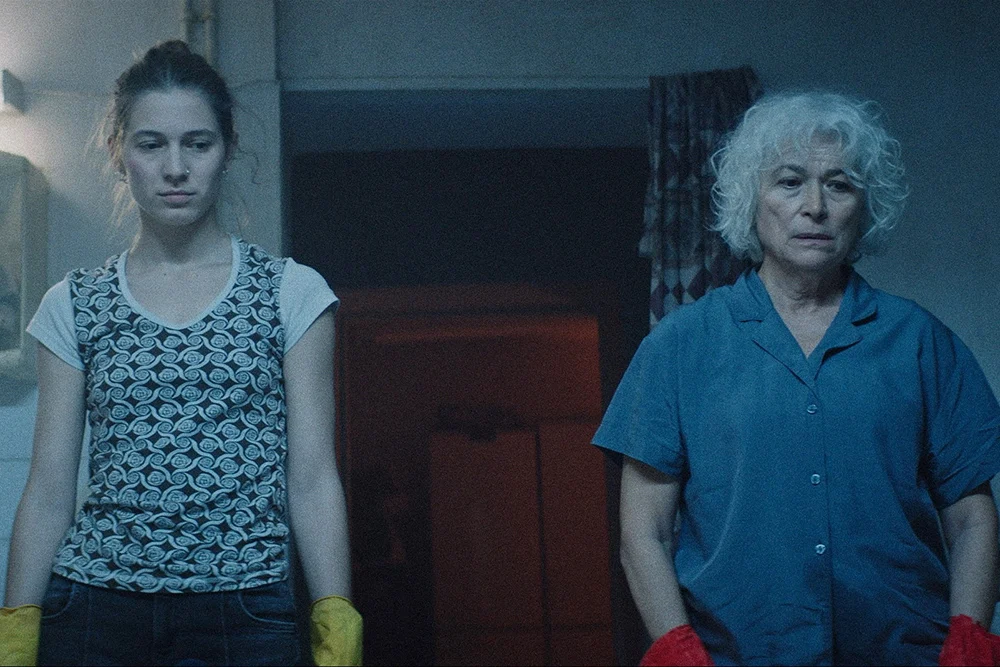
In a cinematic landscape often defined by the bizarre, the perverse, and the ironically detached, writer-director Alexis Alexiou has carved out a space of raw, unvarnished vulnerability. His latest feature, Sea of Glass, which recently held its premiere out of competition at the Edinburgh International Film Festival, marks a significant departure from the trend of "weird" Greek cinema. Instead, Alexiou delivers a stark, emotionally resonant exploration of generational trauma and the unexpected strength found in female allyship.
Eleven years after the release of his sleek, neon-soaked thriller Wednesday 04:45, Alexiou returns to the screen with a work that is as much a slow-burn neo-noir as it is a searing family melodrama. While the film’s 130-minute runtime occasionally asks for a tighter hand at the editing desk, the depth of its character study and the atmospheric prowess of its production design cement Sea of Glass as a standout entry in contemporary European filmmaking.
The Anatomy of a Return: Chronology and Context
Alexis Alexiou’s career has long been characterized by a meticulous attention to atmosphere. With Wednesday 04:45, he proved his mastery of the genre-thriller, crafting a film that drew favorable comparisons to the works of Michael Mann. However, Sea of Glass, co-written with Afroditi Nikolaidou, signals a shift toward the domestic front.
The gestation period between these two features—over a decade—is reflected in the maturity of the narrative. The film follows Vangelio (Evangelia Andreadaki), a woman in her mid-sixties whose life has been defined by the silent, grueling labor of caretaking. When her bedridden husband passes away, the expected grief is superseded by a chilling, quiet sense of relief. Seeking to reclaim the autonomy she surrendered decades ago, Vangelio travels to the off-season, wind-swept coast of the Greek island of Evia.
It is here that the film’s chronology shifts from internal reflection to external conflict. Her arrival at a dilapidated, wintry coastal hotel serves as the catalyst for the narrative’s second act. As the weather turns and the lonesome reverberations of the sea take center stage, Vangelio encounters Vicky (Christiana Matelska Toka), a 23-year-old woman trapped in a cycle of abuse under the thumb of her alcoholic, tyrannical father.
Character-Driven Despair: The Performance of Silence
The heart of Sea of Glass beats within the weathered, expressive face of veteran actress Evangelia Andreadaki. Known for her recent turn in the Oscar-shortlisted Arcadia, Andreadaki delivers a performance of profound restraint. She is a woman who has spent a lifetime being "the listener," and as a result, her character’s backstory is told almost entirely through her weary, watchful silences.
Her interaction with the younger Vicky is the film’s emotional anchor. While Vicky is initially withdrawn—a product of the systemic oppression enforced by her father and tacitly supported by a local community of men—she finds in Vangelio a mirror to her own suppressed desire for freedom.
"The film is a study in what happens when the domestic sphere becomes a cage," notes one observer of the production. The dynamic between the two women is not an instantaneous bond of friendship, but a slow, tectonic shifting of alliances. As Vangelio observes the daily abuse inflicted upon Vicky, her sense of duty to her own past translates into an urgent, protective instinct toward the younger woman.
Technical Mastery: The Aesthetic of the "Sea of Glass"
The film’s title, derived from the Book of Revelation’s description of the passage to heaven, serves as the primary aesthetic directive for Director of Photography Simos Sarketzis. The film does not rely on the vibrant, sun-drenched palette typically associated with the Greek islands. Instead, Sarketzis employs a color grade of frosted blues, murky greens, and earthy browns, evoking the imagery of glass shards that have been worn down by decades of relentless tide.
The sound design is equally pivotal. By capturing the lonesome, hollow sounds of a hotel in the off-season—the wind whistling through uninsulated frames, the rhythmic, aggressive lapping of the sea against the shoreline—the film creates a sensory experience of isolation. This "wintry limbo," as described in the film’s production notes, perfectly encapsulates the emotional state of the protagonists.
The water acts as a recurring motif throughout the film. It is the boundary that separates these women from the world, the element that provides the rhythm of their lives, and ultimately, the medium through which the final, violent cleansing of their circumstances occurs.
Thematic Implications: From Tragedy to Empowerment
While Alexiou explicitly references Thelma and Louise as an inspiration, Sea of Glass avoids the high-octane road-trip aesthetic in favor of something more claustrophobic and grounded. The film’s "final act," which sees the narrative scale expand, provides a cathartic release, yet it remains firmly rooted in the emotional reality of its characters.
The film serves as a biting critique of the patriarchal structures that persist in small, isolated communities. The local police, the boorish father, and the societal expectations placed upon women all contribute to a feeling of impending, unavoidable disaster. When the "liberation" finally arrives, it is not depicted as a joyful escape, but as a violent, necessary rupture.
The implications of the film are clear: the cost of freedom for these women is high, and the scars they carry are deep. By framing the narrative as a classical Greek tragedy—where the consequences of action are both inevitable and brutal—Alexiou elevates the story from a simple thriller to a profound commentary on generational trauma.
Supporting Data and Production Perspectives
Despite the film’s strong performances and atmospheric weight, industry critics have noted the pacing challenges inherent in a 130-minute runtime. The first half of the film, while masterfully setting the scene, occupies a significant amount of time before the central conflict between the women fully ignites.
However, for fans of slow-burn cinema, this deliberate pace is not a flaw but a feature. It forces the audience to inhabit the same monotonous, oppressive reality that Vangelio and Vicky endure. The silence of the hotel, the repetitive nature of their daily chores, and the mounting tension in the father’s behavior are all meticulously rendered to ensure that when the breaking point arrives, the impact is visceral.
As of its Edinburgh screening, the reception has been largely positive, with particular praise directed toward the performances of Andreadaki and Toka. The chemistry between these two, separated by nearly half a century of life experience, provides the "galvanizing connection" that allows the film to transition from a somber, grey-toned drama into a high-stakes, breathless survival story.
Conclusion: A New Direction for Alexiou
Sea of Glass represents a maturing filmmaker who is no longer interested in the stylistic games of his youth. Alexis Alexiou has moved away from the "neon-nights" and the "ticking-clock" thriller mechanics that defined his previous work, opting instead for a quiet, stormy, and deeply human inquiry into what it means to be a woman in a world of men.
The film is not without its flaws, but its ambition is undeniable. By treating the plight of its characters with the gravity of ancient myth, and by grounding that myth in the cold, wet, and unforgiving reality of a winter in Evia, Sea of Glass succeeds in being both a harrowing watch and a deeply moving testament to the power of human connection. It is a film that lingers long after the credits roll, much like the tide that continues to crash against the shore, washing away the dirt and blood of the lives it has touched.










