

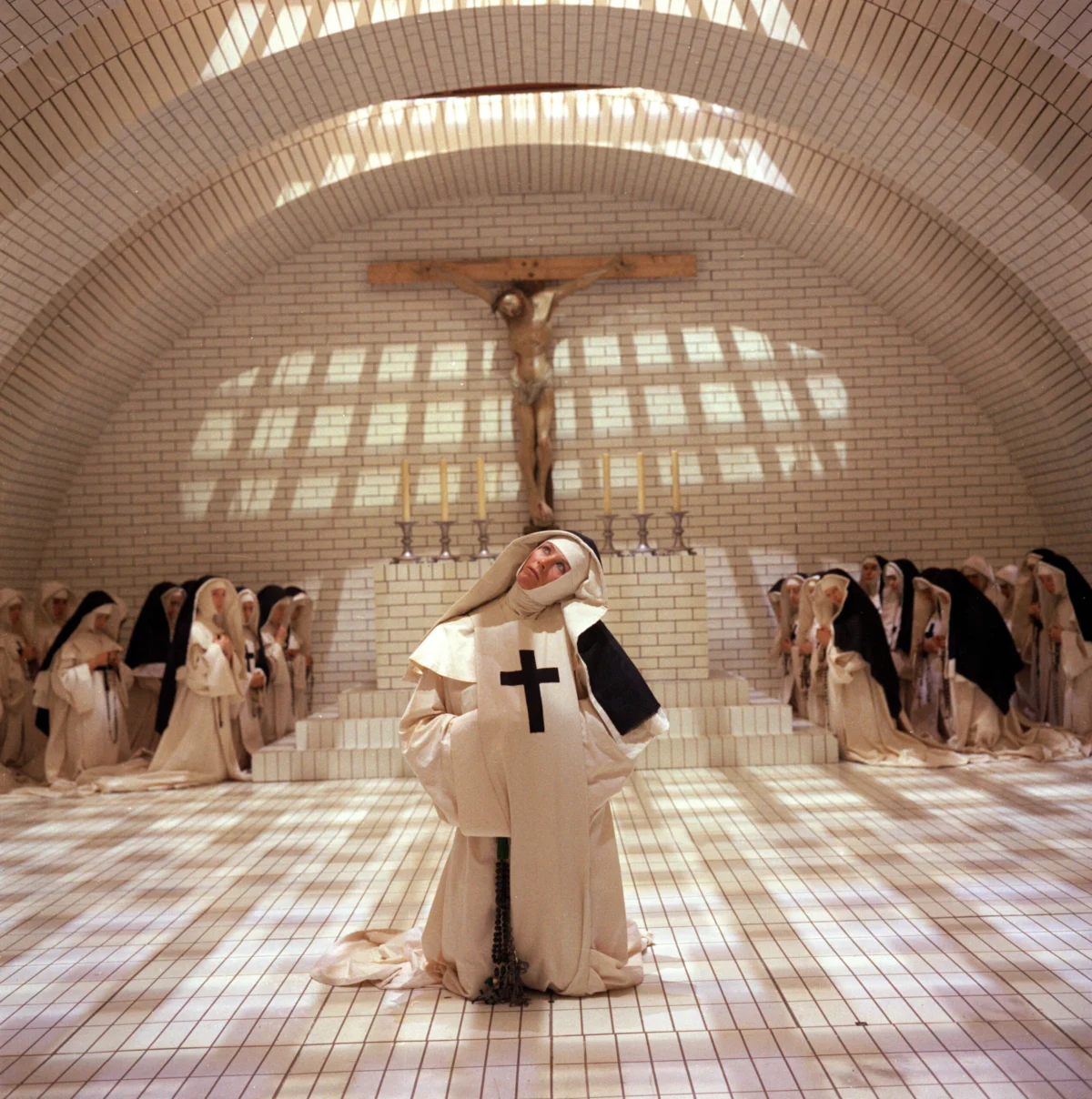
There is a profound, almost poetic irony in the programming choices at this year’s Cannes Film Festival. While the glitz of the red carpet is dominated by the latest global premieres, two of the most significant Hollywood-backed titles screening at the festival have been relegated to the repertory Classics section. One, the high-octane anniversary screening of The Fast and the Furious, serves as a reminder of the studio system’s modern blockbuster dominance. The other, however, represents a seismic shift in film preservation and the reclamation of a cinematic pariah.
Warner Bros.’ new boutique label, Clockwork, chose Cannes for the official debut of its new 4K director’s edition of Ken Russell’s 1971 masterpiece, The Devils. For decades, this film has existed as a phantom limb of cinema history—a legendary, controversial work that was systemically censored, buried, and mythologized by its own unavailability. With its premiere in the Grand Lumière, the "lost" masterpiece has finally stepped out of the shadows.
A Legacy of Sacrilege: The Genesis of ‘The Devils’
To understand the weight of this restoration, one must revisit the atmosphere of 1971. Starring Vanessa Redgrave as a sexually repressed Mother Superior and Oliver Reed as the defiant, hedonistic Father Urbain Grandier, The Devils is a harrowing dramatization of the 17th-century Loudun possessions. Based on true events and drawing from Aldous Huxley’s non-fiction account and John Whiting’s stage play, the film depicts the systematic destruction of a priest framed for witchcraft by a corrupt church and state.
When Ken Russell first unleashed his vision upon the world, it was met not with mere criticism, but with an existential fury. The film’s unflinching portrayal of religious hypocrisy, political maneuvering, and hysterical sexual repression—visualized through surreal, avant-garde set design—was branded "blasphemous" by the Catholic establishment.
The Vatican’s reaction was immediate and punitive. They lobbied for the cancellation of its debut at the Venice Film Festival, and while press screenings were allowed to proceed, public viewings were aborted to preempt civil unrest. Despite the heavy hand of institutional censorship, Russell walked away with the Best Director award at Venice, a hollow victory in a climate that saw the film subsequently banned in Italy and several other territories. In the United Kingdom and the United States, the film was butchered, released with an "X" rating only after significant, brutal cuts were made to its most provocative sequences.
Chronology of a Censor’s War
The history of The Devils is a decades-long struggle between an auteur’s vision and the corporate fear of controversy.
- 1971: The original release faces global outcry. The Vatican calls for a total ban. Warner Bros., fearing a backlash against their wider distribution slate, demands edits.
- 1971–2000s: The film becomes a cult object, largely available only in truncated, compromised versions. It remains a "holy grail" for cinephiles who hear whispers of the "missing" scenes that contained the film’s thematic soul.
- 2002: In a candid interview with his biographer, Mark Kermode, Russell reflects on the censorship. He describes the process as "heartbreaking," lamenting that the deleted footage represented some of the most potent, essential work of his career.
- 2004: Russell oversees an uncut restoration for a screening at London’s National Film Theatre. While it generates massive critical acclaim, it remains a fleeting, non-commercial event.
- 2011: The British Film Institute (BFI) makes a valiant effort to keep the film in the cultural conversation by releasing a DVD of the edited version, but the uncut original remains locked in the Warner Bros. vaults.
- 2024: Warner Bros. announces the launch of their boutique label, "Clockwork," with the restoration of The Devils as its flagship project.
- 2025: The 4K restoration premieres at the Cannes Film Festival, marking the first time the public can legally access the director’s intended cut in over half a century.
The Technical Triumph of the 4K Restoration
The screening at Cannes was introduced by Elisabeth Russell, the director’s widow, alongside Kermode. The technical achievement of the 4K print cannot be overstated. By returning to the original camera negatives, the restoration team has scrubbed away the grime of time, revealing the staggering, tactile brilliance of Derek Jarman’s production design.
The colors are hyper-saturated and deliberate, turning the white-washed walls of the convent into a prison of blinding light, while the shadows in the dungeon scenes possess a depth that was previously lost to digital compression. The picture quality is, by all accounts, astonishing—a visual restoration that honors the grandeur of Russell’s original vision.

Industry and Audience Response
The atmosphere at the Grand Lumière was charged with a sense of historical justice. Among the audience members was Peter Jackson, the Oscar-winning director of The Lord of the Rings, who, according to Cannes head Thierry Frémaux, was one of many high-profile filmmakers who aggressively lobbied for a ticket to the sold-out event.
"For them, Ken Russell and this movie, in particular, has a special importance in their lives," Frémaux remarked during his introduction. The presence of such heavyweights underscores the film’s status as a "director’s director" movie—a work that pushed the boundaries of what was permissible in mainstream cinema.
Interestingly, the reception of the film itself has shifted. While the 1971 audiences were reportedly horrified by scenes such as the "rape of Christ"—a sequence involving naked nuns—the modern audience reacted with a mixture of intellectual engagement and laughter. The shock value that once threatened to shutter the film has dissipated, replaced by a recognition of the film’s biting, satirical brilliance.
The Implications: A New Era for ‘The Devils’
The significance of this release extends beyond the film itself. The decision by Warner Bros. to allow "Clockwork" to handle The Devils suggests a broader industry shift toward the preservation of "difficult" cinema. For years, the studio’s refusal to release the uncut version was viewed as a lingering vestige of the 1970s moral panic. By embracing the restoration, Warner Bros. is finally signaling that the cultural value of the work outweighs the potential for religious or political blowback.
The timing of this release is also critical. The Devils functions as an intense satire of state corruption, the fusion of political and religious power, and the use of manufactured hysteria to control a population. In a contemporary global landscape often defined by rising populism and the erosion of institutional trust, the film’s themes feel less like a period piece and more like a warning.
As Elisabeth Russell and the creative team look toward the film’s wider theatrical release on October 16, the legacy of Ken Russell is being rewritten. No longer the "blasphemous" outcast of the 1970s, The Devils is now positioned as a cornerstone of British cinema, a monumental work of art that survived a decades-long war against its own existence.
For the students of film, the historians, and the casual cinephiles who have waited years for this moment, the restoration is a victory for artistic freedom. The devil, it seems, is finally in the details—and he looks more vibrant than ever.











No comments yet. Be the first to join the conversation!