Suro Senen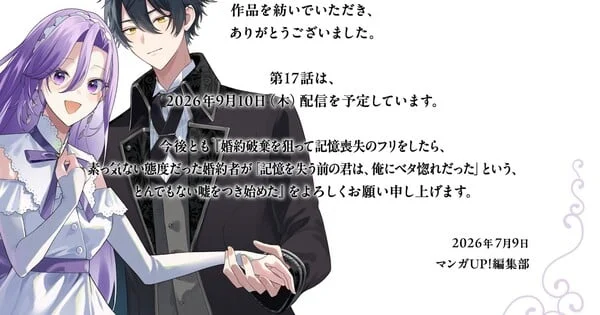
September 7, 2026 – 3:15 PM EDT
By Anita Tai
A significant artistic transition is set to occur within the popular romantic comedy manga series, Fake It to Break It! I Faked Amnesia to Break off My Engagement and Now He’s All Lovey-Dovey?! (original Japanese Konyaku Haki o Neratte Kioku Sōshitsu no Furi o Shitara, Sokkenai Taidodatta Konyakusha ga "Kioku o Ushinau Mae no Kimi wa, Ore ni Beta Boredatta" to Iu, Tondemonai Uso o Tsuki Hajimeta). The original artist, Yone, will be passing the torch to Megumi Dorokawa, commencing with the release of chapter 17 on September 10th. The announcement was made via X, formerly known as Twitter, by the manga’s author, Kotoko.
This change marks a new chapter for the beloved series, which has captivated readers with its unique premise of a noblewoman feigning amnesia to escape an unwanted engagement, only to find her fiancé unexpectedly devoted. The manga is currently published in English by Manga UP! Global, who have been instrumental in bringing the story to a wider international audience.
Main Facts: A Seamless Handover
The core of this news revolves around the change in artistic direction for Fake It to Break It!. Author Kotoko, known for her engaging storytelling, confirmed the handover on social media, a common and increasingly effective channel for direct fan communication in the digital age. The precise date of the artistic change, September 10th, ensures a smooth transition for readers, with the new artist’s work debuting in the very next chapter.
Megumi Dorokawa, the incoming artist, is recognized for her work on the manga Share House Nile. This prior experience suggests a level of proficiency and adaptability that will be crucial in maintaining the visual appeal and character consistency that fans have come to expect. The decision to bring in a new artist is a significant one, and the selection of Dorokawa signals a strategic move to ensure the continued success and quality of the series.
Chronology of the Series and the Artistic Shift
The journey of Fake It to Break It! began in 2022 when Kotoko and artist Yone launched the series on Square Enix’s Manga UP! digital platform in Japan. The manga quickly garnered a following, leading to the publication of its compiled volumes. The third compiled volume was released in February 2025, indicating a steady output and growing popularity.
The English localization efforts have also been robust. Manga UP! Global began publishing the manga in English, offering a convenient way for international fans to engage with the story. Simultaneously, J-Novel Club has been releasing the original light novel series in English, providing a comprehensive reading experience for those who wish to delve deeper into the narrative.
The upcoming change in artist, effective September 10th, 2026, with chapter 17, marks a pivotal moment in the manga’s publication history. This transition occurs well into the series’ run, meaning Dorokawa will be tasked with building upon Yone’s established visual foundation.
Supporting Data and Context: The Appeal of "Fake It to Break It!"
The enduring appeal of Fake It to Break It! lies in its clever subversion of typical romantic tropes. The premise, as described by Manga UP! Global, centers on Viola, a viscount’s daughter, and her fiancé, Philip Laurenson, the charismatic heir to a dukedom. Their engagement is presented as a formality, lacking genuine connection, with their interactions reduced to strained "silent tea parties."
Viola’s drastic measure of faking amnesia after a minor accident is a bold attempt to escape this loveless union. However, the story takes an unexpected turn when Philip’s reaction is far from what Viola anticipates. Instead of relief or indifference, he professes a deep, albeit fabricated, history of affection, claiming she used to call him "Phil" and was "beta bored" with him before her supposed memory loss. This dramatic irony and the ensuing romantic development between the seemingly mismatched couple have resonated with readers.
The narrative structure, which blends elements of historical romance with comedic misunderstandings and a touch of magical realism (through the potential for reincarnation or otherworldly influence, common in the genre), has contributed to its success. The engaging plot, coupled with strong character development, has solidified its place as a fan favorite.
Official Responses and Author’s Intent
The primary official response comes directly from the author, Kotoko, via her X account. This direct line of communication allows for transparency and a personal touch in delivering significant news to the fanbase. While the initial announcement is brief, it signifies the author’s active involvement and direction for the series.
The choice of Megumi Dorokawa as the successor artist is a testament to Kotoko’s confidence in Dorokawa’s ability to capture the essence of the story while bringing her own artistic flair. The success of Share House Nile suggests that Dorokawa is adept at portraying character relationships and emotions, crucial for a romance manga.
This artistic transition also comes at a time when Kotoko’s other works are also experiencing significant adaptation news. Her manga, The Final-Boss Prince is Somehow Obsessed with the Chubby Villainess: Reincarnated Me (original Japanese Odebu Akujo ni Tensei Shitara, Nazeka Last Boss Ijisama ni Shōchaku Sareteimasu), illustrated by Kaname Hanamiya, is slated for a television anime adaptation. Furthermore, her light novel series, I Was Reincarnated as the Heroine on the Verge of a Bad Ending, and I’m Determined to Fall in Love! (original Japanese Bad End Mokuzen no Heroine ni Tensei Shita Watashi, Konse de wa Renai Suru Tsumori ga Cheat na Ani ga Hanashite Kuremasen!?), is also receiving an anime adaptation. These concurrent developments highlight Kotoko’s prolific output and the growing popularity of her creations across various mediums.
The I Was Reincarnated as the Heroine series, in particular, offers further insight into Kotoko’s creative process and the ecosystem surrounding her works. Launched on the Shōsetsuka ni Narō website in 2021, the light novel series was published by TO Books. The original illustrations were handled by Tsukasa Satsuki for the first two volumes, with Kei Kumanomi taking over from the third volume in December 2022. A manga adaptation, titled Bad End Mokuzen no Heroine ni Tensei Shita Watashi, Konse de wa Renai Suru Tsumori ga Cheat na Ani ga Hanashite Kuremasen!? @COMIC, was launched in June 2022 on TO Books’ Corona EX manga website by artist Ikuto Nanase. Tokyopop’s LOVELOVE imprint is publishing this manga adaptation in English. This detailed publication history underscores Kotoko’s established presence in the light novel and manga spheres and the collaborative nature of bringing these stories to life.
Implications and Future Outlook
The artistic change in Fake It to Break It! carries several implications for the series and its readership. Firstly, it presents an opportunity for the manga to evolve visually. Dorokawa’s unique style could introduce new nuances to character designs and panel layouts, potentially revitalizing the series for long-time fans and attracting new readers.
Secondly, the success of this transition will depend heavily on how well Dorokawa integrates into the existing narrative and aesthetic. Fans often form strong attachments to the original artists, and a significant shift can sometimes be met with initial resistance. However, the author’s endorsement and the artist’s proven track record suggest a positive reception is likely.
The timing of this announcement, coming amidst news of other adaptations of Kotoko’s work, also points to a broader trend of increasing interest in her storytelling. This could lead to greater synergy between her various projects, potentially fostering cross-promotion and expanding her overall fanbase.
For Manga UP! Global and J-Novel Club, this change necessitates a period of adjustment in their promotional materials and communication strategies. Ensuring a smooth rollout of the new art and maintaining consistent messaging will be crucial for continued sales and reader engagement.
Ultimately, the artistic handover in Fake It to Break It! is more than just a change of illustrator; it’s a strategic move aimed at sustaining and potentially enhancing the manga’s appeal. As Megumi Dorokawa steps into this new role, the focus will be on her ability to capture the comedic timing, emotional depth, and romantic charm that have made the series a success, ushering in a new visual era for Viola and Philip’s unconventional love story. The commitment from the author and the publisher to continue the series with a new artist underscores the confidence in its enduring narrative potential and the creative talent involved.

 Azzam Bilal Chamdy
 Ali Ikhwan