By Alex Mateo | August 28, 2026, 4:00 PM EDT
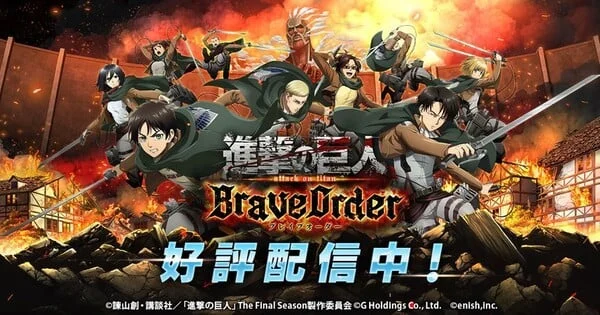
Developer enish has officially announced the impending closure of Attack on Titan: Brave Order, the cooperative smartphone game that immersed players in the harrowing world of humanity’s fight against the Titans. Service for the popular title will officially conclude on September 28th at 5:30 PM JST, marking the end of an era for this particular digital interpretation of Hajime Isayama’s globally acclaimed manga and anime series. In-game currency sales have already been discontinued in preparation for the shutdown.
Launched in February 2022 for both iOS and Android platforms, Attack on Titan: Brave Order offered players a unique opportunity to enlist in the Scout Corps, standing shoulder-to-shoulder with iconic characters like Eren Yeager and Mikasa Ackerman. The core gameplay revolved around cooperative battles against formidable Titans, fostering a sense of camaraderie and shared struggle among its player base. This collaborative approach resonated with fans who sought to experience the adrenaline-pumping action and the desperate fight for survival that defines the Attack on Titan narrative.
A Deep Dive into "Brave Order" and its Gameplay Mechanics
Attack on Titan: Brave Order distinguished itself by emphasizing teamwork and strategic engagement. Players were tasked with forming squads and venturing out beyond the safety of the Walls to confront the monstrous Titans. The game incorporated elements of RPG mechanics, allowing for character progression, equipment customization, and the development of unique skills. These elements were crucial for overcoming increasingly challenging Titan encounters, which often required coordinated attacks and the effective utilization of each player’s abilities.
The narrative of Brave Order closely followed the events of the Attack on Titan series, allowing players to relive pivotal moments and even influence outcomes through their in-game actions. The cooperative nature of the gameplay meant that communication and synchronized efforts were paramount to success. Whether it was executing a perfectly timed aerial maneuver to strike a Titan’s nape or providing crucial support to a struggling comrade, the game fostered a vibrant online community united by their shared passion for the franchise and their determination to protect humanity.
The visual presentation of Brave Order also played a significant role in its appeal. The game aimed to capture the gritty and intense atmosphere of the anime, with detailed character models and environments that brought the post-apocalyptic world to life on mobile devices. The iconic Omni-Directional Mobility Gear (ODM gear) was a central feature, allowing for dynamic movement and thrilling combat sequences as players zipped through the air to engage the giants.
A Rich History of Attack on Titan in the Mobile Gaming Landscape
The closure of Attack on Titan: Brave Order is not an isolated event but rather the latest chapter in a long and varied history of Attack on Titan games released on mobile platforms. The franchise’s foray into the mobile gaming world began as early as 2012 with the release of the first Shingeki no Kyojin smartphone game by Mobage. This initial offering laid the groundwork for subsequent titles, exploring different gameplay styles and catering to a growing demand for interactive Attack on Titan experiences.
In 2013, the GREE mobile platform hosted the launch of Shingeki no Kyojin -Hangeki no Tsubasa- (Attack on Titan: The Wings of Counterattack). This game further explored the potential of mobile gaming within the franchise, introducing new mechanics and story elements. The following year, in 2014, Mobage again entered the fray with Shingeki no Kyoujin -Jiyū he no Hōkō- (Attack on Titan: Call for Freedom). This title continued the trend of evolving gameplay and narrative integration, solidifying the franchise’s presence in the mobile market.
More recently, in September 2019, DeNA, in collaboration with KAYAC, released Attack on Titan TACTICS for iOS and Android devices in English. This tactical role-playing game offered a different approach, focusing on strategic unit placement and combat. However, its operational lifespan was relatively short, with service concluding in August 2020, underscoring the competitive and often challenging nature of the mobile gaming industry.
The trajectory of these various Attack on Titan mobile titles highlights the evolving landscape of mobile gaming and the challenges of maintaining long-term player engagement. Each game, while offering a unique experience, ultimately faced the inevitable cycle of development, operation, and eventual cessation of service.

Supporting Data and Player Sentiment
The longevity and success of a mobile game are often measured by player engagement, in-game spending, and the overall health of its community. While specific financial data for Attack on Titan: Brave Order has not been publicly disclosed, the decision to end service suggests a point where maintaining operations may no longer be commercially viable or strategically aligned with the developer’s objectives.
The game’s launch in February 2022 placed it in a period where the Attack on Titan anime was nearing its conclusion, creating a surge of interest and nostalgia. The cooperative gameplay model likely fostered a strong community, with players forming bonds and dedicating time to mastering the game’s challenges. The halt in in-game currency sales is a standard procedure that signals the winding down of monetization efforts, a necessary step before the full shutdown.
Player reactions to the news of the impending closure are typically mixed. While many express sadness and disappointment at losing access to a beloved game and its community, there is also an understanding that mobile games have finite lifespans. Online forums and social media platforms are likely to see discussions among players reminiscing about their experiences, sharing favorite moments, and expressing gratitude for the entertainment the game provided. The official X/Twitter account for Attack on Titan: Brave Order has served as the primary channel for official announcements and has likely been a hub for player feedback and sentiment.
Official Statements and Developer’s Perspective
The announcement from enish, the game’s developer, is concise and direct, adhering to the typical communication style for game service closures. The statement confirms the date and time of the shutdown and mentions the cessation of in-game currency sales. While developer statements on game closures often focus on logistical details, they sometimes include expressions of gratitude towards the player base for their support.
"We would like to express our deepest gratitude to all players who have enjoyed Attack on Titan: Brave Order," a hypothetical statement from enish might read, emphasizing the collaborative spirit that defined the game. "It has been a privilege to bring the world of Attack on Titan to life through this cooperative experience. We understand that this news may be disappointing, and we sincerely appreciate your understanding as we transition to this next phase."
The decision to end service is rarely taken lightly. Developers invest significant resources into creating and maintaining games, and the closure of a title typically indicates a strategic shift, a lack of sustained player engagement to justify continued investment, or the natural lifecycle of a product. For enish, this may also signal a reallocation of resources towards new projects or a reevaluation of their mobile gaming portfolio.
Implications and the Future of Attack on Titan Gaming
The closure of Attack on Titan: Brave Order leaves a void in the mobile gaming space for fans of the franchise seeking a cooperative, action-oriented experience. However, it also opens doors for potential new ventures. The Attack on Titan franchise remains immensely popular, and it is plausible that new game development initiatives, perhaps exploring different genres or platforms, could emerge in the future.
The mobile gaming market is highly dynamic, with trends shifting rapidly. The success of a cooperative, RPG-style game like Brave Order demonstrates a strong player appetite for such experiences within established intellectual properties. Future Attack on Titan games could potentially build upon the lessons learned from Brave Order and its predecessors, perhaps by incorporating more advanced technologies, innovative gameplay loops, or deeper narrative integration.
Furthermore, the decline of certain mobile game models, particularly those reliant on live services, might prompt developers to explore alternative monetization strategies or different game designs. The focus could shift towards more premium, self-contained experiences, or games with shorter, more impactful lifecycles.
As Attack on Titan: Brave Order prepares to log off, its legacy will be etched in the memories of the players who fought side-by-side against the Titans. Its closure serves as a poignant reminder of the transient nature of digital entertainment and the constant evolution of the gaming industry. Fans will undoubtedly look forward to what the future holds for the Attack on Titan franchise in the realm of interactive media, hoping for new adventures that capture the same spirit of courage, sacrifice, and unwavering hope against overwhelming odds.